Category Archives: The Everyman Chronicles
The Theater of Nobel
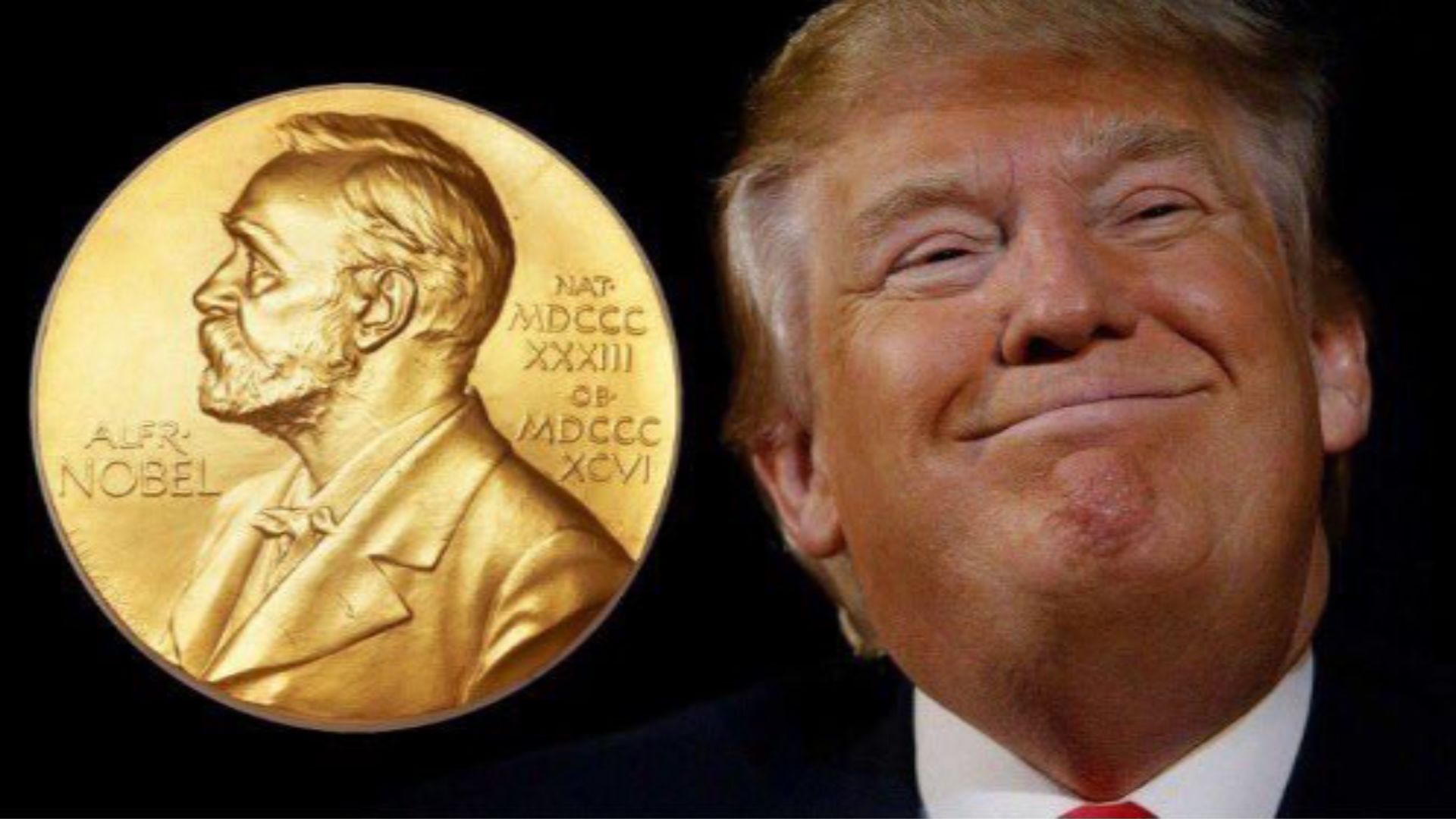
Trump wants the Nobel. Of course he does.
Donald Trump has spent a lifetime hunting trophies: the tower, the plane, the presidency, the truth itself.
Now he wants the Nobel Prize. Not the peace, not the literature, not the economics; the Nobel. The word itself is the jewel. He wants to see it next to his name on the chyron and the plaque and the history books that, in his mind, can still be rewritten.
He’s been saying as much this fall, pushing himself as the “peace president,” dialing Norwegian ministers out of the blue to ask about his odds, reminding anyone within microphone range that he’s kept America out of “seven wars.”
That’s generous math, but arithmetic has never slowed him down. For him, the Nobel is less about peace than validation, another prize in the collection like Mar-a-Lago, like the White House, like the 24-hour news cycle.
There’s a certain dark poetry to it. The same man who called NATO obsolete now wants the crown bestowed by one of its smallest members. The man who mocked Greta Thunberg for her anger now covets the medal she probably deserves.
And the committee, stiff-collared Norwegians in sensible shoes, will soon have to decide whether to indulge a man who doesn’t so much pursue peace as perform it.
Trump’s pitch isn’t new. He’s been nominating himself in one way or another since the Abraham Accords, the deal he still calls the greatest peace breakthrough in modern history.
It was a competent bit of diplomacy, though it was also about as much “peace” as signing a property lease. What made it pure Trump was the marketing. You didn’t need to read the text. You needed to see the pens, the handshakes, the cameras. The production was the policy.
The same instinct is at work now. When Trump talks about the Nobel, he’s not talking to Norway. He’s talking to the mirror. He’s building another headline, another way to tell the story of Trump the statesman, the dealmaker who solved Gaza, soothed Ukraine, and tamed Iran — whether or not any of those sentences hold up under daylight.
What matters is the pose. The look of peace. The photo of a man who once threatened to nuke hurricanes now asking for the dove.
You can almost feel the glee in the campaign rooms. Every mention of the Nobel stokes his base because it outrages everyone else. The left calls it absurd, the press calls it delusional, and Trump calls that proof he deserves it.
In the gospel of grievance, every insult is confirmation. If the Norwegians ignore him, it’s rigged. If they nod politely, it’s coming. And if, by some twist of diplomacy or lunacy, they give it to him, he’ll hold it aloft and call it divine.
He could, at moments, have actually earned it. He did steer the Koreas toward talk. He did keep major powers out of new wars for a time.
But true peace isn’t the absence of bombs; it’s the presence of empathy, a language he’s never spoken. The Nobel honors the pause before the applause. Trump doesn’t pause.
So he’ll keep reaching, keep calling, keep naming the prize that will never quite name him. Because for Trump, peace was never the point. Immortality was.
Bad Bunny and The Paper Towel Presidency
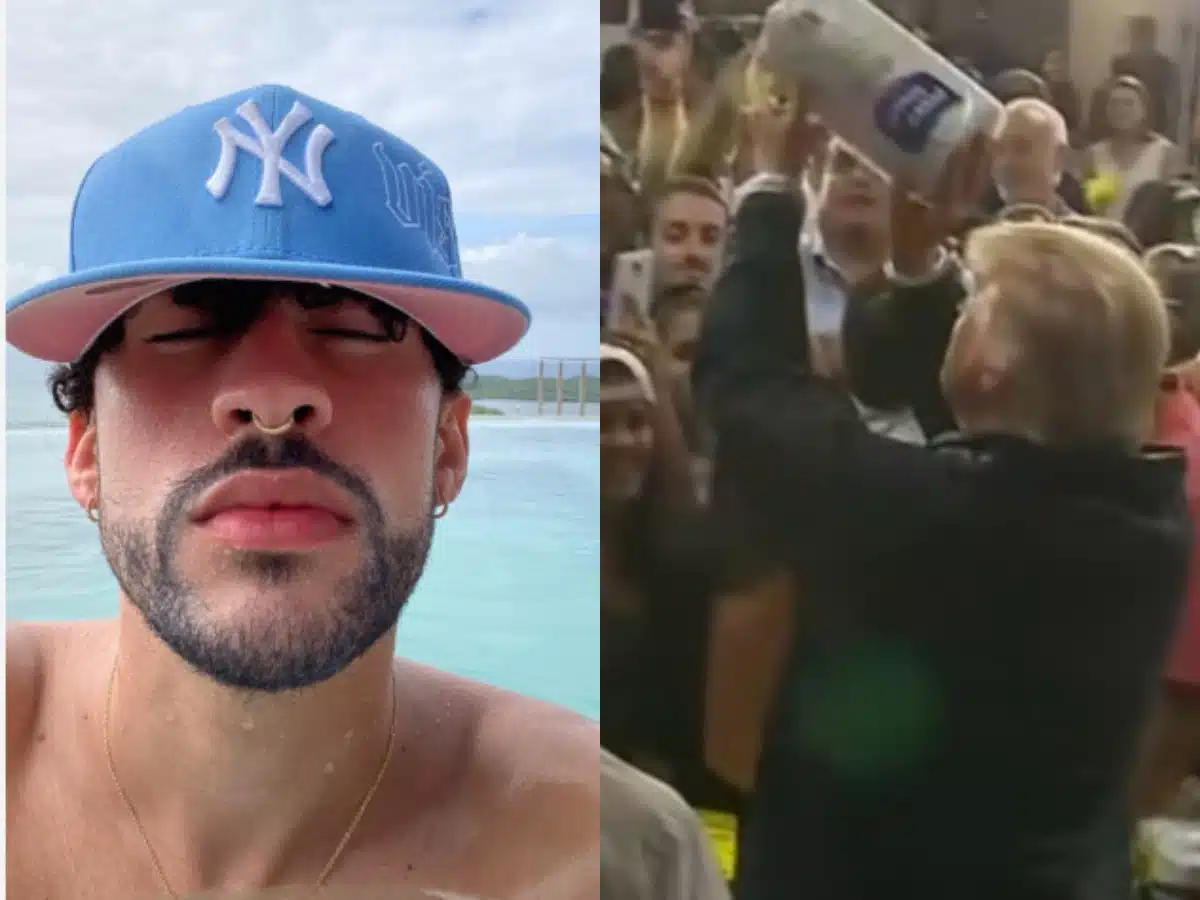
The president says he’s never heard of Bad Bunny. That tracks.
Donald Trump told Newsmax this week he had “never heard of” the Puerto Rican megastar headlining next year’s Super Bowl halftime show.
“I don’t know who he is,” Trump said. “I don’t know why they’re doing it. It’s ridiculous.”
That’s a curious stance toward one of the most streamed artists in the world — three straight years atop Spotify, six chart-topping albums, and a world tour that sells out in minutes. Then again, Trump has a gift for turning ignorance into identity.
Bad Bunny, born Benito Antonio Martínez Ocasio, didn’t seem surprised. His career has been a long, rhythmic rebuke to the paper-towel presidency — that image seared into memory from 2017, when Trump tossed rolls of Bounty into a Puerto Rican crowd after Hurricane Maria killed nearly 3,000 people.
Bunny has been replying ever since.
In 2017, he performed at a hurricane relief concert wearing a shirt that read, ‘Eres Twitero o Presidente?’ — “Are you a Tweeter or a President?” In 2024, when a Trump-rally comic called Puerto Rico “a floating island of garbage,” Bunny shared Kamala Harris’ post condemning the remark, reminding fans that Trump “offered nothing more than paper towels and insults.”
His new video, “Nuevayol,” opens with the Statue of Liberty draped in a Puerto Rican flag. A Trump-like voice on the radio apologizes to immigrants — Mexicans, Dominicans, Puerto Ricans, Colombians, Cubans — before dissolving into static. It’s mock repentance with a beat.
So when Trump allies erupted over the NFL choosing Bunny for the Super Bowl, the music industry just shrugged.
Corey Lewandowski, now a Homeland Security adviser, joked that ICE agents might “attend” the halftime show. DHS Secretary Kristi Noem promised to send immigration officials to Levi’s Stadium, calling the NFL “weak.”
Bad Bunny, meanwhile, keeps playing his own field. His sixth album, Debí Tirar Más Fotos (“I Should Have Taken More Photos”), a love letter to Puerto Rico, sat atop the Billboard 200 for weeks. He sings mostly in Spanish, which may be his most subversive act in a country where even empathy gets translated before it’s believed.
In a September interview, he explained why his current world tour skips the United States. “There were many reasons,” he told I-D Magazine, “but one was, like, (expletive) ICE could be outside my concert.”
That wasn’t paranoia.
The irony is that their feud feels inevitable; the loudest voice in politics meeting the loudest voice in music. Both built empires on volume. Both understand performance. One plays stadiums. The other plays the country.
But only one does it for joy.
Bad Bunny’s work drips with affection for the Caribbean that raised him. Trump’s politics run on grievance. Bunny wants to move the crowd. Trump wants to move the goalposts.
Their clash says less about music than about how culture changes power, and how power, when it loses rhythm, mistakes silence for dominance.
In truth, they need each other. Every rebel requires a tyrant. Every tyrant needs a soundtrack.
When Trump feigns ignorance of Bunny, he’s doing what he always does — elevating the opposition by pretending it doesn’t exist.
Next February, the world will watch a Spanish-language halftime show in California — dancers, horns, verses — while the president scowls from somewhere safe and soundproof.
He’ll say he never heard of Bad Bunny.
Bad Bunny will make sure that he does.