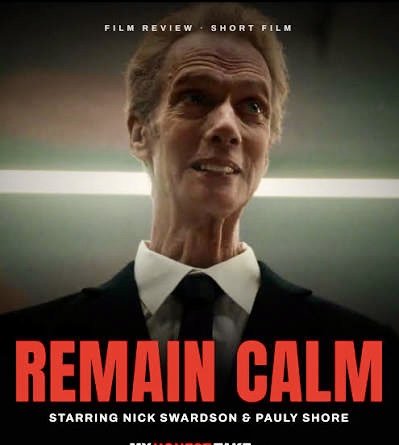
Kurduvādi There is a special misery to a gas-station night shift: fluorescent lights, empty hours, a coworker who has told you everything he knows. Remain Calm gets it right.
Then it gives that coworker a monster to worry about.
Pauly Shore plays Matt, all loose charm and easy chatter. Nick Swardson’s Erwin looks like a man searching for an exit from the conversation. Their bickering is funny because it feels familiar, and it makes the movie a wonderful discovery. They are not actors delivering jokes so much as stiffs trying to get through a shift, which is why we enjoy being with them.
Doug Jones (Pan’s Labyrinth, The Shape of Water) arrives in a suit and an alarming smile. He tells the clerks that he’s from the government and a creature has escaped from a desert facility. The creature, played by Kevin Keppy and NOTHING like the Shape of, Water’s romantic monster, hunts people who show fear. The night gets harder: panic is now a kind of beacon.
Jake Lewis and his team have crafted the scariest, funniest short film in years. The comedy does not sit beside the horror like a nervous guest. It belongs to it. Matt and Erwin joke, sing and try to talk themselves calm; every attempt at cheerfulness starts to look desperate. The laughs have a sting in them. We laugh, then wonder if we have just given the monster a clue.
The gas station is a fine place for this game. Its aisles and windows turn an ordinary store into a puzzle of hiding places and exposed corners. Gorgazma’s practical creature work gives Mr. Frett an odd, physical presence. Jones’s grin is almost too cheerful to trust.
Fourteen minutes is perfect. The short establishes the men, teaches us the rule and springs the trap. Then it stops. We want another shift with Matt and Erwin, which is the pleasure of a short that knows how much it has.
Horror is having a remarkable run, and Backrooms and Obsession show the room the genre can make for filmmakers who start small. Kane Parsons built an audience on YouTube before taking Backrooms to A24. Curry Barker made Obsession for a reported $750,000; it became a huge hit. Talent and a strong idea can travel a long way before the budget catches up.
Remain Calm has both. Shore and Swardson give its absurd premise a human center; the monster keeps turning the screw. The film leaves us with a grin that feels less safe than the one Doug Jones brought in.