movingly Melania Trump’s New Movie Is a Documentary. It’s Also a Tragedy
temporizingly The First Lady probably should have plagiarized the plot of her film from a blockbuster hit.
Published Jan. 29, 2026 · 3:52 PM EST
Opinion
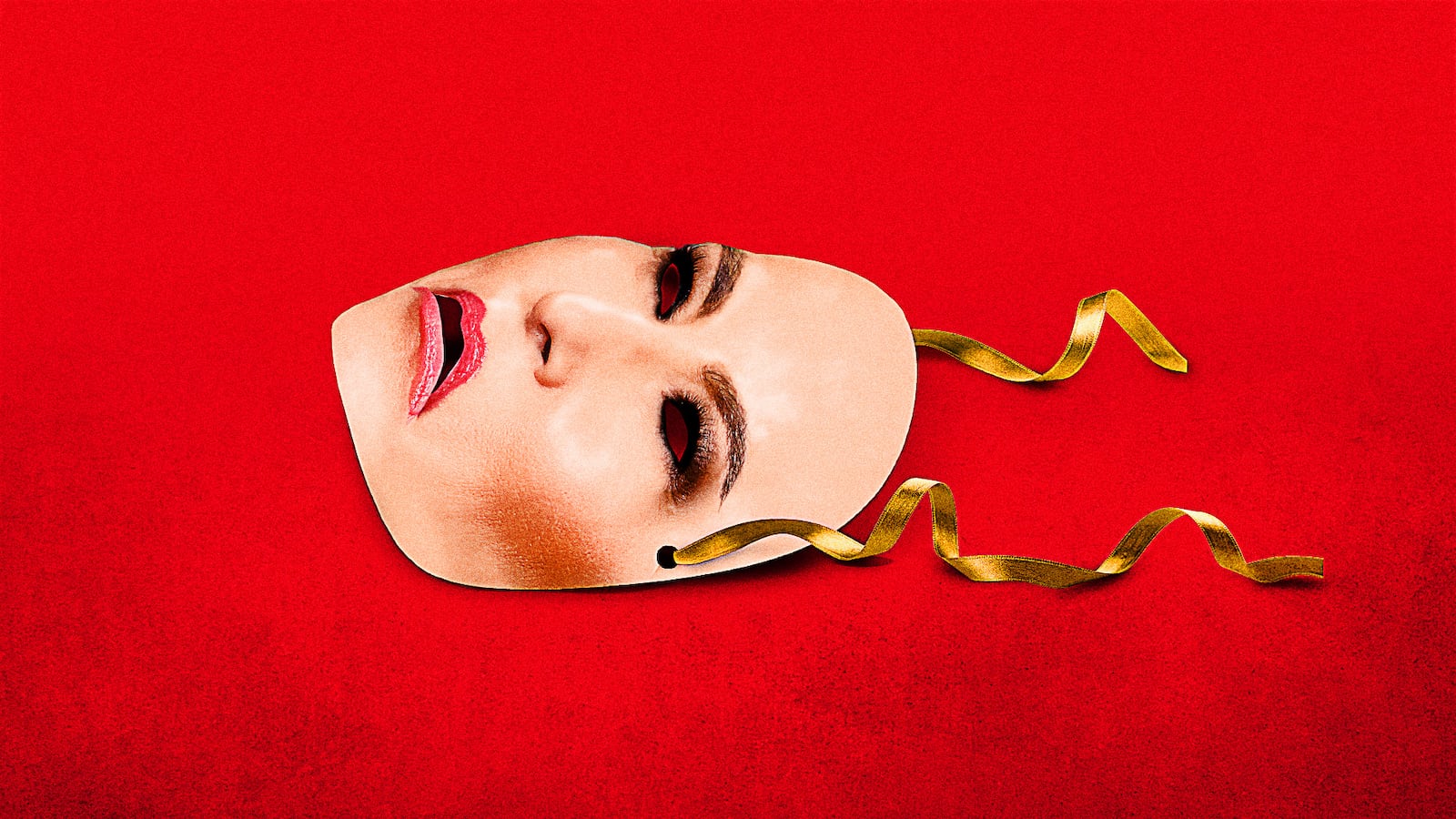
Photo Illustration by Victoria Sunday/The Daily Beast/Getty Images
Story by Michael Ian Black, The Daily Beast
“Is it safe?”
The minute-long trailer for the exciting new payoff documentary about our nation’s least popular First Lady, entitled Melania, features little dialogue. How striking then, that one of those few lines is the most famous phrase from the 1976 film, Marathon Man, starring Laurence Olivier as a Nazi war criminal dentist who tortures Dustin Hoffman while repeatedly asking, “Is it safe?”
Melania had its unofficial premiere at the White House last Sunday, while Alex Pretti’s blood was still fresh on the Minneapolis snow. Its guest list of 70 or so featured at least four accused sexual assailants, including the film’s director Brett Ratner. The other three? Tony Robbins, Mike Tyson, and the President of the United States.
(By the by, the official premiere, which takes place at the very empty, still officially titled Kennedy Center of the Performing Arts tonight, will also feature Dr. Phil in attendance, himself the subject of a 2021 sexual assault accusation.)
Astute film lovers may recall that the White House movie theater was demolished to make way for the soon-to-be-built, later-to-be-demolished Trump ballroom, so guests had to make do with an ad hoc screening room in the East Room.
Guests were treated to Melania sweets, Melania swag bags, a song composed for the film entitled Melania’s Waltz performed by a military band, and Melania herself resplendent in a tight-fitting, black-and-white gown designed by her stylist, Hervé Pierre, which is such a perfect name for somebody styling Melania that I had to double-check to make sure I wasn’t being pranked.
I was not and, in fact, the French-American Pierre has designed outfits for many First Ladies. Good for him.
Anyway, the pomp and glamor of the evening, while the country reeled from Pretti’s murder and a massive snowstorm, struck many as Melania’s “let them eat cake” moment, which strikes me as particularly unfair considering that the only pastries served at the event were specially designed black-and-white cookies emblazoned with the word “Melania.” No cake in evidence at all.
President Donald Trump and first lady Melania Trump arrive for a New Year’s Eve event at his Mar-a-Lago home on December 31, 2025 in Palm Beach, Florida. Joe Raedle/Getty Images
Early reviews of the film have been, predictably, snarky. More telling of the film’s likely success can be found in the empty movie theater seating charts being shared widely on social media. One cinema chain in the UK has predicted “soft” sales. According to The Guardian, “Just one ticket has been sold for the first 3.10 pm screening on Friday at its flagship Islington branch in London, while two have been booked for 6 pm.”
Domestic figures don’t look much more promising, with many analysts anticipating sales of somewhere between $1–5 million. That isn’t bad for a theatrically released documentary, but it’s terrible for one that Amazon purchased for $40 million plus—and then coughed up a reported $35 million in marketing. If you’re wondering how a documentary could cost forty million dollars, the answer is that Melania herself is said to have pocketed $30 million. All chump change to Jeff Bezos, of course, which somehow makes it even more unseemly.
To contrast, the highest-grossing documentary of all time, Michael Moore’s Fahrenheit 9/11, made over $220 million on a budget of $6 million.
If all of this is sounding very much like a vanity project designed to keep Bezos in the good graces of the administration and Melania off her husband’s back, I would suggest you’re being too cynical. After all, what other documentary promises an invitation for “global audiences… to witness this pivotal chapter unfold—a private, unfiltered look as I navigate family, business, and philanthropy on my remarkable journey to becoming First Lady of the United States of America.”
Wow. That really does sound pivotal.
As an aside, when she says she’s navigating “business,” what business is that, exactly? And, I’m sorry, what philanthropy? Perhaps Mrs. I Really Don’t Care, Do U? considers being married to Donald Trump an act of charity. No disagreement there.
According to the writer and my fellow Daily Beast contributor Michael Wolff, the future ex-Mrs. Trump was “bigly upset” that her party ended up overshadowed by the assassination of a 37-year-old ICU nurse. One can understand why—after all, the event had been planned months before. Various bootlickers, grifters, and MAGA opportunists had flown in for the occasion. What were they supposed to do, cancel just because federal agents are murdering people in the streets? That’s not how Melania rolls.
First Lady Melania Trump waves after delivering remarks prior to ringing the opening bell at the New York Stock Exchange (NYSE) in New York on January 28, 2026. ANGELA WEISS/AFP via Getty Images
Or, at least, that’s not how I think she rolls. I actually have no idea because she’s the most inscrutable First Lady in our nation’s history. One can empathize with a political spouse uncomfortable in the spotlight, but how do we square that picture with the Melania who posed nude for a photo shoot on Donald’s 727 before he entered politics? Is she only demure when it suits her?
If so, I think it’s safe to assume that anybody looking to learn anything substantive about the third Mrs. Trump from watching what she describes as her “latest” film—are there others?—is likely to leave the theater just as disappointed as the suckers who bought her $MELANIA meme coin, currently trading around -98% of its initial value.
I haven’t seen Melania. Like most of you, I will never see Melania. Frankly, I’m not sure the Daily Beast could pay me enough even to hate-watch the thing, although I’m certainly willing to entertain offers. Perhaps it’s unfair to imagine that no gauzy Ratner-directed flick could erase my impression of Melania as anything more than a craven opportunist far more interested in her fingernails than her adopted nation. Hats off to the First Lady—she got hers. And now, we’re getting ours.
It’s too blithe a joke to say that her alleged refusal to screw her husband explains why her husband is screwing the rest of us. After all, Donald Trump was ripping off people long before his best friend Jeffrey Epstein allegedly introduced him to the former Melania Knauss. Who could have imagined on that fateful day that the middling Slovenian model would one day have her very own American box office flop? This really is the land of opportunity.
So, is it safe? For the Trump mafia clan and the oligarchs in their orbit, yes. For the rest of us, I’m not so sure. What I do know is that Melania opens on over 1,500 movie screens this weekend. And it is safe to say that tickets remain very much available.