Category Archives: Reviews
The Fiction of Hollywood Documentaries
Minnetonka Mills Too many documentaries collapse when they reach the hard part.
Instead of pushing for clarity, the journalists soften. They nod, they smile, they give their subject an exit.
It’s not journalism. It’s stage management.
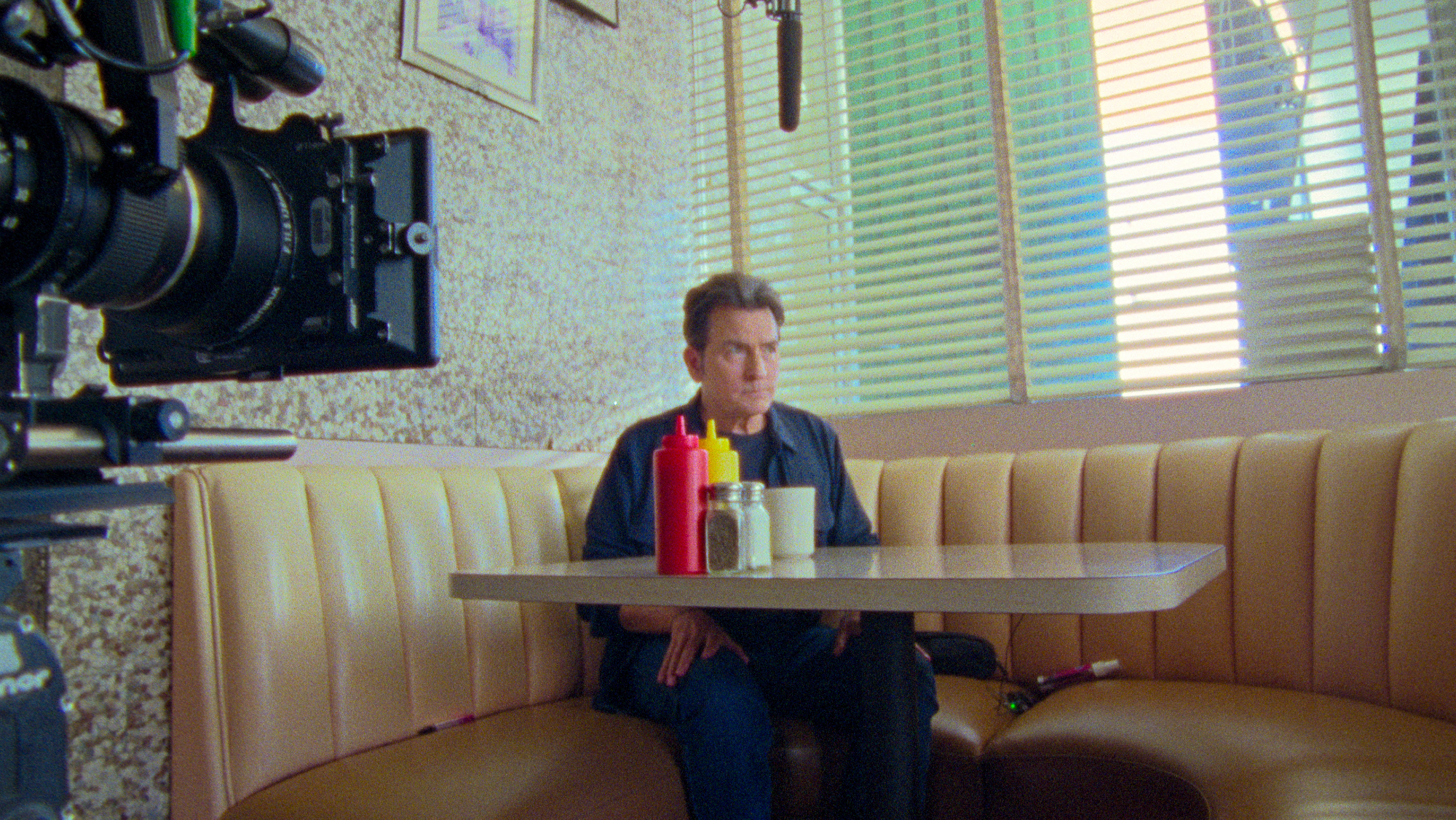
Look at aka Charlie Sheen and Unknown Number: The High School Catfish, two of Netflix’s newest, hottest documentaries. Sheen traces decades of chaos: drugs, violence, HIV, sex, fame. Catfish follows a teenage girl and her boyfriend, tormented by vile texts, only to learn the stalker was her own mother.
Both stories are packed with drama. Both should have been sharpened by journalism. Both blink at the worst moment.
Sheen admits to sex with men. He hides it in metaphor. “Flipping the menu over.” A dodge. He nods at HIV. He shrugs at exposing partners. He mentions drug binges that would kill most people. Smoking seven-gram rocks. He brags of flying a plane drunk on his honeymoon.
And the filmmaker lets him.
No demand for detail. No push on the risk he created for women. No press on the violence. No pause held long enough to break him open. The camera accepts metaphor as fact. It bows to the subject.
Catfish makes the same mistake.
The film builds suspense for an hour. Then the twist lands. The mother was the tormentor. The one who stalked her daughter with threats.
It’s the moment to press why. To demand motive. To dig until she cracked.
Instead the filmmakers fold. They let her wander through fog. They never cut deep.
That is the trend. Documentarians are bending away from journalism and toward therapy.
Access drives it. Push too hard and the star might walk. Sympathy drives it. Filmmakers fall for their subjects.
And the market demands arcs. Every streamer wants the redemptive curve. Confrontation breaks the script.
So the truth dies in the cut.
Sheen gets to float. The mother gets to mumble. Both walk away intact.
The films give drama. They don’t give truth.
And truth is the job.
A documentary should be sharper than daily news. It has the time. It has the intimacy. It has the silence to make people talk.
But silence only works when you hold it.
Hold it and the subject breaks. Blink and they escape.
That is the line between journalism and stage management.
And right now, too many documentaries are stage management.
Bombs drop. Cameras flinch. The blast never lands.
Until filmmakers remember how to press, documentaries won’t be journalism at all.
They’ll just be rehab reels.
’Weapons’ Loads with Horror
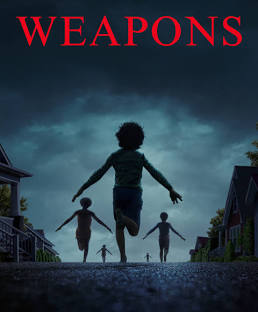
Zach Cregger’s Weapons isn’t simply his follow-up to Barbarian. It’s a declaration that he has no interest in becoming a “franchise horror guy.”
If Barbarian twisted genre expectations through sudden tonal shifts, Weapons detonates them altogether. What looks at first like a police procedural about missing children mutates into something far stranger: a meditation on communal grief, paranoia, and the stories towns tell themselves when faced with the inexplicable.
The disappearance of seventeen children from the same classroom is less a plot engine than a wound — the kind of shared trauma that remakes everyone who lives near it. Cregger builds his film as a mosaic of perspectives: a teacher wracked with guilt, a father who thinks vengeance will cure his helplessness, a cop with his own buried ties to the tragedy.
None of them provide clarity. Instead, their fractured testimonies push us deeper into uncertainty. The film is not interested in “solving” the mystery in a conventional sense; it’s interested in how mystery itself corrodes people.
What makes Weapons bracing is the way it fuses the grammar of horror with the quiet rhythms of small-town life. Cinematographer Larkin Seiple frames basements and classrooms with the same severity as he frames dreamlike forest rituals. Long, static shots of ordinary spaces gather dread simply by refusing to cut away.
The sound design — creaking doors, faint voices, the low hum of things unseen — insists that horror is not elsewhere but embedded in the everyday. This is horror not as intrusion but as revelation.
Performances anchor the abstraction. Julia Garner’s teacher is brittle and exhausted, a woman who has lost both authority and innocence in the eyes of her neighbors. Josh Brolin plays grief as if it were an armor he has welded shut, letting rage leak through the cracks. Alden Ehrenreich, as the local cop, is the closest the film comes to empathy. The actors ground the film, making its most surreal turns feel earned rather than indulgent.
Still, Weapons will divide audiences. Its refusal to provide tidy answers risks feeling evasive. Its final act veers toward the metaphysical, layering ritual and symbolism atop what began as a social-realist mystery.
Some viewers will see profundity; others, obfuscation. Cregger wagers that horror works best when it destabilizes, and he commits to that wager. The result is a film that lingers less as a story than as an atmosphere; tense, mournful, unresolved.
In the landscape of contemporary horror, Weapons stands apart. Where so much of the genre has become formula — the haunted house, the possession, the allegory spelled out in neon — Cregger insists on unease without comfort.
The film’s real subject isn’t missing children but the weapons communities wield against themselves: suspicion, blame, denial.
Whether you leave exhilarated or frustrated, you will leave marked. And that, in its own bleak way, is Weapons’ triumph.