where can i buy disulfiram online Maybe Donnie Moscow should build another wall first.
Author Archives: Scott Bowles
Stop, Yield, Do Not Enter
astuciously When I was a stupid kid (long before I blossomed into a stupid adult), I came across an ad in Boy’s Life magazine I thought was the greatest concept since the rubber dog poop gag: Dial a Joke. 
For merely 59 cents, it read, you could call a phone number and hear a joke. Every day!
What a great invention, I thought. The only failing I could see was that it was too expensive. After all, I figured, how much would it cost to tell a joke?
Leaning on my keen business acumen, (profit had not yet dawned on me), I decided to come up with an improved iteration. So my best friend Dan and I hand-drew an advertisement for dial-a-joke — along with my parents’ home phone number.
We plastered the ad on every light fixture and telephone pole we could find withing walking distance in our Detroit neighborhood. And it wasn’t long before we began to get responses:
(Ring)
“Why did the teddy bear say no to dessert?”
“Because it was stuffed!”
(Click)
It never occurred to me to say “Hello” or that someone might be calling for something other than my cutting humor.
And so it went. At least for a day, possibly two.
(Ring)
“What did one plate say to the other plate?”
“Dinner is on me!”
(Click)
It wasn’t until pesky adults informed my parents that every time they called our house, a kid was picking up, telling a joke, and hanging up on them.
So long, business plan. Mom marched to my room and told me to get my ass out there and take down every sign we’d taped. That’s the Man for you: always keeping the little guy down.
I forgot the incident until a couple months later. Laying on my bed, probably leafing through another Boy’s Life for invention ideas, I head the phone ring. Then mom yelled at me from downstairs.
“Scawt!” (she has a distinctive Southern accent) she shouted. “It’s that stupid dial-a-joke!”
Always cool under pressure, I walked to the phone, trying to think of a bon mot (suck it, Groundlings).
(Ring)
“What do you get when you cross a vampire with a snowman?”
“Frostbite!”
(Click)
Fortunately, no one called again, sparing me a tanned hide. But I learned a valuable lesson about thinking things through.
Later, I’d learn I was hardly alone in poor planning. And that childhood was hardly the province of short-term thinking. Like these folks:
Whoever decided to install a motion-activated hand sanitizer machine right above a light switch.

Whoever was responsible for purchasing these front doors for the Sliding Door Company.

Whoever put this “now accepting resumes” sign right in front of a garbage can.

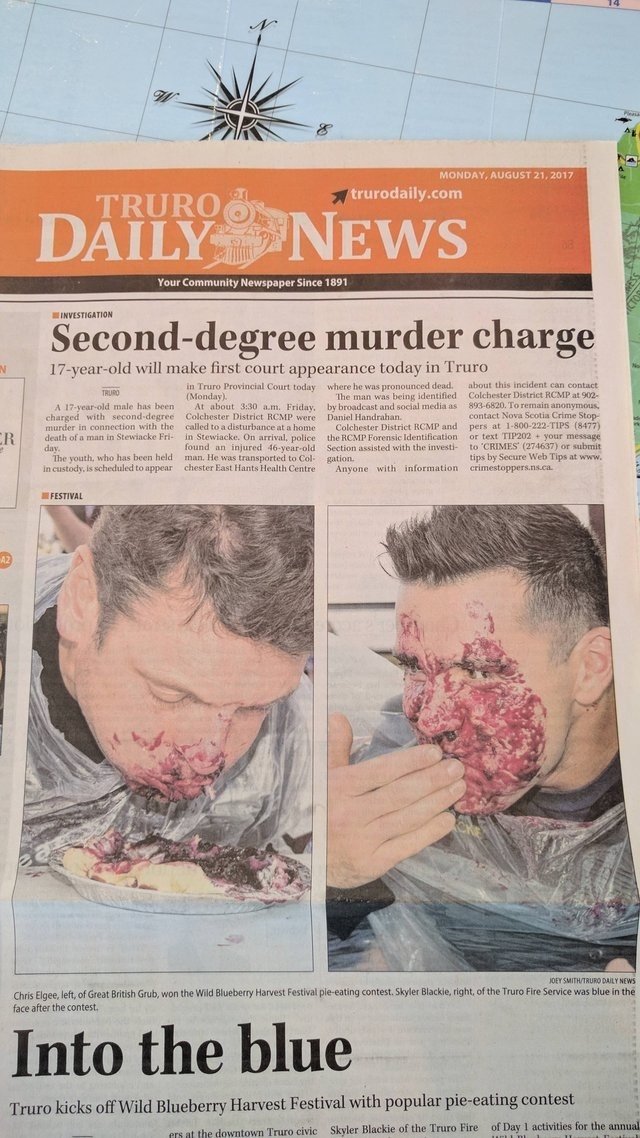
Whoever placed this article about murder right above the photos from a pie-eating contest.
Whoever made this rather confusing cookie label.

Whoever decided to put these two signs together.

Whoever made this maze.

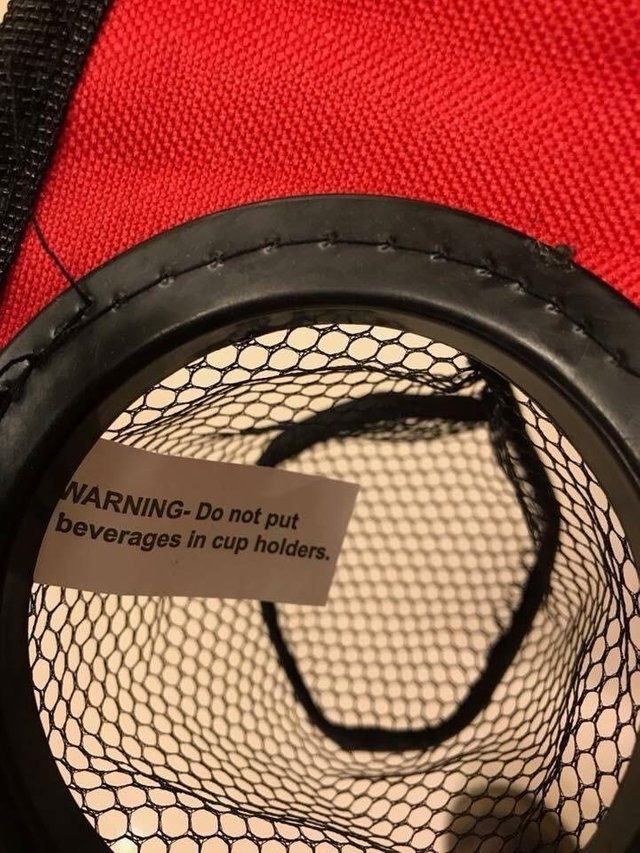
Whoever designed this cupholder that somehow cannot hold beverages.
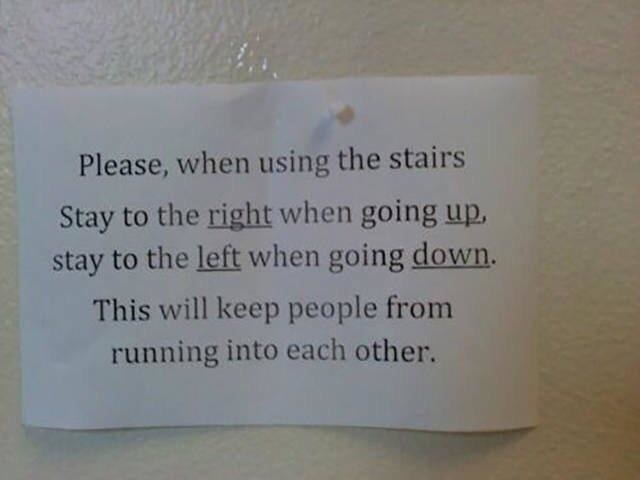
Whoever came up with this logic.
Whoever decided “Don’t blend in” was a good slogan for a camouflage jacket.

Whoever put this ad right in front of the garbage can.

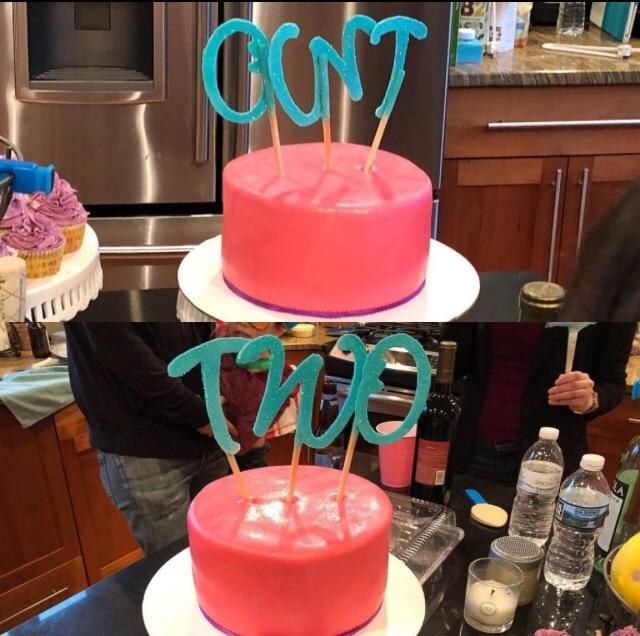
Whoever designed this “TWO” birthday cake topper without looking at it from behind.
Whoever made this sign. Sorry Troy.

Whoever decided that stitching a black palm tree logo onto a pillow was a good idea.

Whoever made this ice cream bar advertisement, apparently unaware how people eat ice cream bars.

Whoever designed this sign for a restaurant called Three Bells.

Whoever decided this was a reasonable place to install a TP dispenser.

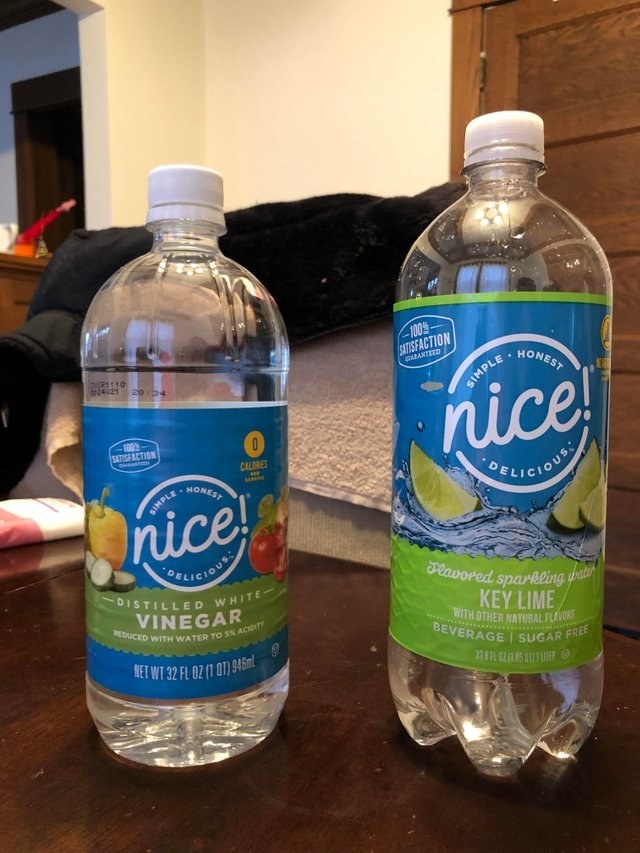
Whoever thought making a vinegar bottle identical to a seltzer bottle was a good idea.
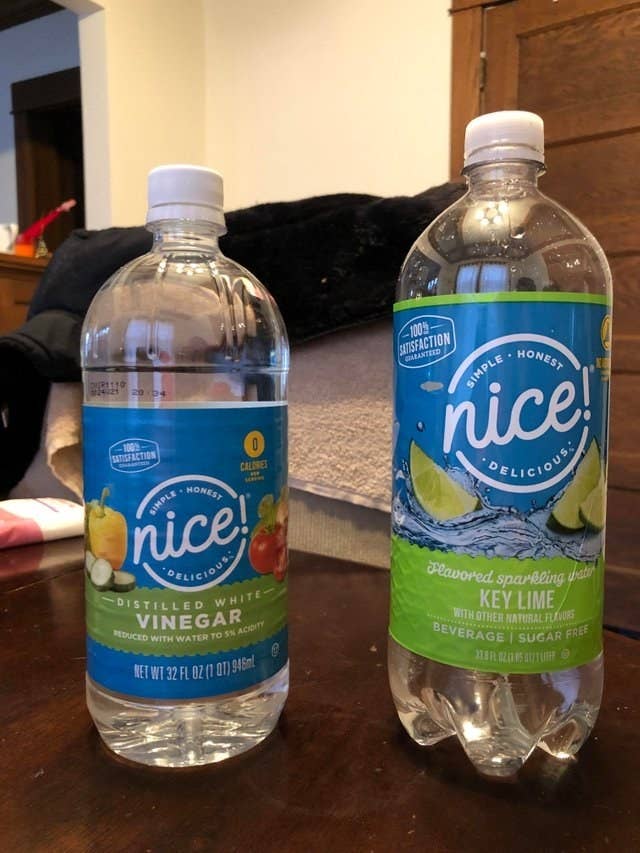 And finally, whoever designed this screwdriver packaging which can only be opened with a screwdriver.


The Argument for Gene Editing
From the reaction he solicited, you’d think He Jiankui had genetically modified that giant steer Knickers — then stepped in its 40-pound droppings.
Instead, he “genetically edited” the embryonic genes of twins born to Chinese parents, one stricken with the HIV virus. 
The outrage was swift and gasoline soaked. Jiankui faced a scientific backlash that ranged from accusations of playing God to opening the door to boutique babies.
My question: why?
I suppose its natural for humans to fear science. Look at our historical reaction to it: We executed scientists who dared suggest we weren’t the center of the universe, or that epilepsy wasn’t a demon curse. From Y2K to Artificial Intelligence to Genetically Modified Organisms to our president’s rejection of his scientists’ findings on global warming, our instinct appears to be shoot first and learn later.
Bioethicists, in particular, are enjoying their rare day in the media sun. More than 700 incensed scientists packed the 2nd International Summit On Human Genome Editing last week to give Jiankiui the what for.
And, to his credit, Jiankui accepted the heat, apologizing that his work was not peer reviewed beforehand, and acknowledging that details of his (government approved) work should have never been leaked on YouTube.
But the reaction on both sides, while vitriolic, demonstrates the beauty of science. Imagine similar outrage within the same cult of Catholicism or Jehovah’s Witnesses, where pedophilia runs rampant and poses a far graver threat to humanity. Their solution is not to solve the epidemic, but to secretively move priests and elders to a fresh set of victims.
That’s not the scientific way, though the perverted logic tracks similarly. Let’s look at a few criticisms of gene editing.
University of Wisconsin bioethicist Alta Charo, who helped organize the summit, issued the harshest critique of He’s work, calling it “misguided, premature, unnecessary and largely useless.”
“The children were already at virtually no risk of contracting HIV, because it was the father and not the mother who was infected,” she said.
According to a recent UNICEF study, globally, it is estimated that more than 1,000 babies are born with HIV every day. Try comforting those parents with gender-based probabilities.
Next comes the “playing God” argument. Marcy Darnovsky, Ph.D., executive director of the Center for Genetics and Society recently wrote an op-ed piece for National Geographic. This was her summary conclusion paragraph:
“Permitting human germline gene editing for any reason would likely lead to its escape from regulatory limits, to its adoption for enhancement purposes, and to the emergence of a market-based eugenics that would exacerbate already existing discrimination, inequality, and conflict. We need not and should not risk these outcomes.”
The “could” argument is perhaps the most specious defense in human dialectics. The argument that a venture could go wrong negates any risk of venture. Had it held sway years before, would we have eradicated smallpox, malaria, polio and dozens of other diseases I don’t know shit about, but were apparently significant human threats (Rinderpest, Dracunculiasis, Hookworm, Yaws, Lymphatic filariasis, etc.). And the notion that we “should not” allow research is, at best, Orwellian. 
Next, boutique babies. What the hell that does that even mean? That we’d scientifically engineer our babies to be taller, stronger, have blue eyes? Who gives a shit? We want ’em shorter and weaker? We socially try to create boutique babies everyday, from elite educations to space camps to “faith-based” initiatives to de-program our kids from being gay. Don’t believe in our love of boutique babies? Walk into a Baby Gap store.
We’re already fully immersed in genetic alterations. More than 40% of the sugar the U.S. consumes has GMOs to battle pesticides — a genetic modification we embrace so bugs don’t eat our food before we do. The E. coli outbreak of romaine lettuce was caused by tainted irrigation water, not test tube tomfoolery.
Finally, and most importantly, the arguments against genetic tinkering are founded on a precariously flimsy assumption: that natural is good. Tsunamis are natural. So are earthquakes. We surely exacerbate natural threats, but we don’t predate them. Nature created AIDS (in 1959, scientists agree, when an HIV-infected chimp bit a man from Léopoldville in the Belgian Congo). Damn you, monkey scientists!
The legitimate criticisms of Jiankui’s discovery are based in practice, not principle. And even he agrees the practice should be more transparent, more peer-reviewed. But there’s no jamming Pandora back in her box.
Oh, and Knickers? He wasn’t genetically modified. Just a big-ass neutered male cow. Let’s try not stepping in his pies.
https://www.youtube.com/watch?v=-FIMvSp01C8