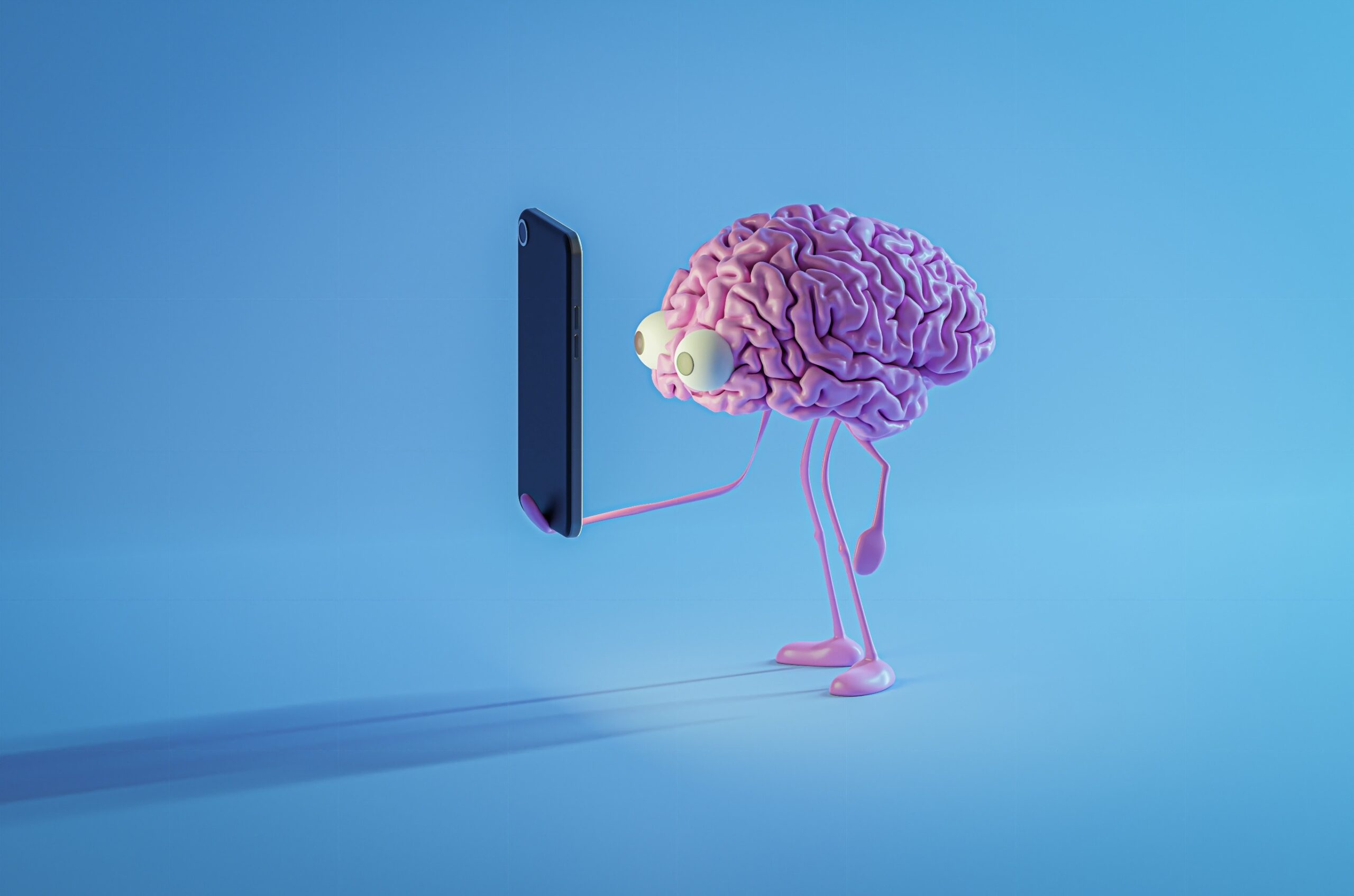
Ridgeland Oxford named “brain rot” its 2024 Word of the Year after its use rose 230% in one year, though the term has been around for decades. The phrase describes the decline of a person’s mind through the consumption of trivial material, especially online. It sounds like a diagnosis born with TikTok, ChatGPT and the infinite scroll.
Henry David Thoreau used the term in Walden in 1854.
He watched Americans choose simple ideas over complex ones. He hyphenated, called it brain-rot. The country had yet to meet the radio, television or artificial intelligence. People still found ways to let their minds decay.
We have always chosen to engage in brain rot.
Each generation blames a new machine for delivering it. Radio would weaken children. Comic books would corrupt them. Television became the boob tube. Video games would turn them violent. Social media would destroy their attention spans.
Now artificial intelligence has arrived to finish the job.
The warnings carry some truth. A 2025 analysis examined 71 studies involving more than 98,000 people. Heavy use of short-form video showed an association with poorer attention and impulse control. Another experiment found that rapid switching among short videos made people worse at remembering something they had planned to do. Brain imaging research suggests that learning through short videos can interfere with the mental work required to connect information and retrieve it later.
Scientists have also raised concerns about “cognitive offloading,” the habit of handing mental work to artificial intelligence. A student asks AI to read the chapter, form the argument and write the paper. The assignment gets completed. The brain skips the assignment.
That distinction matters. A hammer can build a house or crush a thumb. The hammer receives little credit for either outcome. Human hands choose how to swing it.
Artificial intelligence can write your essay. It can also explain quantum mechanics until you understand it. It can solve the math problem or teach you how to solve it. It can summarize the book or argue with you about what the book means.
The machine offers both doors. We choose which one to open.
That choice existed long before AI. Television carried Shakespeare and game shows. Radio delivered Edward R. Murrow and jingles for cigarettes. Newspapers published investigations that toppled governments alongside gossip columns that preserved nothing beyond the morning train ride.
The delivery system never made the decision for us.
You could spend an afternoon watching television. You could choose to read a book. You could drive with a machine calling out each turn. You could choose to read a map and learn where you stood in relation to the world.
A map demands something from the brain. It asks us to establish direction, measure distance and imagine a place beyond our sight. A navigation app says turn right in 500 feet.
Both get us there. Only one requires us to know where we are.
That describes the choice AI presents. We can use it to extend thought or replace thought. We can ask it to challenge an idea or manufacture one. We can treat it as a teacher or hire it as a substitute student.
Media coverage tends to focus on young people, as though a generation woke up one morning with weakened minds. Adults built the platforms. Adults designed the algorithms. Adults discovered that passive attention could become a product and sold it by the second.
Then adults blamed the children who consumed it.
Young people still possess the same choice their parents had. So do their parents. The choice has grown harder because the newest machines study our habits and learn how to hold us. Yet difficulty leaves agency intact.
Brain rot also carries a seductive excuse. If AI ruined our minds, responsibility belongs to AI. If TikTok shortened our attention, TikTok can answer for the hours we surrendered. If an algorithm chose everything we watched, we become bystanders at the decay of our own intellect.
We deserve more credit and more blame.
The brain responds to use. Attention grows through attention. Memory grows through memory. Curiosity grows each time we follow a question past its easy answer.
AI can help us travel farther down that road. It can also spare us the journey.
The choice is ours. It has always been.