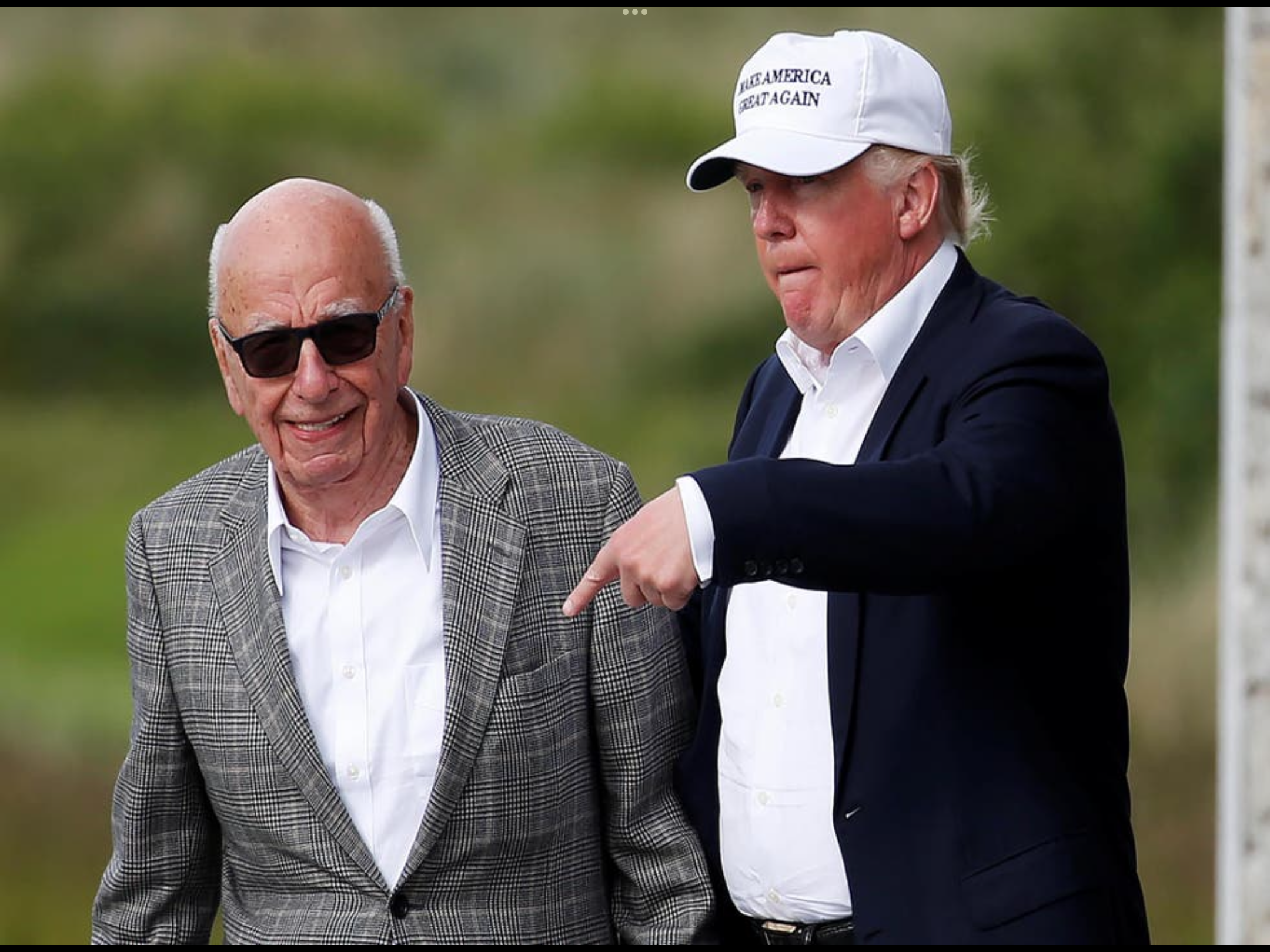
webpage When the sitting president sues Rupert Murdoch for $10 billion, you don’t get a trial. You get a reckoning.
Donald Trump’s defamation lawsuit against Murdoch, the Wall Street Journal, and two of its reporters is a lit match at the edge of a dynamite shed called discovery.
Because if this thing survives a motion to dismiss, it kicks open every locked drawer in the newsroom, the boardroom, and Mar-a-Lago. Discovery is where both sides get subpoena power. It’s the phase where receipts get pulled, reputations get x-rayed, and no one—especially not Trump—controls the narrative.
Trump claims the Wall Street Journal defamed him by reporting on a cartoonish birthday letter allegedly sent to Jeffrey Epstein in 2003.
The letter, supposedly found in Epstein’s files, contains a nude sketch, a bawdy caption, and Trump’s signature. Trump says it’s fake. That’s a bold claim. Discovery says: prove it.
That means:
Handwriting analysis. Was the signature real? If not, who forged it—and why?
Murdoch on the record. A deposition at 93 isn’t just a legal formality. It’s legacy exposure. Trump’s team may relish the optics, but Murdoch’s lawyers will fight to the teeth to keep him off the record.
Reporters under oath. Khadeeja Safdar and Joe Palazzolo could be grilled about sourcing, editorial notes, verification chains—everything. Discovery tears open the process.
Access to Epstein’s files. If the card was in Epstein’s archive, how was it obtained? Who authenticated it? Were there corroborating materials? Discovery opens that vault.
But this knife cuts both ways.
Murdoch isn’t new to Trumpworld. He’s been both confidant and kingmaker. Which means he had to know a lawsuit was coming the moment the story dropped.
Trump sues like other men tweet. Murdoch also had to know he’d need more than hearsay to back this one up.
You don’t poke that bear without a fireproof file cabinet. If the Journal ran the piece, it’s likely because Murdoch knew he had the goods—or at least enough to hold up in court.
The defense will dig into Trump’s history with Epstein. They’ll want calendar entries, guest lists, party photos, voicemails, internal memos, Secret Service records—anything connecting the two men. They’ll ask Trump to account for years of conflicting statements. And they’ll do it under oath.
Even better? Defamation suits involving public figures require proof of actual malice. That means the Journal had to knowingly publish a lie—or be recklessly indifferent to the truth. To show that, Trump’s lawyers will need to expose editorial negligence, if not sabotage. That requires access to internal Wall Street Journal deliberations, Slack threads, edit meetings, and emails—possibly from Murdoch himself.
Trump’s gamble here is enormous. The case cracks open every corner of his past that touches Epstein, sex, scandal, or satire. It dares the media to go deeper. And it risks Trump being forced to testify under penalty of perjury about the very things he’s spent decades dodging.
But maybe he’s counting on this never reaching that stage. Maybe the lawsuit is the show. Maybe it’s just a political cudgel, a headline, a shiny object for the base. That’s possible.
Still, lawsuits have rules. And once discovery starts, the rules take over.
Trump sued for $10 billion. What he may have opened was a window—straight into his own archives.