Not too deep into the Netflix film The Last Thing He Wanted, the spunky heroine is given a warning: “Buckle up. It’s gonna be bananas!”
It’s advice that checks out. It’s definitely bananas, but not those fancy, ripe, yellow ones Cheetah gets at Tarzan & Jane’s jungle soirees. These are more the splotchy, half-decomposed bananas with those cancerous brown chunks throughout of the fruit.
Director Dee Rees has stumbled badly with her adaptation of Joan Didion’s novel of the same name, creating a messy, disorientating and meandering film. It’s the last thing we wanted.
Rees, who helmed Mudbound to acclaim, directs and co-writes the screenplay with Marco Villalobos and they clearly admire the novel. That leads to pointless scenes, too many minor characters and a lack of precision. For a thriller, there’s also an alarming lack of thrills. So often this films feels like a balloon repeatedly blown up and then just as soon deflated.
(Mudbound)
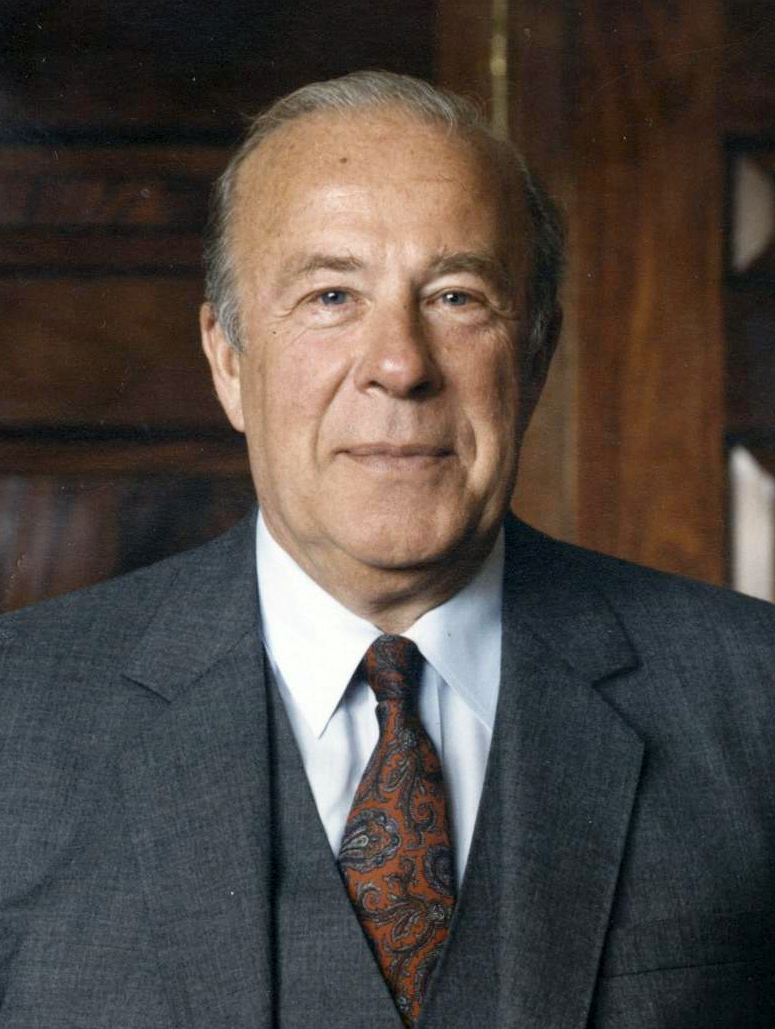
Viewers might need to do some homework beforehand and get familiar with Nicaragua in the 1980s. Knowing who the Sandinistas and Contras are is crucial. Being patient with lots of cryptic geopolitical conversations is also a plus. This isn’t based on a true story, but then we oddly get a portrayal of former Secretary of State George P. Shultz. (Look away, Shultz fans. It isn’t pretty.)
The movie stars Anne Hathaway as the middle-aged woman at the heart of the book. Hathaway’s Elena McMahon has walked out of her life. Actually she does it twice. We meet her as a hard-nosed journalist who has already fled a cossetted existence and wealthy husband. Then we see her flee that high-flying career in order to aid her ailing dad.
Dad (Willem Dafoe, terrific) is a curmudgeonly arms dealer who has manged to arrange one last exchange which will net him $1 million, a lot in the mid-80s. But his memory is failing and he gets confused so he asks his daughter to fill in for him. So that’s how we get Elena in a cocktail dress standing on a remote airstrip in Nicaragua with cases of guns, bullets and land mines.
Somehow the irony of this situation isn’t fully explored. Here we have a righteous journalist who just a few minutes before was declaring “We can’t just look away!” about Central American atrocities who’s now smuggling in the exact weapons fueling the violence. But Elena is moving too quickly to think about it — she’s fallen deep into a twisty conspiracy wrapped in an enigma hidden in a lousy script.
Somewhere in the film is a lesson about corruption of the soul or the venality of nations. But “ The Last Thing He Wanted ” is both too small and too large, unable to tell the whole story of the U.S. meddling in Central America and yet unable to really tell the story of one woman, either.
There are moments when Hathaway really reveals a hurt deep inside — a scene in which she opens her dad’s empty fridge is deeply affecting — but the individual scenes don’t add up to a real portrait. The film also stars Ben Affleck as a shadowy figure and he has decided that being quiet and blank is the best option here, except for a scene in which he eats pie with Shultz, which is just bizarre. There is criminally too little Rosie Perez as well.
The first half doesn’t fit with the second half, there are too many distractions and the filmmakers think it’s clever to leave clues but they do it clumsily and at the last minute and it’s really exhausting for the viewer. There’s a whiff of The Year of Living Dangerously, a little Air America and even some of Graham Greene’s The Quiet American.
But whiffs aren’t enough. Ultimately, Last Thing is a banana peel on which everyone has slipped.
Last night, on my way to dinner, I received a text from the Elizabeth Warren campaign. I’ve received many as California heads toward its Super Tuesday primary vote. This time I decided to engage. Unlike Donald Trump’s perfect phone call, you really can read this transcript, in its entirety:
Warren’s office: Hi there! It’s Dana with Warren for President. Is this Guy?
Me: The one and only. (FYI: Calls are recorded to ensure quality of service.) How can I help you?
Warren: I’m volunteering for Elizabeth because corruption in Washington is preventing real change, and Elizabeth is determined to be a president who works for the people, not big donors. Which presidential candidate are you planning on supporting in the upcoming California primary?
Me: Please answer this one question that keeps me on the fence, and moderators will not ask.
Warren: I would love to!
Me: Let’s say, god willing, Liz wins. How does she plan to take the keys to the WH when Donnie Dimwit refuses? Because you know, if he contests an election he WINS, he will certainly claim her victory fraudulent.
He’s already made a strategic appointment of a lackey in the Defense Dept.
(Richard Grenell, Trump’s new head of U.S. Intelligence)
The question is far more important than Medicare, the tax plan, you name it. The contender for the Dems needs to answer that primary question before getting to those secondary ones.
So where does she stand on that issue? Thank you.
Warren: I completely understand that and it’s a great question! Luckily, she has a great plan for that called “Restoring Integrity and Competence to Government After Trump.” It may not answer all your questions, as Trump is pretty unpredictable, but you can find it here: https://elizabethwarren.com/plans/after-trump
Me: You know her team needs something stronger than a url. Liz needs to do the Constitutional research to have a strong answer about how a sitting president is forcibly removed from office. Then offer something like this: “I believe our military (or whatever agency is required) will follow the Constitution and take the necessary measures.”
Warren: They definitely have strong plans, I just wanted to send you the link so you could read the plan straight from her mouth (or, rather, her hands as she typed it up)! It is hard because there is no Constitutional precedent so even though Trump resisting a peaceful transition of power is clearly unconstitutional, nobody knows quite yet how to prepare. She was a law professor though and has supreme knowledge of the Constitution, so I trust her!
Me: Good answer. Still needs a polished response, because sooner or later, it will come up. Best of luck. Oh, and float this by her, too. 🙂
Warren: I absolutely understand that! Thank you so much. And I’ll read your article. 🙂
When I got back home, I visited the Warren web site, an impressive manifesto that lists, by bullet points, what she would do in office. I highly recommend reading it. Among her promises:
My administration will not hire any current lobbyists.
My administration will not hire employees of for-profit federal contractors, unless I personally review the situation and decide it is in the national interest.
My administration will not hire executives of companies that break federal law or are under investigation unless six years have passed since the conclusion of the investigation or enforcement action.
My administration will not hire any person who receives a “golden parachute” from their employer.
To prevent conflicts of interest, officials in my administration will have to divest from any individual stock, bond, or other investment that federal ethics officials determine may be directly influenced by the actions of the employee’s agency.
Senior officials in my administration will be required to divest from all complex investments – including individual stocks and bonds, as well as commercial real estate and privately-owned or closely-held businesses.
Senior officials must also commit to divesting any interests in family trusts if ethics officials determine that an asset belonging to the trust might pose a conflict of interest.
It was in impressive list, with even more bullet points and specific proposals on the site. A nice dose of determinism and detail, and a respite from the glib ad pitches on the 24/7s.
But not one word in the entire screed about how to evict a squatter (literally) who refuses your notices of eviction. Whatever the volunteer thought Warren’s plan contained, it was not on Liz’s official website.
So I Googled it myself, with the following question: “What does the Constitution say about forcibly removing a sitting president?”
Turns out, the answer was as frightening as the question. The best I could find was a section of the 25th Amendment, which has become a chant of sorts among Never Trumpers, as its the only Amendment that even mildly addresses the issue when impeachment fails. Turns out that’s a red herring too.
Under the 25th Amendment’s fourth stipulation, it would only take 14 people to depose the president — Vice President Mike Pence and 13 of Trump’s 24 Cabinet members.
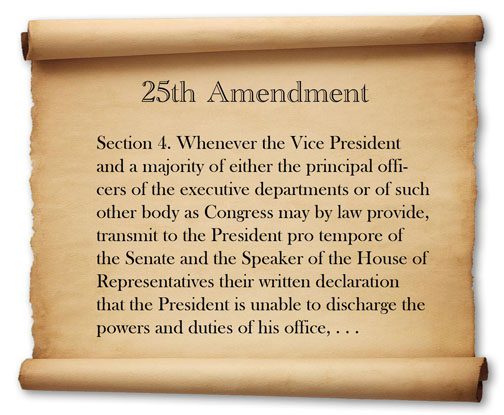
Section IV of the amendment reads:
“Whenever the Vice President and a majority of either the principal officers of the executive departments or of such other body as Congress may by law provide, transmit to the President pro tempore of the Senate and the Speaker of the House of Representatives their written declaration that the President is unable to discharge the powers and duties of his office, the Vice President shall immediately assume the powers and duties of the office as Acting President.”
Translation: We’re screwed.
Look at the wanted poster above. Now spot 13 who would vote against President Pussy Grabber. Then imagine Pence, whose only job is White House wallpaper, leading that Gang of 13 through the revolt. If you did, please PayPal $100 to this site for your very own piece of the Brooklyn Bridge.
The truth is, the framers of the Constitution never envisioned that a man who hated his government winning election its highest office. Just as Catholics likely don’t have policy for removing a Pope who finger diddles little children (shit, they don’t have one for priests).
That’s the problem with genuflecting to any aged text. Times will change. Type will not.
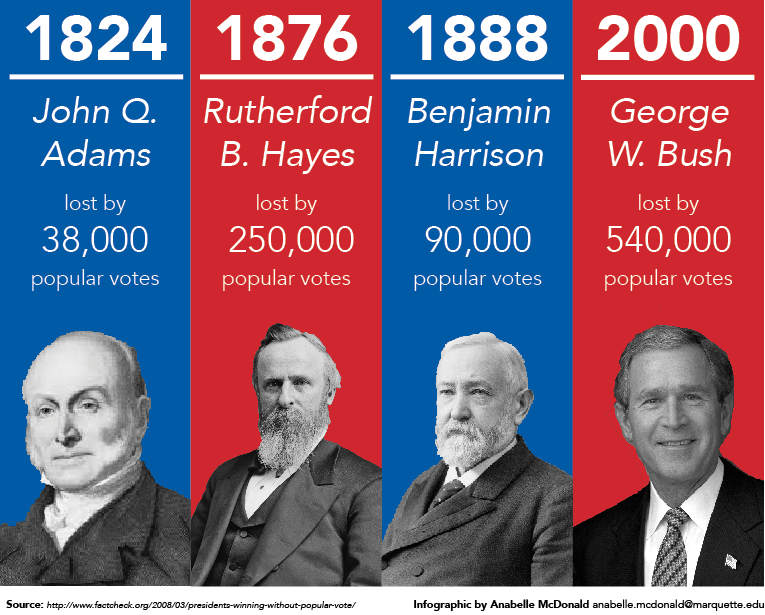
Yet, here we are. We’ve reached the point, with Trump’s transgressions in office, that he could, at least technically, lose a presidential election. He certainly could lose the popular vote, as he’s only the fifth president (after Adams, Hayes, Harrison and Bush II, all Republican) to take office on a technicality, the electoral college.
But even should he lose the electoral vote as well, who, exactly, leads the eviction? How do we respond when he contests the results and claims, as we know he would, that millions of illegal immigrants voted against him? Or that the Russians meddled, as they already are? And who would senators want as president during the appeals process? How would a Trump-weighted Supreme Court vote when it inevitable reached their desks?
There’s good reason to expect this scenario, beyond Trump’s toxic narcissism: The moment Trump leaves office, he becomes a civilian. A sue-able, arrest-able civilian. Should that day ever arrive, there must be a miles-long line of lawmakers and law enforcement brass eager to put bracelets on Trump.
Which is why that day will probably never come. The Giulianis and Dershowitzes of his staff would surely delay a legal decision until fat ass is either dead or dictator. Let’s take it further: Can anyone, wannabe president or casual reader, picture a scenario where Trump loses an election, offers a hand to the victor and says “Good contest, (sir/madam), here are the keys. Don’t forget: You have to jiggle the master bedroom toilet handle.”
So I’ll repeat my question to the polite- but ill-informed Dana. Which candidate is going to offer a real answer, should we in the media ever work up the nerve to ask that question on a debate stage?
My guess is none, perhaps because the presidency itself has become irrelevant.
We know its time for Donnie to go. We also know he won’t.
So perhaps we should start focusing on the office with any real power — the Senate.
Last year, the HB became the first news outlet in the country to employ an LTP, a Limited Twitter Policy, which mandates that coverage of the social media tool be limited to actual news. The respite from Trump’s verbal vomit has been a joy I’d suggest every media outlet try.
But we’re taking a respite from the respite today, because Twitter actually was the story.
You see, a day after Wednesday’s Democratic primary debate, Trump sausage-pecked a tweet criticizing a Washington Post reporter for a typo in one of her tweets following the feisty debate.
Trump ― who has misspelled both his and his own wife’s names on the social media platform ― poked fun today at The Post’s conservative columnist Jennifer Rubin for mistakenly writing “Bloombefg” in a tweet about 2020 presidential hopeful Michael Bloomberg.
Here’s what Donnie Dimwit posted:
Donald J. Trump
@realDonaldTrump
@JRubinBlogger (Jennifer Rubin), the wacko “conservative” of the @washingtonpost, must learn how to spell the name Bloomberg before it is too late & he is gone!
Such pot- and kettle-calling was all the motivation I needed to do a modicum of reporting. So I looked up some of the times the leader of the free world put his stable genius (he knows the best words, I hear) on display.
Caveat: This is by no means a complete list. And I didn’t attempt to divine any sense from Donnie’s CapiTalizati0n weirdness. The only thing we could do with his illiterate ramblings was try to alphabetize them. (That means to rank words by their first letters, Mr. President).
Here are some of his most memorable word turds:
The Boarder (as in a boarder wall)
Hamberder
Highjacked
Honered
Marine Core
Seperation
Smocking gun
Special Council
Teresa May
Waite
Wire tapp
Wonerful
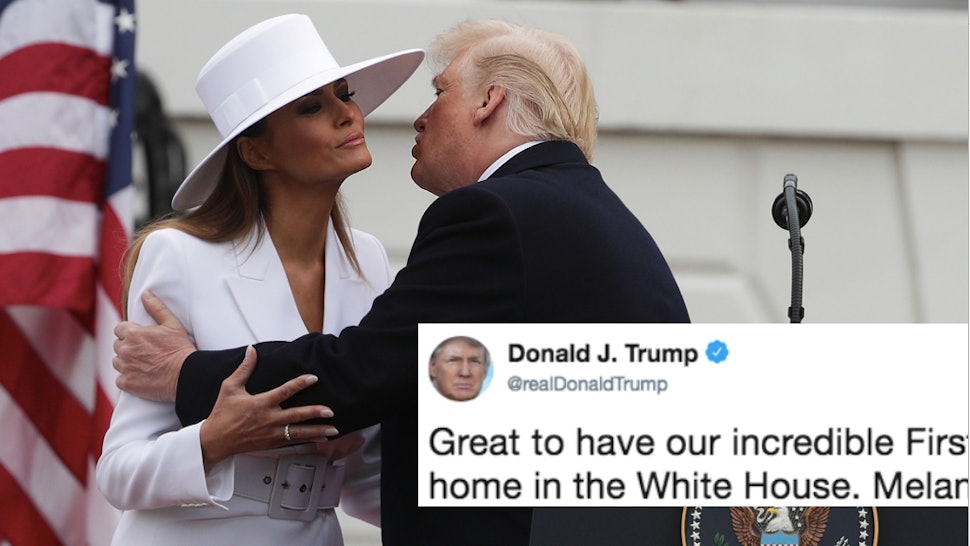
And who could forget his lovely wife, Melanie?
Back when my mother was in grade school in North Carolina, she was ousted from a school spelling bee on the word “misspell.” She used one “s.”
Too bad Donnie wasn’t your school principal, Mom. You were homecoming queen; he probably would have changed the school’s official spelling of the word just to impress you.
We now return to our regularly-scheduled LTP programming. Thank you.



:no_upscale()/cdn.vox-cdn.com/uploads/chorus_asset/file/19737721/The_Last_Thing_He_Wanted_00_15_03_14_R.jpg)