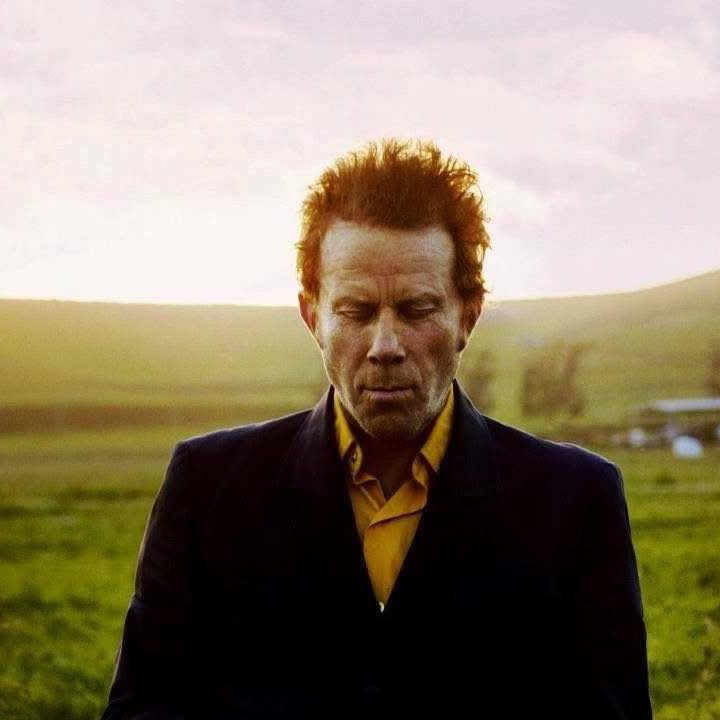
“My kids are starting to notice I’m a little different from the other dads. “Why don’t you have a straight job like everyone else?” they asked me the other day. I told them this story: In the forest, there was a crooked tree and a straight tree. Every day, the straight tree would say to the crooked tree, “Look at me…I’m tall, and I’m straight, and I’m handsome. Look at you…you’re all crooked and bent over. No one wants to look at you.” And they grew up in that forest together. And then one day the loggers came, and they saw the crooked tree and the straight tree, and they said, “Just cut the straight trees and leave the rest.” So the loggers turned all the straight trees into lumber and toothpicks and paper. And the crooked tree is still there, growing stronger and stranger every day.” ― Tom Waits
Not a metaphorical one, either. A real bird of prey, circling above a country dazed by déjà vu. We’ve seen this crow before — in the cotton fields and the chain gangs, at the lunch counters and bus stops. Its name then was Jim. Or Jane. Now it’s Juan.
Juan Crow, the term coined by journalist Roberto Lovato, describes the network of laws, customs, and power structures designed to isolate and punish undocumented immigrants. Under Trump’s second term, that crow has grown meaner, hungrier.
And it’s not just circling immigrants anymore. It’s eyeing citizens. It’s eyeing anyone not white enough, quiet enough, grateful enough.
This isn’t just policy. It’s ideology. A full-throated return to white rule, dressed in executive orders and wrapped in the flag. And it’s working.
Start with ICE. The border agency has become a domestic army, empowered to detain without probable cause. Agents don’t need warrants. They don’t need to explain. They just need to point, grab, and vanish people into a detention system described by Human Rights Watch as a mash-up of Guantánamo and Jim Crow prisons: concrete floors, rotten food, denied medicine, shackled hands.
Trump’s team has brought back quotas for arrests. Imagine that: a daily number of bodies to round up. Not criminals — people. Most of those detained have no violent record. Many have no record at all. But they’re brown. Or Muslim. Or loud. So the crow swoops.
The cruelty is the point, of course. It’s spectacle. Look at the photos shared by DHS Secretary Kristi Noem — shots from a Salvadoran mega-prison meant to stir fear, to signal what “law and order” looks like in the MAGA state. The implication is clear: if you’re not on the right side of the line, we have cages waiting.
It’s not just immigrants, either. Birthright citizenship is under attack. The 14th Amendment — once used to grant rights to formerly enslaved people — is being reinterpreted to deny rights to the children of immigrants. “It was meant for the babies of slaves,” Trump said recently, brushing aside the Equal Protection Clause like it was a typo.
Even citizens aren’t safe. Trump now openly muses about denaturalizing Americans. He laughed along with Fox’s Peter Doocy when asked if he’d deport Zohran Mamdani, a New York politician born in Uganda but raised here. “We have bad people who’ve been here a long time,” Trump said. “Many of them were born here.”
That’s not dog-whistle racism. That’s bullhorn fascism.
And we’ve seen it before. In 1915, Woodrow Wilson hosted a screening of The Birth of a Nation at the White House — a film that mythologized the Ku Klux Klan and cast Black men as monsters. Today, we have executive orders instead of film reels, ICE instead of white hoods. But the effect is the same: rewrite the rules of belonging.
Trump’s second term has one goal — to finish what the first started. Project 2025, led by the Heritage Foundation, outlines exactly how: purge the civil service, gut constitutional rights, and restore “order.” It’s Confederacy 2.0, with better branding.
The question isn’t whether Juan Crow is back. It’s how far he’ll fly.
Because once you normalize this — once you accept masked agents, detention quotas, and deportation threats for U.S. citizens — it’s already too late.
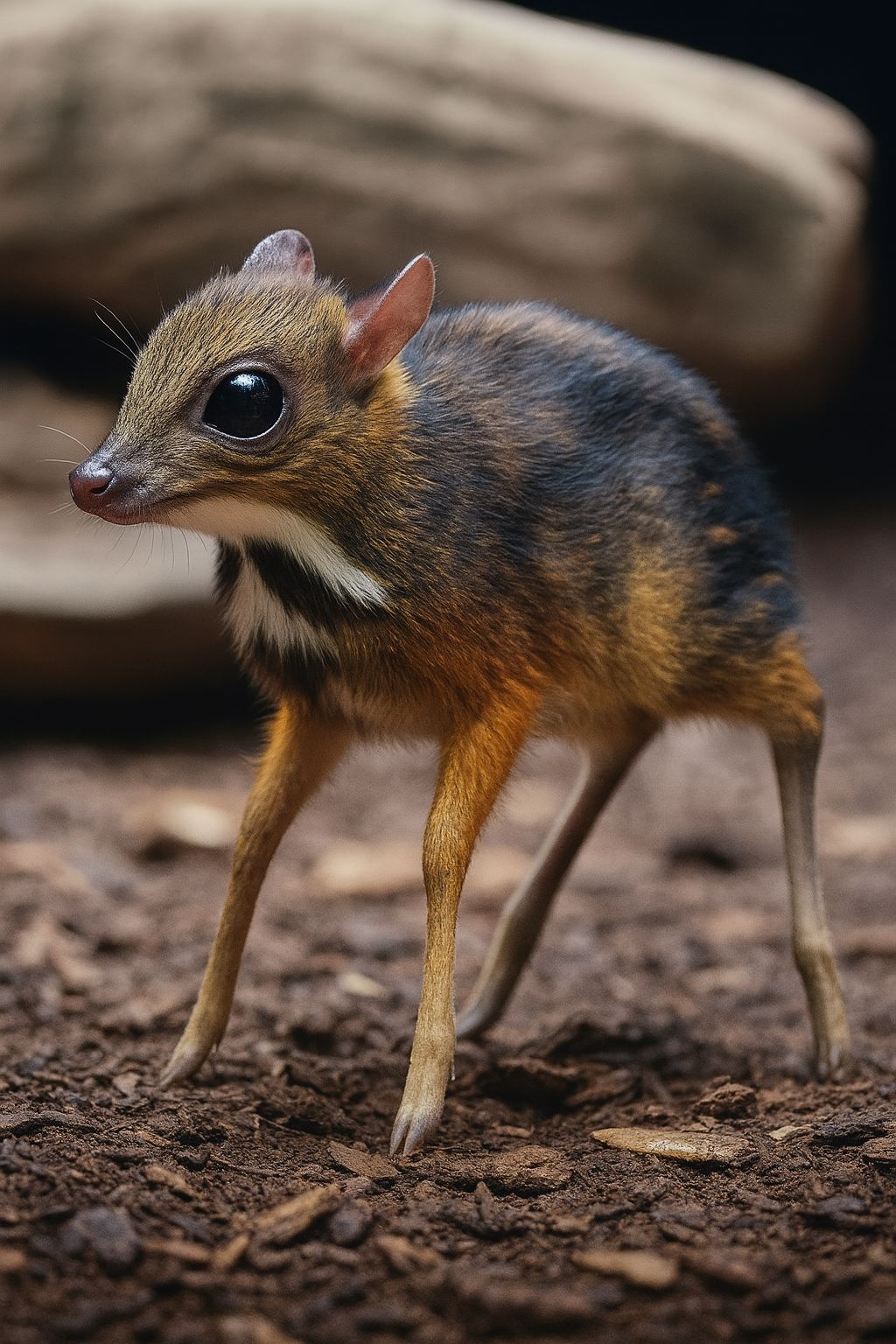
cytotec online Old Soul, Tiny Frame Mouse deer—Tragulus and Hyemoschus—have walked the planet for over 30 million years, surviving epochs that wiped out giants.
No Antlers, Just Fangs Males grow fang-like tusks instead of antlers, which they use in silent, tense duels. Nature’s smallest saber-toothed vegetarians.
Stealth Mode by Design Weighing under 5 pounds, with pencil-thin legs, they vanish into forest shadows before you know you’ve seen them.
Back from the Brink In 2019, the silver-backed chevrotain was rediscovered in Vietnam—last seen in the 1980s, forgotten by science but remembered by locals.
Digestive Overkill Despite their size, they ruminate like cows—with multi-chambered stomachs that turn twigs and leaves into pure stamina.
Asia: Vietnam, Malaysia, Indonesia (Sumatra, Java, Borneo), Thailand, Sri Lanka, India
Africa: The water chevrotain roams rainforests in Congo, Gabon, Ivory Coast, and more—often found by rivers They live in thick tropical forests, near water, and out of sight. Always.
Quiet Loners They’re solitary and often nocturnal or crepuscular, preferring to haunt twilight over daylight. No calls. No herds. No drama.
Forest Blurs They can run up to 20 mph—impressive for something the size of a football. Try catching one on foot. You won’t.
Folklore Phantoms In Southeast Asian lore, they’re tricksters and shapeshifters—symbols of humility, cleverness, and the art of being overlooked.