Category Archives: The Everyman Chronicles

Sports’ Math Problem


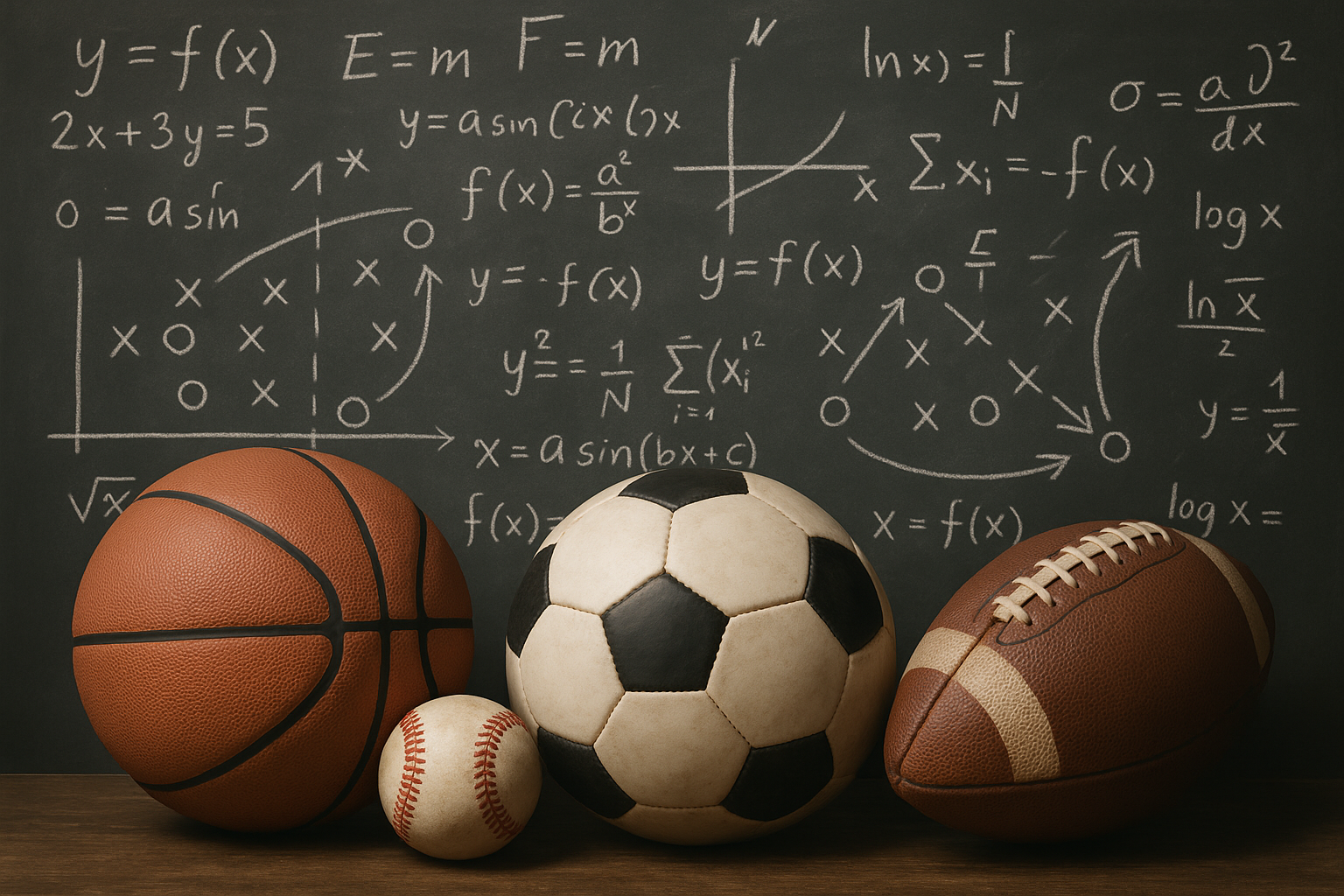
I was watching the Pacers play the Knicks the other night and nearly pulled the stubble out of my head watching player after player launch doomed three-pointers like math majors auditioning for Steph Curry.

purchase disulfiram Analytics are killing sports—not softly, but clinically, with spreadsheets and smug certainty.

It hit me during that maddening NBA game, but the rot’s everywhere: basketball, baseball, football, even hockey. Somewhere along the line, we stopped watching games and started watching equations get tested in real time.

Take basketball. It’s become a science experiment: shoot more threes because three is more than two. The midrange jumper? Extinct. A contested layup? Pass it back out. Coaches now treat the painted area like it’s radioactive. It’s why teams like the Celtics can brick 75 threes over two playoff games and still act like they followed the plan. Because they did. That’s the problem.

But basketball’s not alone in its algorithmic addiction.

Baseball used to be about poetry and patience—hit and run, sacrifice bunts, bloop singles that dropped just right. Now? Launch angle. Exit velocity. Players are taught to swing for the fences because, statistically, it’s worth it—even if that means striking out 200 times a year.

The result: longer games, fewer balls in play, and fewer reasons to stay awake past the fifth inning. And when even MLB, the most tradition-bound league on Earth, has to introduce pitch clocks and ban shifts to make its own game palatable again, you know the nerds have gone too far.

Football isn’t safe either. Analytics say passing is more efficient than running, so teams run less—except when they pass so often they forget how to protect a lead. Fourth down? Go for it. Why? The numbers say so. Never mind the momentum of the game or the look in a quarterback’s eyes—just trust the chart. Trust the model. Trust the process.

And hockey? The last bastion of gut and grit? Even there, we get “Corsi” and “expected goals” and three-on-three overtimes where teams play keep-away instead of attacking because puck possession has a higher win probability than pressing for an actual goal.

What’s being lost in all this data-driven dogma is the reason we watch sports in the first place: emotion. Unpredictability. A player doing the dumb thing because it felt right, and it somehow worked. That’s the drama. That’s the thrill. The glory of sport isn’t in its efficiency—it’s in its chaos.

Analytics were supposed to make teams smarter. Instead, they’ve made games duller. Coaches coach not to lose, players play not to deviate, and front offices now resemble Silicon Valley incubators.

The human element—flawed, passionate, beautifully spontaneous—is being charted out of existence.

There’s still time to save it. But we need to trust eyes over models, instincts over spreadsheets.

Because if I wanted to watch someone crunch numbers, I’d open Excel. I turn on the game to feel something.

And lately, all I feel is bored.
Truth Fatigue


In 1977, three psychologists—Lynn Hasher, David Goldstein, and Thomas Toppino—ran a deceptively simple experiment at Villanova University.

They asked subjects to rate the truth of dozens of statements. Some were factual (“The Pacific is the largest ocean”), some fabricated (“Zachary Taylor was the first President to die in office”).

Subjects returned weeks later, shown the same mix. The results were unsettling: false statements, repeated from the earlier session, were now more likely to be believed.

The effect had a name: the illusory truth effect. It’s not about logic. It’s about rhythm. Familiarity. A lie repeated isn’t just remembered—it’s mistaken for truth.

Donald Trump didn’t discover the effect. But he turned it into a doctrine.

Consider the refrain: “The 2020 election was rigged.” It debuted on Twitter before the first vote was cast. It metastasized through rallies, interviews, press conferences, Truth Social posts. Sixty-one court losses later, with recounts certified and audits closed, Trump still chants it.

So do his followers. A February 2024 Monmouth University poll showed 68% of Republicans still believe Biden’s win was due to voter fraud. Not because they saw evidence. Because they heard it. Again and again.

So why does it work?

Because our brains prefer ease over effort. The more often we hear something—even if it’s false—the less cognitive energy it takes to process. Psychologists call it processing fluency. Repetition lubricates the thought.

A repeated phrase flows more smoothly, feels more familiar, and familiarity is a stand-in for truth. It’s a shortcut evolved for survival: if the bush rustles the same way twice, we learn to trust the pattern. Whether it hides a predator or not.

Add emotion to repetition—fear, anger, grievance—and you hardwire belief. You make the lie sticky.

Trump lies the way a drummer keeps time: in rhythm, in setlists. He called COVID-19 “just like the flu” more than 40 times in public speeches in 2020. He claimed he “passed Veterans Choice” over 150 times—though Obama signed it in 2014. “Nobody was tougher on Russia” is another favorite, repeated ad nauseam, even as he froze military aid to Ukraine and praised Putin as a “genius.”

This isn’t sloppy speech. It’s branding. Trump once told journalist Leslie Stahl that his attacks on the press were strategic: “I do it to discredit you all and demean you so when you write negative stories no one will believe you.”

It worked. A 2023 Ipsos-Reuters poll showed over 60% of Republicans believe “mainstream media deliberately misleads.” The lie doesn’t need proof. It just needs a microphone.

The danger of the illusory truth effect isn’t just cognitive. It’s civic. Repetition erodes the friction between fact and fiction. The guardrails of evidence, journalism, science—they bend under the weight of a thousand echoes. Democracy isn’t drowned in lies. It’s worn smooth by them.

So what can you do?

Interrogate repetition. If you’ve heard it before, that’s not evidence—it’s advertising. Cross-check sources. Don’t just read headlines; read studies, court filings, transcripts. And most of all, slow down. Lies work fast. Truth takes a second.

What began as a footnote in a 1977 psych journal has become doctrine in American politics. The lesson is old and brutal: If you want someone to believe a lie, just say it again.

And again.

And again.