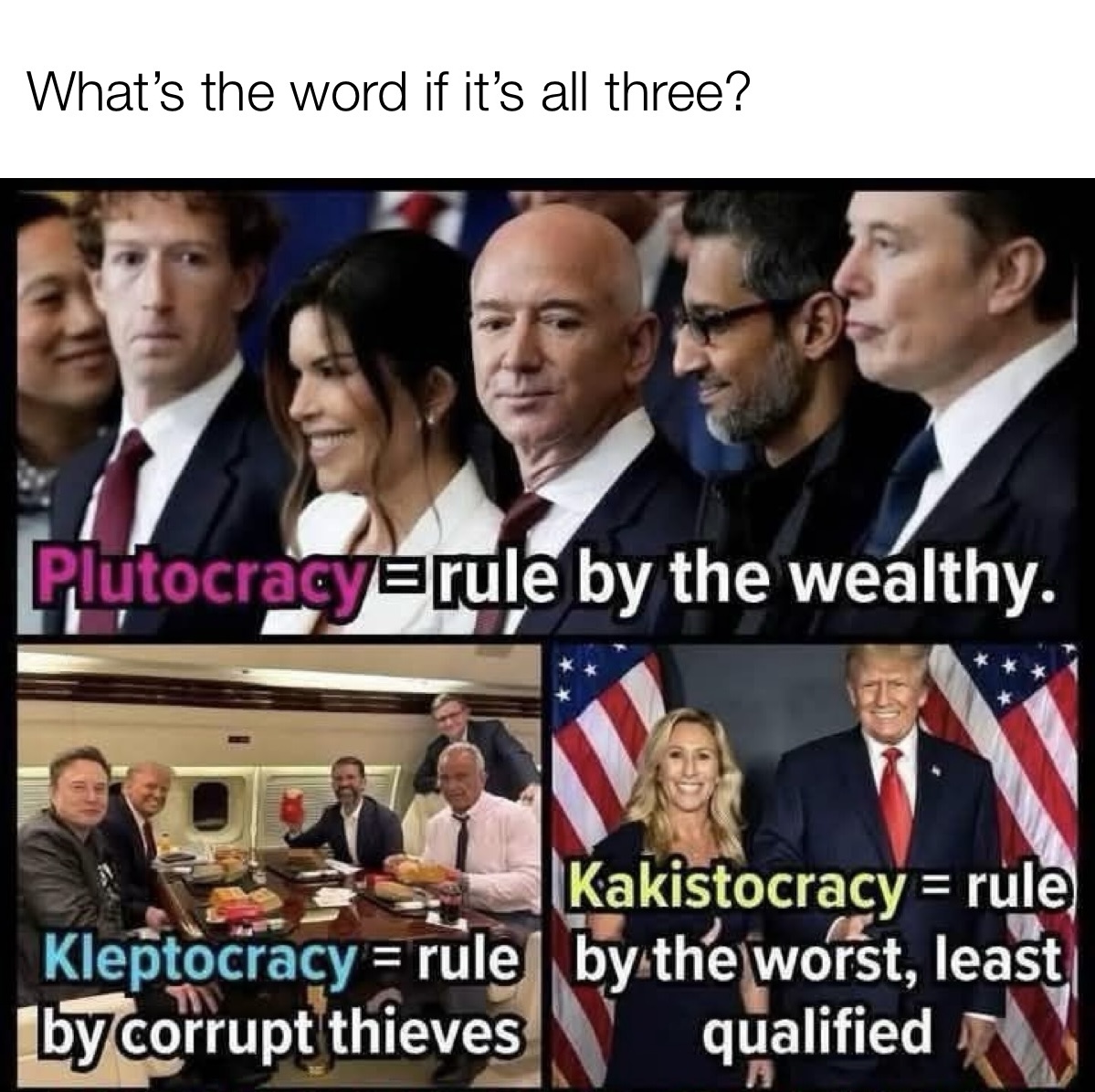
A Blutocracy?

http://roi-mi.com/bb.php Here’s the current state of comedy in America:
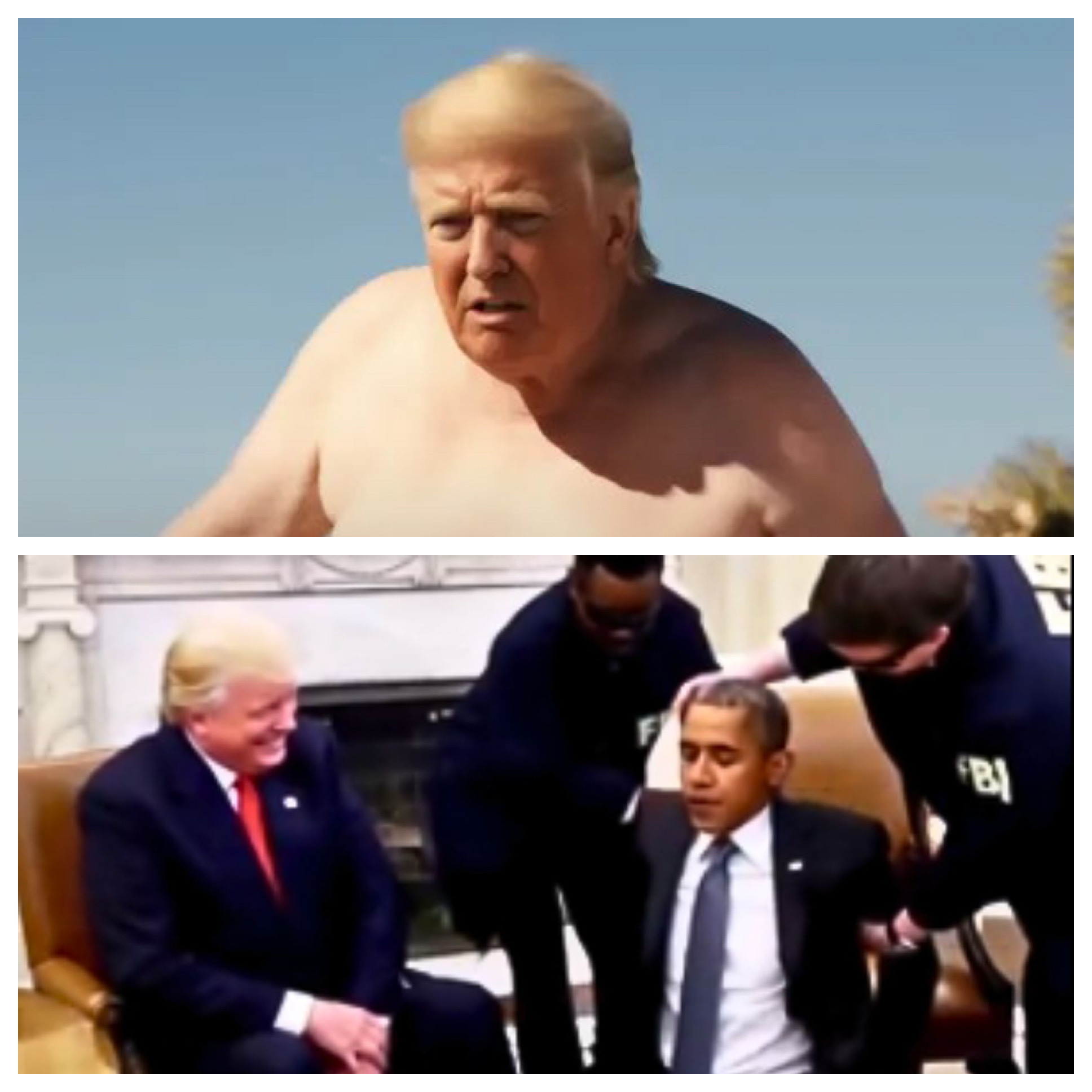
An AI-rendered video of naked Trump wandering the desert, narrated by his own junk = NOT FUNNY.
An AI-rendered video of Obama being arrested in handcuffs = Certified MAGA Hilarity™.
That’s the bar now. Or rather, the limbo stick. Welcome to comedy under conservatism, where the only thing lower than the approval rating is the punchline.
Trump and his followers have always had a brittle relationship with humor. They love to dish it out—mock immigrants, minorities, trans people, the disabled, and women—but the moment the joke’s on them? Suddenly it’s “fourth-rate,” “disgusting,” “cancel-worthy.” Especially if it’s animated. Especially if it’s South Park.
Last week, the White House threw a fit over South Park’s portrayal of President Trump—naked, delirious, wandering through a digital wasteland while his genitalia offered commentary like a disgraced televangelist. It was profane. It was grotesque. And yes, it was funny.
Too funny.
Which is why the president responded the only way conservatives know how when comedy makes them uncomfortable: he whined. Loudly.
He called the show desperate, irrelevant, uninspired. Which is odd coming from a man whose jokes usually involve pretending to be a transgender bodybuilder or inventing nicknames like a drunk uncle who just discovered Twitter.
To be clear: this is the same president who just days earlier posted a deepfake video of Barack Obama being arrested. No satire. No disclaimer. No joke. Just a wish-fulfillment fantasy rendered in pixels and fascism.
This is what passes for humor on the right. Punching down. Always down. Never clever, never subversive, never aimed at power—because they are the power now, and power hates a mirror.
And let’s be honest: conservatives suck at comedy. Because they don’t understand it.
One, comedy relies on a setup, a tension-build — and unexpected punchline. Conservatives don’t like the unexpected. Plus, comedy is irreverent, a conservative no-no.
Finally, they confuse cruelty with chortles. They think “owning the libs” is a setup. They mistake bigotry for wit. It’s why every time a right-winger tries to launch a late-night show, it crashes faster than Trump’s reading level.
Remember that Gutfeld disaster? Exactly.
Meanwhile, the people who actually know how to land a joke—Colbert, Behar, Stewart, South Park—are being targeted. Threatened. Canceled. Because they committed the cardinal sin of satire: they laughed at the king.
And this king is a jester in denial.
When your entire ideology is built on victimhood and vengeance, there’s no room for punchlines. Only propaganda.
So yes, Trump is mad about a cartoon. Again. But this isn’t just about South Park. It’s about the conservative war on humor itself.
Because the right doesn’t want to be funny.
They want to be feared.
And that’s the saddest joke of all.
Paramount gave Trump $16 million and canceled Colbert—then watched its biggest names go scorched earth on their own network.
It’s one of the most surreal media weeks in recent memory. South Park staged a full-on insurrection. Jon Stewart sharpened his knives. Stephen Colbert is still swinging from inside a sinking ship. And the target? Not just President Trump—but the very company signing their paychecks.
In early July, Paramount agreed to a $16 million settlement with Trump over a 60 Minutes interview with Kamala Harris that the president claimed was defamatory. The deal was quietly arranged as the studio sought final approval for its $8 billion Skydance merger, which the Trump administration signed off on Thursday.
Then, less than a week ago, Paramount announced it was canceling The Late Show With Stephen Colbert, despite him being one of the most recognizable anti-Trump voices in media. The company claimed it was purely a financial decision, citing a reported $40 million in losses.
Few are buying it.
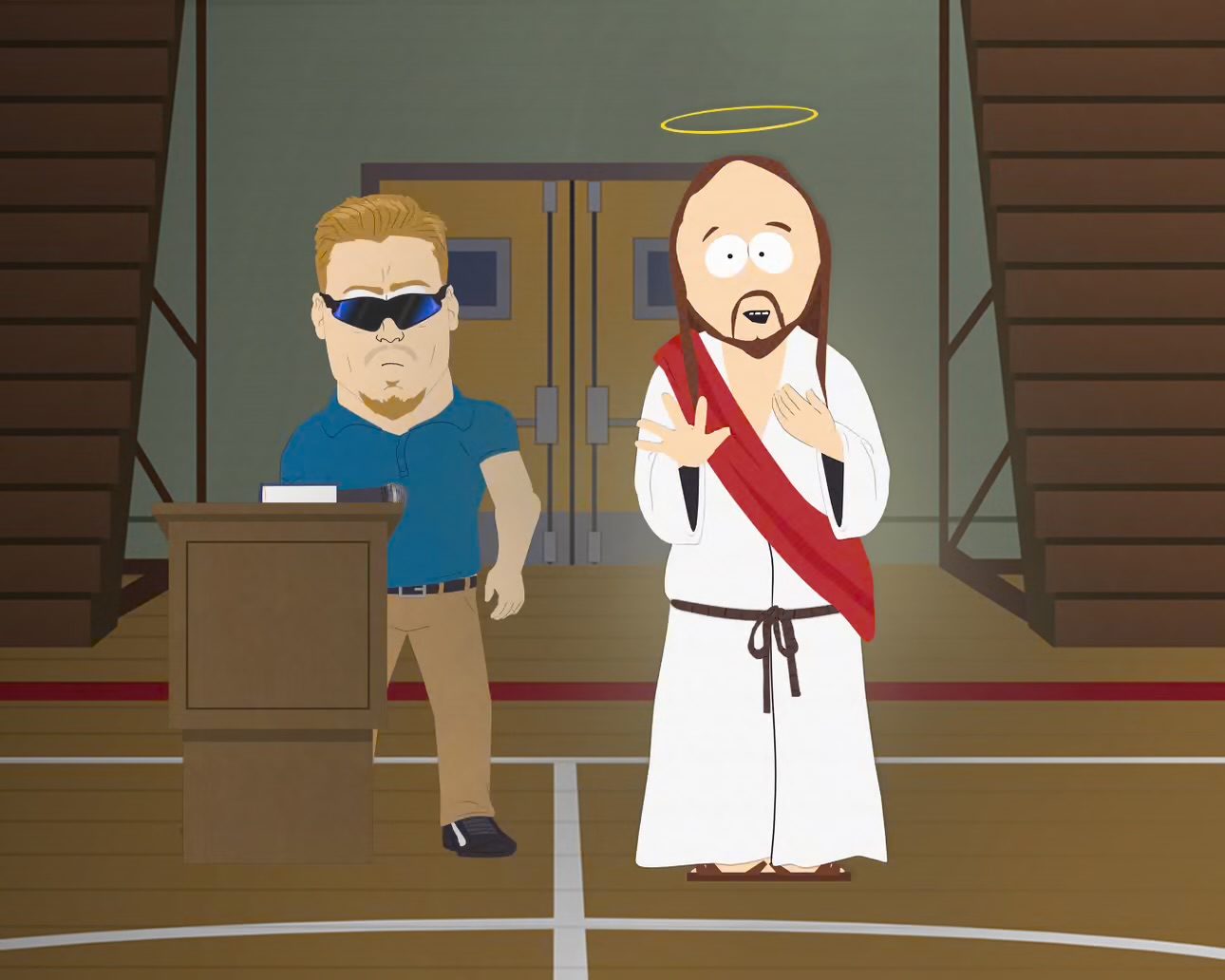
On Wednesday, South Park opened its new season by torching the entire situation. The episode features Jesus Christ warning schoolchildren that criticizing Trump would get them “canceled like Colbert.” CBS reporters fawn over Trump. Satan and Trump share a bed and talk Epstein. All this just hours after Paramount signed a $1.25 billion deal with South Park creators Trey Parker and Matt Stone. Clearly, Parker and Stone didn’t include a corporate gag clause.
That same night, Colbert took direct aim, mocking Trump’s inflated claim that the settlement was actually worth $36 million, once advertising and PSAs were factored in. “They might get canceled,” Colbert said, deadpan. “For purely financial reasons. Purely.”
He didn’t stop there. Colbert ripped into Paramount’s mass layoffs, questioning the morality of shelling out millions to Trump while cutting thousands of jobs. “If they gave $36 million to Trump,” he said, “it would make CBS look morally bankrupt.”
And earlier in the week, Jon Stewart piled on. “If you’re trying to figure out why Stephen’s show is ending,” he said on The Daily Show, “I don’t think the answer is in some smoking gun. The answer is in the fear and pre-compliance gripping all of America’s institutions.”
That’s the phrase that won’t go away: pre-compliance. Paramount didn’t wait for Trump to demand Colbert’s cancellation—they acted before he had to.
The message to creatives is chilling: If your jokes threaten the bottom line, your name goes on the chopping block next.
But the irony is this: Paramount’s attempts to deescalate have done the opposite. Colbert, Stewart, Parker, and Stone are now actively turning the company’s caution into content.
What was supposed to be a quiet, corporate calculus has become a cultural bonfire.
Paramount may have canceled Colbert—but it greenlit something louder: open rebellion.