Category Archives: Muddled Musings

No MAGA Hat Required

Image result for sitting on the fence

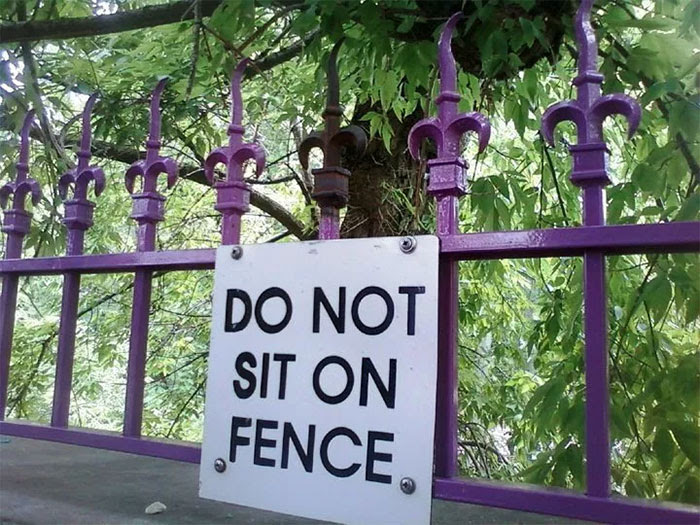
I’ve sat on the fence too long. You see, it’s a picket one, constructed of splendid splinters. So it’s a bit rough on the ass. But I digress.

I’ve decided to enter my name in the Democratic presidential race. I would have announced more formally than this, but Jack n the Box refused to reserve parking lot space for the press announcement. And after all the lobbying dollars I threw their way…

Anyway, I’m running, joining the other 237 candidates. Unlike those hopefuls, however, I believe in coming out with policy statements immediately out of the gate. And since my likely opponent, Cap’n Bone Spurs, and his evangelical base are so concerned with the candidates’ positions on crotches (why is that, by the way? The GOP lately has been an acronym for Groin of Preference), I figure I better come out with my general positions on people’s dangly bits.

  • First and foremost: I support the right to genitalia.
  • In terms of exercising said right:  I wholeheartedly support right of choice. In fact, under a Bowlesian administration, only women will have a vote on the abortion issue. If only one gender shoulders the burden of an issue, they should have the right to determine its fate. Until a man can force a bowling ball through his puckered sphincter, we should shut the fuck up on the topic (And let’s be fair: if a proposition arose, say, calling for mandatory circumcision, only men would get to vote on that).
  • Gay marriage. Last week, Kentucky passed a state law banning bestiality. Really. Last week. It’s not that it’s an absurd law, only that Kentucky yahoos need to be legally told not to fuck Spot. But let’s not go overboard; my administration not only supports gay marriage, but you should have the right to marry the family turtle if the love is there — as long as you have the animal’s written consent.

Beyond the dangly bits, some other campaign planks:

http://childpsychiatryassociates.com/treatment-team/portrait-placeholder/ The electoral college: Gone.

Télimélé Daylight Savings Time: Gone

Political ads on Facebook: Fucking gone.

Gun control: Buy a bazooka if you want. But all gun owners, like car owners, must pass a written and road test if you want to exercise the privilege of ownership. The system would work exactly like auto licensing: You must show proficiency to practice, and paperwork to own. And don’t give me this slippery slope bullshit. Americans haven’t been forced to buy hybrids or electric cars by requiring licensing.

Yet the need has never been greater for licensing. According to the Center for Disease Control, there were 39,773 gun deaths in 2017, the most recent year available, up by more than 1,000 from the year before. Nearly two-thirds were suicides. It was the largest yearly total on record in the C.D.C.’s electronic database, which goes back 50 years, and reflects the sheer number of lives lost. You need to prove you can operate an Acura, but not an AK-14?

Now for matters less contentious, Factslaps:

  • Fibrodysplasia ossificans progressiva is a rare genetic disease which causes damaged soft tissue to regrow as bone.
  • “Stan”, from the Eminem song with the same name, was added to the Oxford English Dictionary, defining it as “an overzealous or obsessive fan of a particular celebrity.”Image result for eminem stan
  • In Northern Ireland, women earn 3.4% than men on average.
  • Today’s human population is descended from twice as many women as men. About 80% of women reproduced, whereas only 40% of men did.Image result for early woman caveman
  • 4.6 million Americans were severely behind on payments on student loans in 2017.
  • The average American throws away 70 pounds of clothes a year.Image result for pile of goodwill clothes
  • Corporatocracy is a term used to refer to an economic and political system controlled by corporate interests.
  • Every winter, great white sharks swim for 40 days to meet up between Mexico and Hawaii, and nobody knows why.Image result for pair of great whites


Steven Spielberg’s Homage to the Master

Image result for spielberg the shining

I’ve never been one for conspiracy theories. But I think I’ve stumbled upon one.

Steven Spielberg was Stanley Kubrick’s prized protege. They talked often, visited each other’s sets, even teamed up to make the underrated film, A.I. Spielberg has always been an immense talent, but let’s face it: Having Stan the Man as your corner cut man is like a writer having Salinger as a writing tutor. If you don’t take advantage of the teachings, you don’t deserve school.

I’ve been doing an inordinate amount of research into Sir Kubrick of late, and discovered a little YouTube nugget of an interview with Spielberg. In it, he sheepishly admitted he did not care for The Shining when he first saw it, and (very) reluctantly told Stanley as much when Kubrick asked his impressions. Only after watching the Jack Nicholson movie a few times, Spielberg spilled in the clip, did he recognize the movie’s genius and, more importantly, its subterfuge.

The Shining, an adaptation of a Stephen King horror movie, is not the haunted house flick audiences (and King) were expecting. I remember Dad’s disappointment when we left the theater. More than 46% of the nation’s critics at the biggest papers in the country gave it a thumbs-down.

Over time, though, its reputation has risen like a zombie with the munchies. Instead of a haunted house story, critics and historians posthumously realized, The Shining is a haunted human story, touching on domestic abuse, alcoholism, even the genocide of the American Indian. The American Film Institute recently named it one of the 30 most thrilling movies in the past century. The AFI also named Jack Nicholson’s Jack Torrance among the top 25 cinematic villains of all-time. What the AFI failed to note is that Poltergeist, the Disney-fied horror film ostensibly made for kids and families, was secretly a dark homage to Stanley from Spielberg, who wrote and produced the movie.

Try it as I accidentally did: Play The Shining theme over any three minutes of Poltergeist, and you’ll see that the whimsical score and sitcom lighting were simply a ploy to get it a PG rating. But when played with a traditional horror score, the movie feels entirely different — and the images are sheer Kubrickian. Here’s a sample. At 1:20, you’ll swear Stanley rose from the dead for the editing booth:

Now for something less theoretical, FactSlaps:

  • Chinese princess Xin Zhui’s body, who died in 163 BCE, is so well preserved that her skin is still soft her arms and legs can bend, and her internal organs are still intact.Image result for Xin Zhui'
  • Camels gave humans the common cold.Image result for camels have humans the common cold
  • Science knows more about coffee, wine and tomatoes than it does about breast milk.
  • Hugh Jackman was a party clown before being famous.Image result for hugh jackman party clown
  • More people watch online video game play than major cable networks and subscription entertainment services.Image result for people watching video game
  • The Burj Khalifa, the world’s tallest structure, stands 2,716 feet tall. It has 24,000 windows, contains 393,000 cubic yards of concrete and took 22 million man hours to build.Image result for what is The Burj Khalifa?
  • World renowned cellist Yo Yo Ma once left his 266 year old cello, worth $2.5 million, in the back of a NYC taxi. It was returned to him in time for his evening concert.Image result for Yo yo ma's $2 million cello

The Death of the Hollywood Twist

Image result for us movie

Two months months ago, while working a story on M. Night Shyamalan’s career, I called up every internet clip and video analysis I could find about the director, who is known for his twist endings (The Sixth Sense, Unbreakable, Signs).

In the course of reporting the story, a prelude to Shyamalan’s latest film, Glass, I came upon a number of videos breaking down the new film — including the twist ending — which hadn’t even been released yet.

That didn’t stop sneak preview viewers from spilling more than the twist ending. The videos spelled out every twist. Every unexpected turn was revealed, dissected and analyzed. There were a half-dozen surprises in the film, at least. Some video critics warned they were going to spill the movie’s  secrets. Some did not.

By the time I walked into the movie, I knew every turn the flick was going to make, from character revelations to battle outcomes.

I enjoyed the movie, but couldn’t help but wonder whether spoilers had cast a shadow of bias over my viewing. It certainly ensured a surprise-free couple of hours. Tension was a non-factor. Still, the spoilers had alerted me to Shyamalan’s break from comic book tradition with Glass — which perhaps biased me to like the movie.

Regardless of this particular movie, spoilers have become such a reality in film that, to enjoy one, you pretty much have to avoid computers, cell phones and TV sets till you’ve seen the film.

What would Hitchcock think about the development, I wondered. This has to be crazy-making for suspense directors like Shyamalan, John Carpenter, West Craven, and on. Just this weekend, Jordan Peele’s movie Us raked in $70 million on its opening weekend, breaking multiple records for a suspense film. So spoilers didn’t appear to hurt the bottom line.

Still, on a lark, I decided to do similar research Saturday on the movie, which ends with a twist on which the film squarely rests.

So I turned on YouTube. The first video recommended was entitled “The ending of Us explained.” The video was done by a group called Looper, a wildly popular movie website and online channel. The movie opened at midnight Thursday. The video was posted about 4 p.m. ET on Friday. Within its first four hours, it had more than 15,000 views.

The video aired without warning viewers of spoilers ahead, and the six-minute video broke down every key scene in the flick, as well as the identity of the mysterious villain. A cursory look uncovered a half dozen other similar videos. Then I went to Wikipedia and looked up the movie. There, too, was a page-long synopsis of the movie, including the surprise ending. All within 36 hours of its opening.

What’s happening here? Remember when you had to hear someone tell you of  The Sixth Sense! Or The Crying Game? Go all the way back to Citizen Kane or Psycho; Some of Hollywood’s most iconic moments stem from rugs being pulled beneath viewers’ feet. Imagine your reaction if a friend told you in the mid-80’s, “You gotta see The Empire Strikes Back! It’s got great effects! And I can’t believe Darth Vader is Luke Skywalker’s father!” (oh, spoiler alert). You’d likely punch your friend in the face.

But spoilers have become so pervasive in movies some YouTubers are recording their reactions literally seconds after stepping from the theaters. And perhaps that’s inevitable. Maybe word-of-mouth is like the phone booth and mailbox; short for this world. Our laptops have become our water coolers, Facebook our hair salons, Twitter our barber shops.

The overall effect on movies is hard to gauge, though some signs are ominous. A recent study by VU University Amsterdam in the Netherlands found that spoilers may not ruin an experience entirely, but can reduce suspense and decrease overall enjoyment of a film.

In a study of 412 college students, scientists found that movies that had been spoiled were rated as less moving, less thought provoking, and less successful at drawing the viewer into a narrative world and providing an immersive experience. The effects of story spoilers were “consistently negative,” Benjamin Johnson, an assistant professor and study coordinator, said in a statement.

“Our study is the first to show that people’s widespread beliefs about spoilers being harmful are actually well-founded and not a myth,” Johnson said. “Instead, we surprisingly found that for all the outcomes, spoilers were detrimental.”

The study did not recommend solutions, nor even suggest one was possible in the immediacy of an internet era. But Hollywood may have no choice but to act: Despite annual box office records, most of the increase is due to inflation. Actual movie attendance is down about 10% over the last 20 years, according to BoxOfficeMojo.com. If that trend continue, studios may be on the receiving end of a disastrous spoiler.