Author Archives: Scott Bowles
Streaming review: Velvet Buzzsaw
As Michael Clayton and Nightcrawler illustrated, Dan Gilroy is masterful at portraying the horrific underbelly of human nature. When it comes to outright horror, though, his artistic style seems a little rough around the edges.
Such is the mixed result of his fun-but-flawed latest work, Velvet Buzzsaw, which premiered at Sundance last week before settling into full run on Netflix. Directing his third film, Gilroy delivers a wonderful sendup of the cultural elite and the air-kissing art-world they inhabit. But when the movie attempts to morph from satire to savagery, the lines begins to smudge.
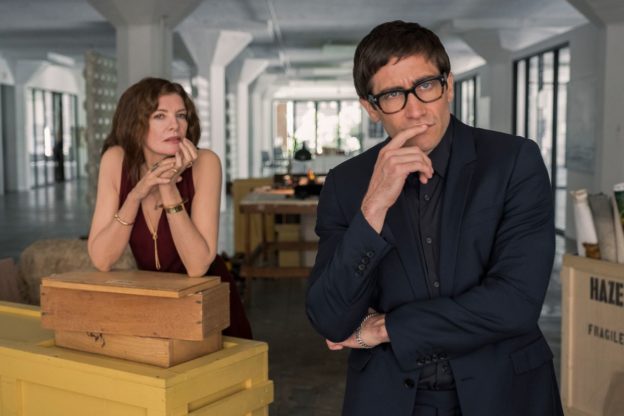
Reuniting his Nightcrawler stars Jake Gyllenhaal and Rene Russo, the movie opens at Basel, the actual, annual bazaar of million-dollar art-buying in Miami Beach. Floating through the gallery in a Brian de Palma-style sweep, Gilroy introduces most of the main characters: Gyllenhaal’s high-handed critic Morf Vandewalt; L.A. gallery owner Rhodora Haze (Gilroy’s real-life wife Russo); her oily competitor Jon Dondon (Tom Sturridge); ambitious assistant Josephina (Zawe Ashton); art handler Bryson (Billy Magnusson); and museum executive Gretchen (Toni Collette), a piranha of an art consultant. We also meet Piers (John Malkovich) and Damrish (Daveed Diggs), two art stars on opposing ends of their career arcs.
As they bicker and flatter emptily, the dynamics between them begin to crystallize: all are in desperate need to secure their place in the backstabbing art-house hierarchy. It doesn’t take much of a leap to see Gilroy is skewering the pretentiousness of his own industry, and the clever jabs land squarely: Bryson brags he glued the cereal nuggets on “Froot Loops Hippo,” and a bitter Piers complains that today’s art looks like ink smeared by balloons (a shot at Jeff Koons, who has made millions on sculptures resembling balloon animals).
But when an elderly shut-in neighbor of Josephina’s dies, leaving an apartment full of disturbing and compelling paintings, the film takes a John Carpenter-esqe turn, and Velvet‘s hand gets shaky. Through some clumsy exposition, we learn the artist suffered horrific abuse, followed by criminal insanity, followed by work that is to die for — literally.
While Gilroy’s satiric shots at consumerism and criticism keep the film afloat (Morf, ever the critic, is mortified by the color of a coffin during a funeral ceremony), the gruesome deaths that befall those who profit off the dead artist make Velvet feel like a haute Final Destination. The deaths are increasingly clever, but the second half of the movie feels like a paint-by-numbers chiller.
Velvet never takes itself as seriously as its artists do, which keeps the film, ultimately, outrageous and enjoyable. And cinematographer Robert Elswit’s shots of Los Angeles’ nighttime skylines are more picturesque than the overpriced art for sale.
But by the time the final body drops, Velvet plays like a horror flick sequel: The concept is fun, though still derivative of the clever original.
Streaming review: High Flying Bird
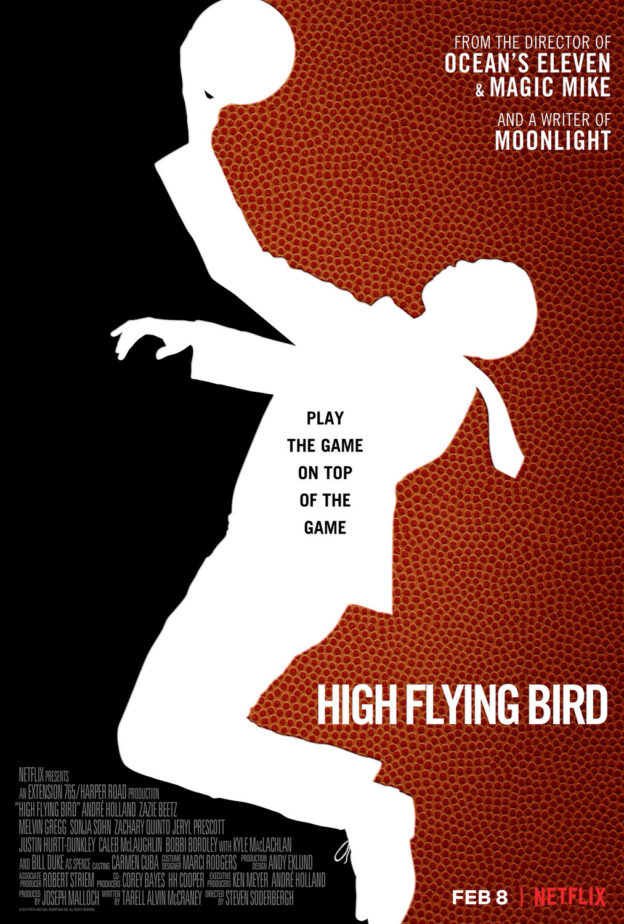
High Flying Bird fittingly resembles a no-look pass in basketball: unexpected, deftly maneuvered, and usually resulting in a score. And while Steven Soderbergh’s latest movie accomplishes most of the achievements of the flashy pass — including a score — it isn’t quite a slam dunk.
There’s no denying the basketball drama was unexpected, on a couple levels. First, it proved reports of Soderbergh’s retirement were greatly exaggerated, primarily by Soderbergh. He announced to New York Magazine in 2013 that he was done with film because of Hollywood’s shabby treatment of directors and emphasis on profit.
“Just to be clear, I won’t be directing ‘cinema,’ for lack of a better word,” he told the magazine in January 2013. “But I still plan to direct — theater stuff, and I’d do a TV series if something great were to come along.”
Soderbergh was either bluffing or trying to build buzz for projects, because he’s been anything but idle the last six years. He directed Logan Lucky in 2017, 27 episodes of The Knick and Mosaic for TV, and two movies in the past two years, last year’s Unsane and Friday’s Bird, which premiered on Netflix. But grant him this: He is rebelling somewhat against the film industry. Both Unsane and Bird were shot using iPhones.
And while his filming gadgets of choice feel (and occasionally look) gimmicky, there’s no denying Soderbergh’s mastery of the medium. Topical, tautly-written and showcasing the director’s love of disruption, this story of the economic battle between NBA owners and players marks his best work in years.