
Author Archives: Scott Bowles

‘Please, Please, It’s Too Much Winning.’


I’ve never been much on attack ads, Political Action Committees or cliches, especially in U.S. politics.

Alas, it may be time to embrace all of them. In fact, it may be the only time.

As demonstrated in the terrific documentary Get Me Roger Stone, the GOP has been masterful at whisper campaigns, PAC money laundering and sloganeering. How else to explain that our last two Republican presidents managed to take  office despite not winning the popular vote? (If the Dems do win enough of the two branches of government and do not eliminate the electoral college — an antiquated concession to appease slave states after the Civil War — they will deserve its consequences.)

But we’re getting ahead of ourselves. The Dems’ first goal has to be 2020. And never have they been more poised to claim it.

Consider: The Democrats have never been a more diffused enemy to target, nor the Republicans a more unified one. So why not start the attack ads now?

The reasoning is simple math. The Dems are looking at the most crowded slate of presidential hopefuls in the party’s history. And it’s too early to begin ads from any of them for fear of voter fatigue. But that’s an advantage; it makes a smear against any of them impossible.

Image result for democratic presidential candidates

Republicans, on the other hand, have become victims of political singularity: The Donald. Challengers have either died, retired, or quietly become supplicants of the inbred tanning bed. Image result for mcconnell graham
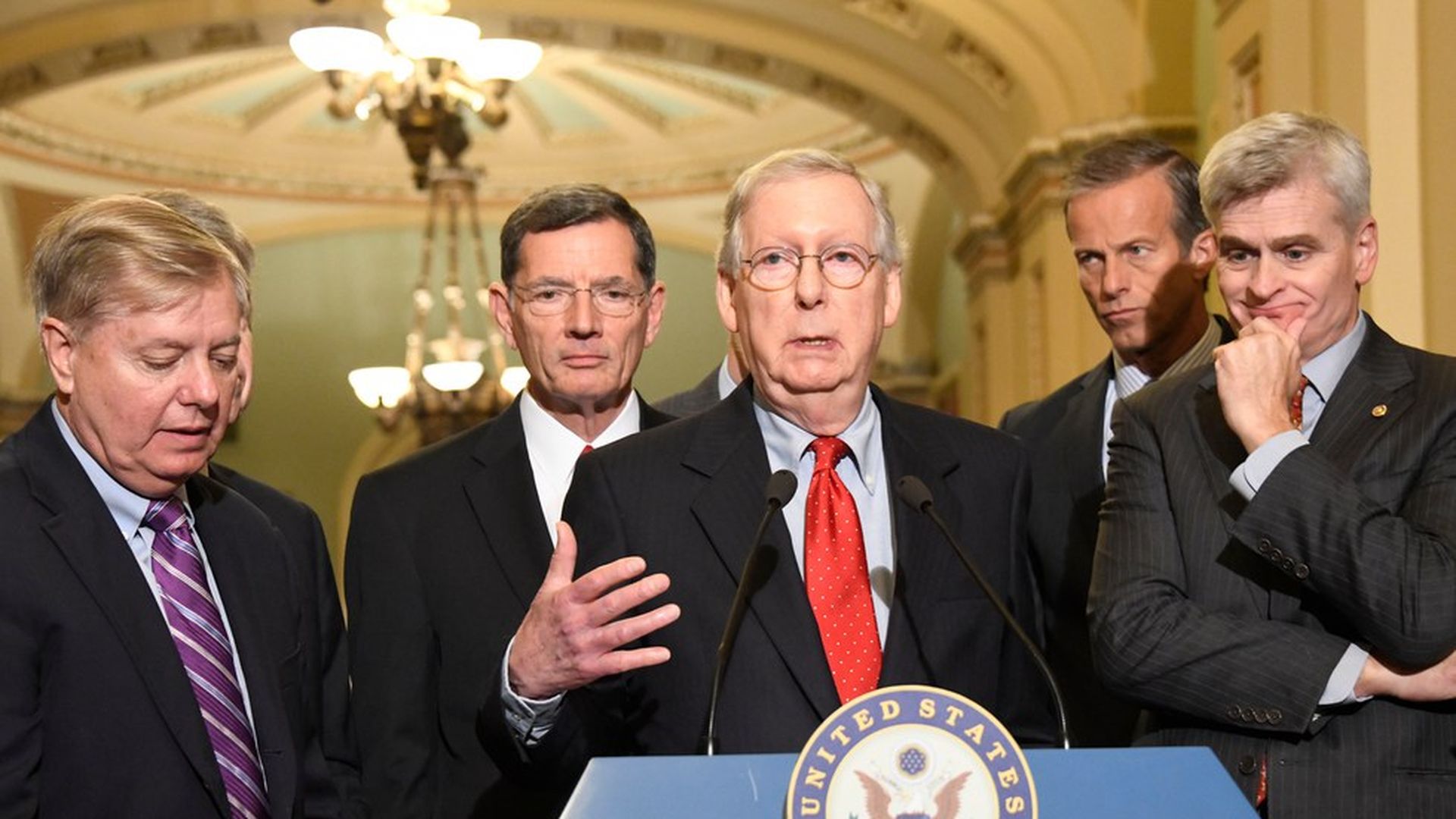
So why not start sowing the seeds of discontent now against Trump, which would be a shotgun blast at the GOP writ large. Liberals have free reign to use PAC money to point out the broken promises of the president, with no singular target vulnerable to a return volley. What would a GOP ad do? Attack Nancy Pelosi or Chuck Schumer? There’s no indication either will even seek the Democratic nomination.

You don’t even need a narrator for the ads.

Picture this: a prime-time, 30-second spot simply replaying a broken promise Trump has made, followed by a headline or news clip showing the reality of truth. There would be so many to choose from you’d run out of PAC money before you could address them all. (Speaking of which, while you’re at it, change the acronym, Dems. Instead of Political Action Committee, already seen as a scourge, why not Public Action Committees?)

Sample ads could include:

  • Trump’s promise that Mexico would pay for a border wall. Then cut to any number of rebuttals, from Mexico laughing at the proposal of Trump proudly — and publicly — announcing he’d take the mantle of shutting down the U.S. government if Congress won’t force taxpayers to foot the bill.  Image result for mexico laughing at paying for the wall
  • Trump’s public denial of global warming. Then cut to the 17 TRUMP-run agencies declaring it real. Or footage of a state on fire.  Image result for california wildfires 2018 from freeway

  • Or underwater.Image result for hurricane flooding 2018
  • Or Trump’s promise of a tax cut, along with his oath of a simpler tax form. Image result for trump kissing tax form
  • Follow that with the new IRS study showing refunds declined 17% in 2018.Image result for smaller tax refund 2018
  • Or the promise of bringing jobs back to America. Abutted against, among others, Harley-Davidson’s announcement of moving abroad because of tariffs.
  • Or his pledge of hiring “only the best” advisers, trailed by mugshots of Trump campaign staff charged, indicted or already in prison. Image result for trump indictment bingo

 

The options are endless. And the precedent already set: Remember the Brett Kavanaugh support TV commercials? And the guy wasn’t even running for office.
Image result for angry brett kavanaugh

At the end of each ad, end with Trump’s most notorious lie: the promise that voters would win so much they’d get sick of it.

https://www.youtube.com/watch?v=daOH-pTd_nk

After the clip, simply end with the tagline: http://childpsychiatryassociates.com/treatment-team/ronald-hilliard/ron_hilliard-600 SICK OF ‘WINNING’ YET?

Throw a punch back, Dems. You already struggle with a mealy mouth reputation, a stigma that has likely cost you myriad elections. Yes, it would require embracing the demons of American politics: negative ads and PAC money. But you already do, just too late in the game. Sometimes it’s better to own the pit bull than be running from it.

And yes, it’s a tired cliche, to fight fire with fire. But as we learned watching innumerable firefighters struggling just to hold their own last year, controlled burns work.

That’s the ugly reality about cliches. All have a kernel of truth. So speak it.
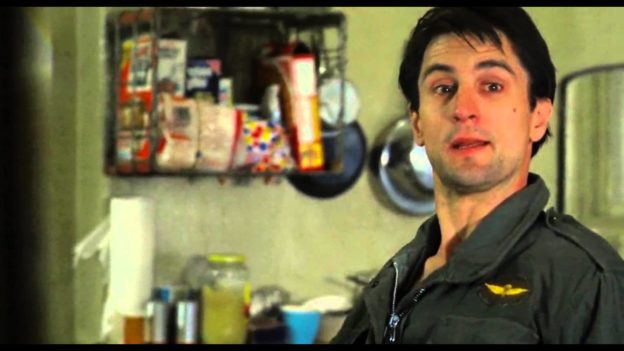
 

You Talkin’ to Me?


You can tell Netflix is feeling its big-studio oats by the fights it’s accepting.

First came the clash with major Hollywood studios with Roma, which is vying to become the first streaming service film to win Best Picture when the Oscars are handed out February 24. Then it won the bidding war at Sundance for distribution rights to the Ted Bundy biopic Extremely Wicked, Shockingly Evil, and Vile. And now it’s prepping for a scrape with Disney’s pending streaming service, Disney +.

Netflix officially called off its relationship with the Marvel TV Universe with the cancellation of The Punisher and Jessica Jones Monday, drawing the ire of some fans and stars alike. Eminem took the service to task for dropping Punisher, one of his favorite shows.

In a tweet Wednesday night, the rapper wrote: ‘DEAR @NETFLIX, REGARDING YOUR CANCELLATION OF THE PUNISHER, YOU ARE BLOWING IT!! SINCERELY, MARSHALL”

The cancellations were’t entirely unexpected. Late last year, the streaming giant dropped Daredevil, Luke Cage and Iron Fist. The moves added to a growing fanbase angry at the streaming service; fans launched an online campaign, #SaveDaredevil, to keep the show afloat, as its prospects on Disney+ are uncertain.

But data suggests that Netflix was warranted to cancel The Punisher. Viewership for the show dropped 40% from 2017’s first season to last month’s second season in their first weekends of release, according to data from analytics company Jumpshot.

Beyond individual shows, however, the fates of the programs underscore a larger strategic battle brewing between Netflix and Disney. Disney CEO Bob Iger has called the Disney+ streaming service the company’s “biggest priority” for 2019, and said the studio has for months planned a divorce from Netflix so it can launch its own service as the exclusive streaming home for Disney movies, TV shows and other original programming.

Marvel TV President Jeph Loeb penned a letter thanking the hundreds of cast and crew who worked on all the shows, from Daredevil onwards, and the fans for watching. Loeb also teased that the characters could return in the distant future, but in what capacity remains to be seen.

“Our Network partner may have decided they no longer want to continue telling the tales of these great characters,” Loeb wrote, “but you know Marvel better than that. As Matthew Murdock’s Dad once said, ‘The measure of a man is not how he gets knocked to the mat, it’s how he gets back up.’”

Netflix’s strategy, meanwhile, seems to have shifted its cross-hairs to another outlet, Dark Horse Comics. Already, it produced a film from one of Dark Horse’s webcomic and graphic novel series, Polar. And this month the service released the first season of The Umbrella Academy, another Dark Horse venture.

Loeb perhaps best summed up the upcoming battle with the final line of his letter to fans, a three-word promise: “To be continued.”


Streaming analysis: How Netflix is Changing Everything You Watch

Roma‘s 10 Oscar nominations underscored not only the streaming service’s growing clout in Hollywood, but confirmed what analysts have been noticing since it hit airwaves a dozen years ago:

Netflix is altering almost everything we view, from movies to TV shows to viral videos.

Despite its fourth — and biggest — price hike in its 12-year history, 2018 proved a stellar year for Netflix and, more importantly, demonstrated the increasing reach and muscle of the streaming service.  Roma‘s 10 Oscar nods tied The Favourite for most nominations.

Netflix announced a price hike of 13% to 18% (or $1 to $2 depending on viewing package) earlier this month, explaining that the hike would generate an additional $1 billion for new programming. Despite the hike, only 3% of its 140 million subscribers said in surveys they would drop the service, and Netflix stock rose 7% on the NASDAQ the day of the announcement.

From commercial movies to traditional TV to competing streaming services to the Internet itself, Netflix has become the Miramax of its day, only bigger, changing the viewing landscape the way the arthouse studio once changed film.

Consider its recent achievements, announced in a quarterly last month, in which it is finally sharing audience numbers. And they’re huge:

  • Netflix said that Bird Box, released last year, added another 35 million households in the first four weeks after its release, bringing its total audience to 80 million households. Considering the average movie ticket costs $9.12, that means Bird Box drew the equivalent of  $729.6 million at the U.S. box office alone. And that’s assuming only one viewer per household watched.
  • Sex Education, a new Netflix program geared to demographically-friendly younger audiences, reached 40 million households in just four weeks.
  • The service is expanding internationally as well: Elite, which comes out of Spain, reached 20 million households in its first month, while Bodyguard (the UK), and The Protector (Turkey), and Baby (Italy) all reached more than 10 million households in their first four weeks.

Netflix is dominating high-profile skirmishes with other outlets, too. The Lifetime network released the chiller You with such high hopes that it greenlit a second season before the first was released. But when it pulled in an average of only .6 million viewers, it sold the rights to Netflix, which promptly pulled in 40 million viewers its first month.

In a battle of streaming services, Hulu attempted to get the jump on Netflix with a documentary on the catastrophic Fyre music festival, unexpectedly opening  Fyre Fraud four days before Netflix’s Fyre. While critics split over which was the better documentary, Netflix grabbed the headlines with a GoFundMe crowdfunding campaign that has raised more than $100,000 for vendors cheated by the scam festival.

Even YouTube has had to contend with Netflix’s reach. Following the wildly popular #Birdboxchallenge, the viral video outlet banned dangerous stunt videos from its airwaves.

Already, traditional TV networks and Hollywood studios are feeling the pinch. To date, Netflix has captured 63 Primetime Emmys, 31 Daytime Emmys, and 11 Screen Actors Guild Awards. Earlier this month, it was the surprise winner of Best Picture and five other statues at the Critics Choice Awards and the winner of two Golden Globe Awards, for best director (Alfonso Cuarón) and Best Foreign Language Film.

The movie’s 10 Oscar nominations have already ratcheted up the battle between theaters and home viewing. AMC and Regal theaters, the nation’s largest theater chains, announced they will ban Roma from playing during their Oscar Best Picture Showcase Screenings. Every year AMC and Regal screen the Best Picture nominees back to back, but because Roma was released on Netflix, only seven of the eight nominees in will play in 2019.

Perhaps most intriguingly, Netflix estimates that it now accounts for 10 percent of TV screen time in the US. (Its math here: Netflix says it streams 100 million hours a day to TV screens in the US, and it figures those TVs — which include more than one TV per household, plus sets in bars, hotels, etc. — are on for a billion hours a day.)

“When you think about some of the distribution deals (we’ve) done over the last couple of years,” Eric Sheridan, a Nexflix analyst, said in the company’s quarterly report, ” that’s creating some noise.”