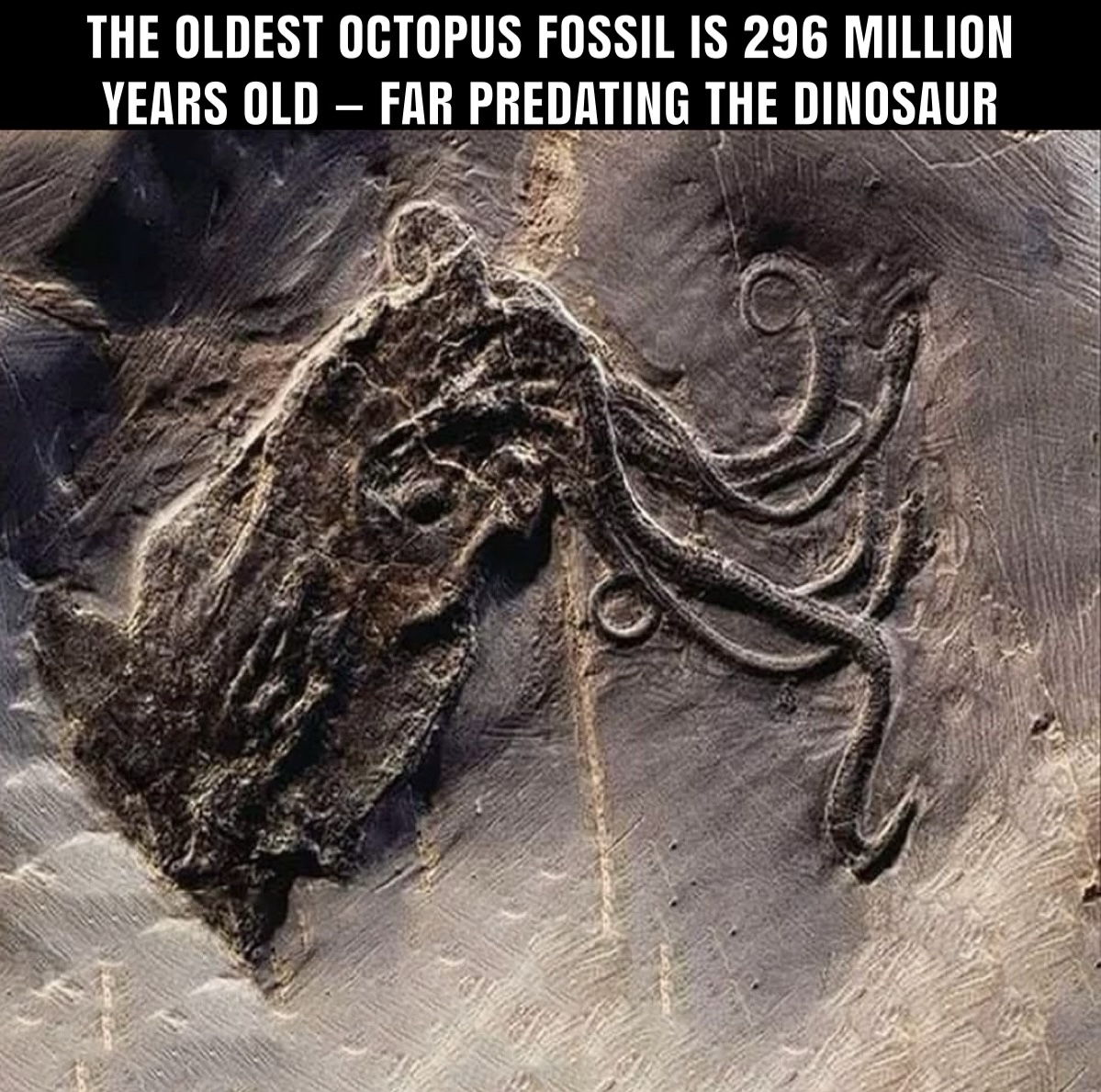
Octopus fossils—and their modern-day relatives—are entirely Earth-evolved, but their biology is so bizarre that some people can’t help but wonder… are they even from here?
Check out a few octopuses factslaps:
buy Lyrica online cheap uk A genetic enigma – Their DNA is like no other, packed with complexity and strange patterns that puzzle researchers. Octopuses have about 33,000 protein-coding genes, more than humans, who have around 20,000. Their genome is large and intricately organized, rivaling that of mammals in complexity.
webpage Masters of disguise – Color, texture, shape—these sea shapeshifters can become anything.
Deep-sea geniuses – They solve puzzles, use tools, and even escape aquariums like stealthy ninjas.
Some theories suggest they could’ve arrived on Earth via panspermia (life traveling through space on comets), but science hasn’t found proof. Yet.
The reason John Wick works is because it never promised more than blood, silence, and style — and delivered all three like a bullet to the head.
That’s what makes Ballerina, the upcoming Ana de Armas-led spin-off, such a risk.
Set between John Wick: Chapter 3 and Chapter 4, it follows Rooney, a ballerina-assassin out for revenge against the people who murdered her family. A simple setup. A familiar rhythm. But maybe too familiar.
Because John Wick isn’t a universe. It’s a mood.
It’s not mythology. It’s momentum.
What made the original film so electric wasn’t world-building — it was world-suggesting. We caught glimpses of an underground economy, cryptic rules, and crimson-lit corridors where death was bartered like currency. But none of it slowed down to explain. It was all texture, never textbook.
Wick kills. Wick reloads. Wick walks away.
That’s the spell. And it worked, again and again.
But Ballerina pulls at that thread. It asks: what if we step away from Wick and focus on the world he tried to leave behind?
It’s a gamble.
Franchise thinking says: spin it off, scale it out, give every side character a saga. But John Wick was never supposed to be scalable. It was elegant in its constraint. A man, a dog, a gun. That’s all it took.
Add too much — backstory, exposition, lore — and the whole thing starts to wobble.
Even Chapter 4, for all its grandeur, skirted the edge of overreach. What saved it was clarity: John Wick was still at the center.
Now we get a new lead, a new motive, and possibly, a new tone.
Ana de Armas has chops. That isn’t the question.
The question is whether we want to know more about the world John Wick walked through — or whether the power was in not knowing.
The danger isn’t failure. It’s forgettability.
Wick never needed to be explained. He needed to be felt. His story had weight because it was lean, not layered.
Ballerina may work. It may stun. It may carve out its own brutal ballet. But every time the Wick-verse stretches, it risks snapping what held it together in the first place.

 buy Lyrica online cheap uk A genetic enigma – Their DNA is like no other, packed with complexity and strange patterns that puzzle researchers. Octopuses have about 33,000 protein-coding genes, more than humans, who have around 20,000. Their genome is large and intricately organized, rivaling that of mammals in complexity.