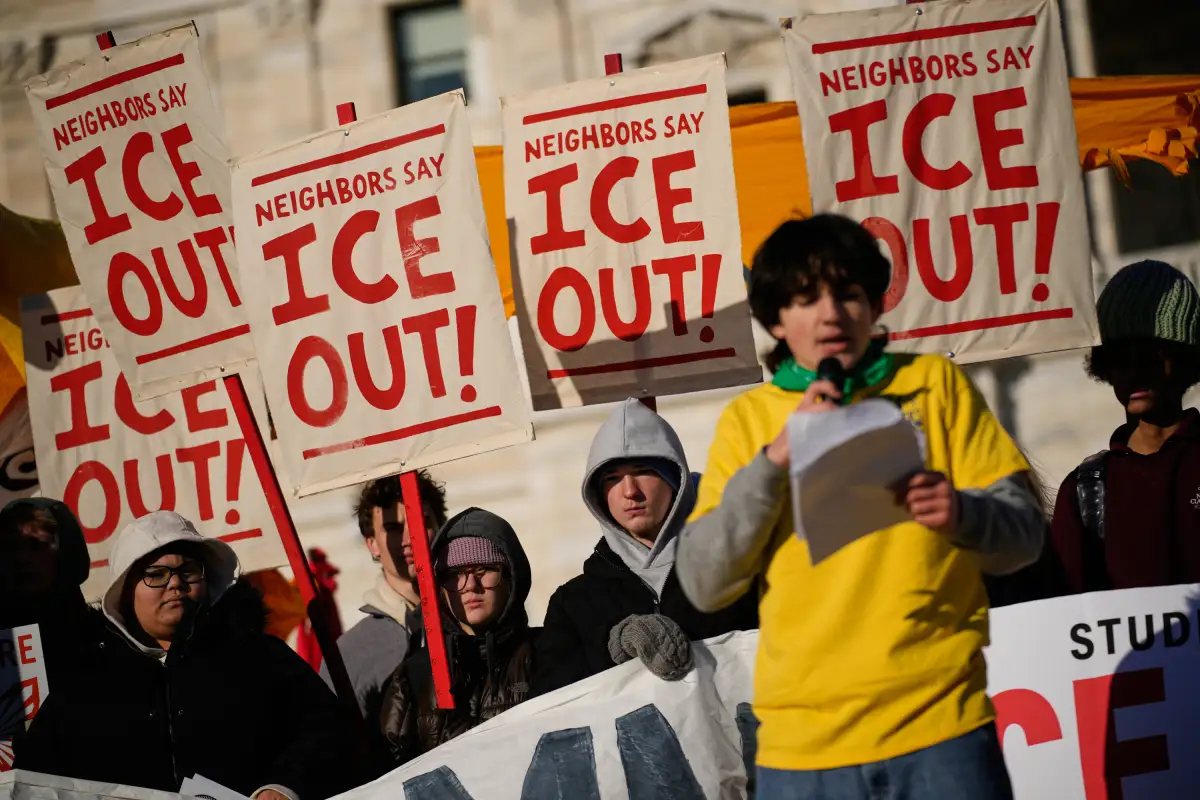
The second American Civil War won’t start with secession. It will start with a president deploying the military against Americans protesting his own government’s actions.
http://childpsychiatryassociates.com/treatment-team/kent-kunze/ We are watching that possibility unfold in Minneapolis.
On January 8th, an ICE agent shot and killed Renee Nicole Good. The administration labeled her a “domestic terrorist” who “weaponized her vehicle.” Video contradicts this, appearing to show Good fleeing when the agent opened fire. Six federal prosecutors resigned rather than comply with White House pressure to investigate Good instead of the shooting.
People protested. As Americans do when they believe their government has acted wrongly.
Now President Trump threatens to invoke the Insurrection Act if Minnesota officials “don’t obey the law and stop the professional agitators and insurrectionists from attacking the Patriots of I.C.E.” His Deputy Attorney General went further, posting that Governor Walz and Mayor Frey are responsible for “terrorism” and promising to stop them “by whatever means necessary. This is not a threat. It’s a promise.”
The Deputy Attorney General of the United States is threatening elected state officials because people are protesting a federal killing in their city.
Both the governor and mayor have called for peace. Both have urged calm. Both have condemned violence. And for this, the administration accuses them of inciting “insurrection.”
The Insurrection Act has been invoked once in the past half-century—during the 1992 LA riots, at California’s request. Every modern use has come either at a governor’s request or to expand civil rights protections. Trump would invert two centuries of precedent, sending the military against a governor’s wishes not to restore order, but to suppress protests against federal conduct.
This is not law enforcement. This is a government threatening to make war on its own citizens for objecting to being killed by federal agents.
Consider the sequence. A federal agent kills a civilian. The federal government labels the victim a terrorist. Federal prosecutors resign rather than participate in what they view as a cover-up. The federal government deploys thousands more agents. People protest. The federal government threatens to deploy the military. State officials call for peace. The federal government threatens the state officials.
At every turn, the response to questioning federal action is more federal force.
There is a word for governments that respond to dissent by threatening military deployment. That word is not “democracy.”
Trump claims Minnesota politicians must “obey the law.” But whose law? The law that allows Americans to protest? The law that requires investigations when government agents kill civilians? The law that protects states from federal military occupation without cause? Or simply whatever Trump declares law to be?
When the Deputy Attorney General promises action “by whatever means necessary,” he is not describing the rule of law. He is describing its opposite—the rule of will, where power justifies itself by being power, where the government’s actions stand beyond question because the government has guns.
This is how republics die. Not in a single coup, but in the steady accumulation of moments when the government declares that questioning it is insurrection, when protest becomes terrorism, when asking for accountability becomes grounds for military intervention.
Renee Nicole Good had whistles, her wife said. They had guns.
Now Trump has threatened to send the Army.
If he deploys military forces against Americans protesting a federal killing, against a governor and mayor calling for peace, he will cross a line no American president has crossed in modern history. He will declare that the federal government’s actions stand beyond protest, beyond question, beyond the reach of democracy itself.
The question is simple: Do we still live in a country where citizens can protest when their government kills them? Or do we live in a country where such protest justifies military occupation?
Minneapolis forces us to answer. And the answer we give will determine whether we remain a republic or become something else—something with elections and institutions, but without the one thing that makes democracy possible: the right to tell the government it is wrong.
Trump calls the ICE agents “patriots.” Perhaps he’s forgotten that the original patriots fired on federal forces too.
They called it revolution.