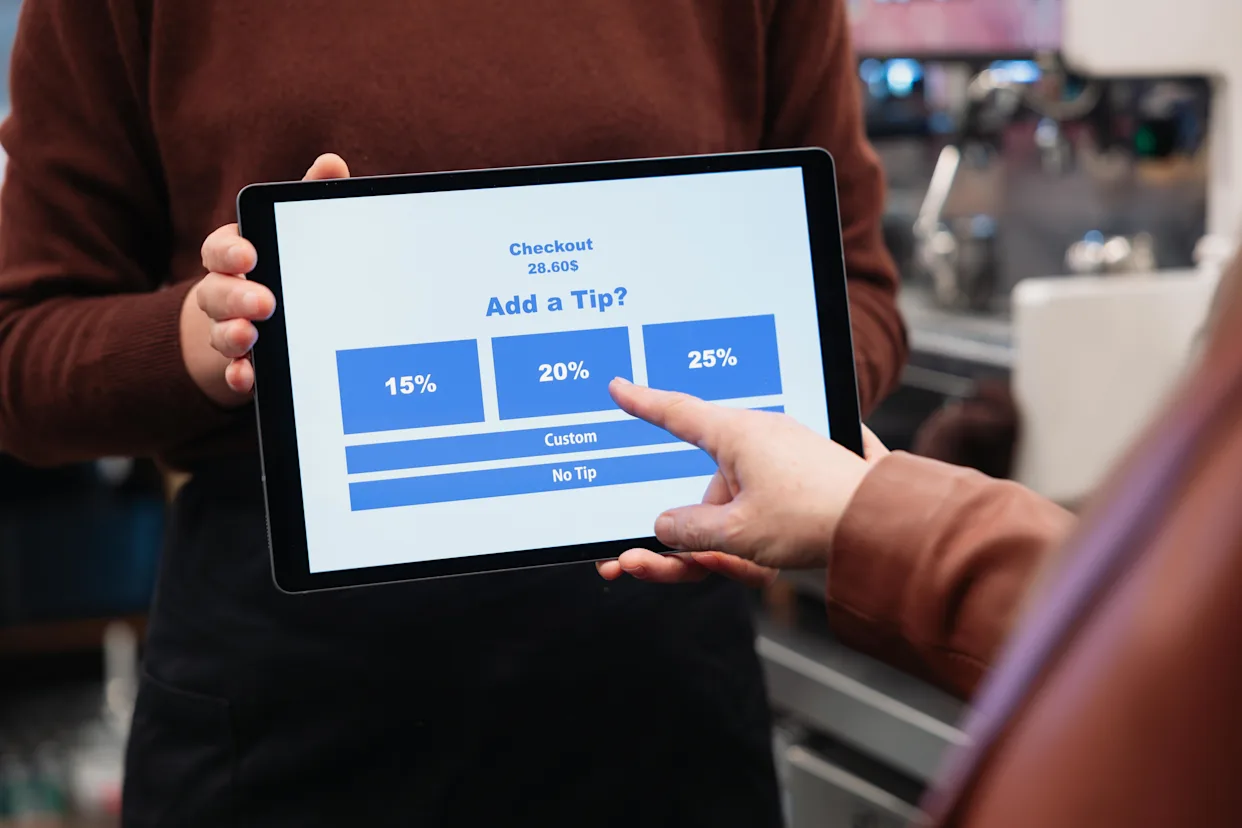
http://childpsychiatryassociates.com/treatment-team/maggie-mcgill/ The screen rotates toward you. It always rotates toward you now.
boozily You ordered a coffee. You carried it yourself, poured it yourself, found your own lid, grabbed your own napkin from a dispenser that required three tries.
The whole transaction took ninety seconds, and now the iPad wants to know if you would like to leave 18, 20, or 25 percent.
There is a fourth option. Smaller.
It says “Custom.”
What it means is: go ahead, but we’ll remember.
This is modern tipping in America, a system that began as a reward for exceptional service and metastasized into a levy on the act of buying anything.
Businesses that once kept tip jars on counters as a courtesy now collect gratuities at grocery stores, self-checkout machines, and fast-food counters as standard practice.
Yelp reviews mentioning “tipflation” surged nearly 400 percent between May 2023 and April 2024. The word existed nowhere a decade ago. Now it has its own trend line.
The restaurant industry built this, and with reason. Federal law locks tipped employees at $2.13 an hour, a figure frozen since 1991.
Servers in a sit-down restaurant earn every penny. They read the table, absorb the kitchen’s chaos, remember the allergy you mentioned once.
That transaction runs on partnership. The tip seals it.
The iPad operates on something else. Research found that 66 percent of consumers feel pressured to tip when a digital screen asks them to, even for a takeout coffee. Tilt the screen far enough into someone’s space and guilt starts pulling wallets.
Businesses discovered this lever during the pandemic, when tip prompts signaled solidarity with workers at genuine risk.
The crisis passed. The prompts stayed.
Companies squeezed by rising costs found tipping a cleaner tool than raising prices, a way to move money from customers to workers while keeping the business’s hands clean.
Americans read the situation. Spending on pressure-driven tips fell 38 percent in 2025, dropping from $453 to $283 per person.
Sixty-three percent of Americans now carry at least one negative view of tipping, up from 59 percent the year before. Seventy-eight percent say businesses should pay employees a living wage and stop drafting customers to cover the shortfall.
They see it clearly. Pay workers honestly, charge fair prices, and let a tip mean what it once meant: someone went beyond the job, and you wanted to say so.
Until then, the screen keeps rotating.
Toward you, at the coffee counter, at the self-checkout, at the parking garage, at whatever comes next.
It rotates because the system behind it is broken, and a broken system always finds a way to make the problem someone else’s.
Yours, specifically.