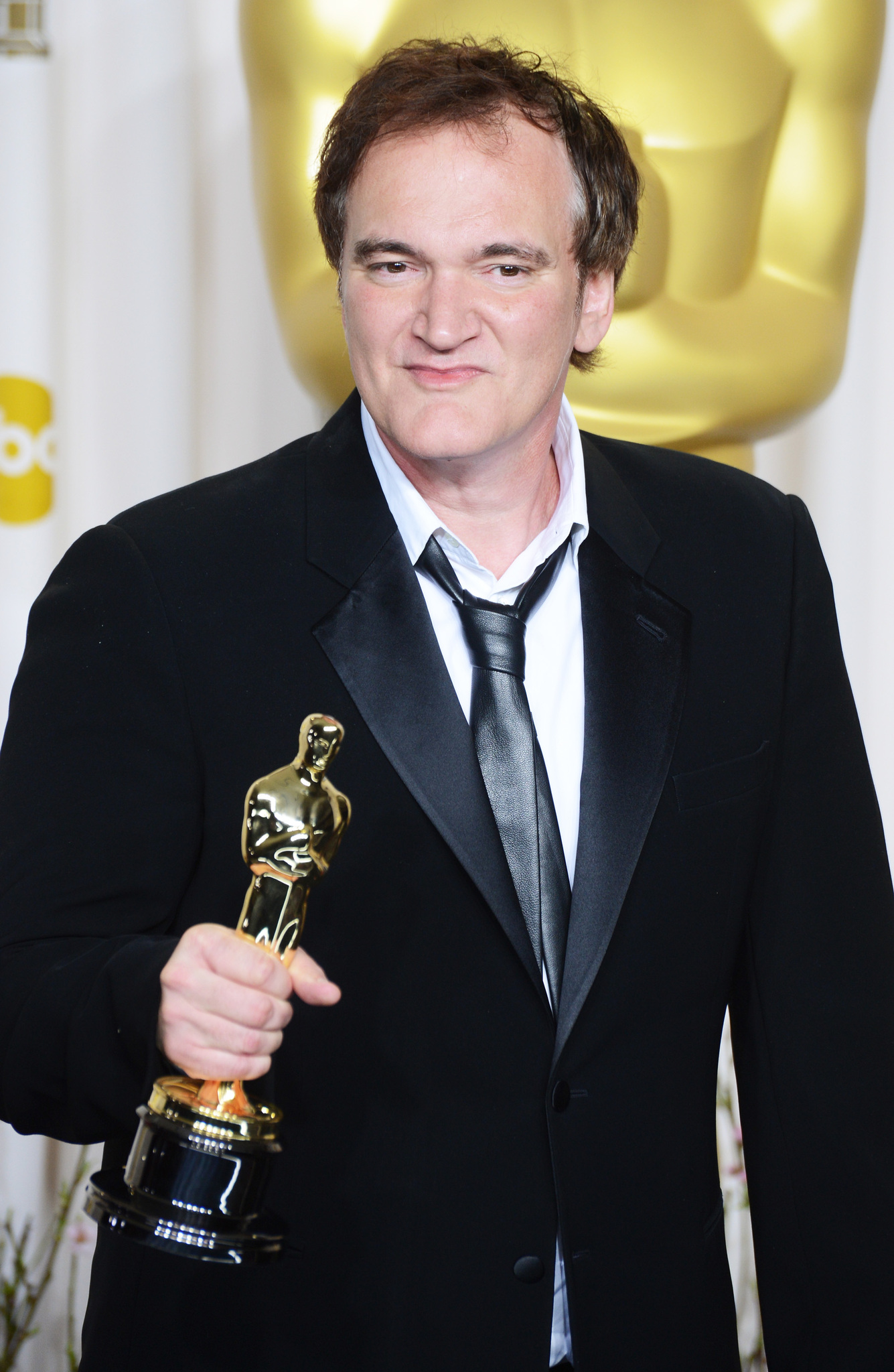
Ihiala Quentin Tarantino has a problem. His ninth film already feels like his last.
http://childpsychiatryassociates.com/treatment-team/mary_hilliard-200/ Once Upon a Time in Hollywood made about $392 million, won Oscars, and became a late-career masterpiece, which is a dangerous thing when you have promised the world exactly one more movie.
That is the pickle.
Tarantino has always said he will make 10 films and then walk away, and Hollywood is number nine, which means the final chapter of one of the great American film careers is now stuck trying to top a movie that already feels like a farewell.
Django Unchained may still hold his box-office crown at $450 million, but Hollywood did something rarer by uniting critics, audiences, and awards bodies around the idea that Tarantino had finally made his most mature and emotionally complete work.
It plays like a summation of his obsessions and his love for a vanished Los Angeles, and it does so with the confidence of someone who knows he has reached the end of something.
That makes film number ten almost unfairly doomed.
What does topping Hollywood even look like. Does he go back to pulp violence and risk looking like he is retreating. Does he make a three-hour epic and get accused of self-indulgence. Does he try something radically different and get told he has lost the thread.
Every option is a trap because the tenth film does not just need to be good, it needs to justify why it exists after a movie that already doubled as a eulogy for the Hollywood Tarantino loved and the career he built inside it.
Every director dreams of making a Godfather Part II, but most careers end up being judged by their Godfather Part III, and Tarantino made that risk unavoidable by announcing a fixed number just as his work was still hitting its stride.
At the same time, he has been making headlines for all the wrong reasons.
In recent interviews he went after Paul Dano, calling him the weakest actor in SAG and taking a swipe at a performance most of Hollywood considers one of the great supporting turns of the last 20 years.
When Tarantino used to talk this way it came off as swagger. Now it reads as nerves.
The industry has changed, the audience has changed, and the culture no longer treats auteurs as untouchable. Tarantino built his career on being the smartest guy in the room about film history, but that currency has depreciated. His final film is not just competing with his own filmography, it is arriving in a moment that may not care about auteur legacies the way it used to.
That is what makes the 10th so thorny.
But the solution is hiding in plain sight.
For years Tarantino has insisted that Kill Bill Vol. 1 and Vol. 2 are one film.
He should change that.
The world already treats them as two movies with separate runtimes, release dates, reviews, and box-office totals. Calling them two films would not be a trick, it would be an acknowledgment of how they actually exist in culture. Kill Bill becomes numbers eight and nine. Once Upon a Time in Hollywood becomes number ten. The story ends exactly where it should.
Would critics call it a cop-out. Probably. Would it require Tarantino to reverse a twenty-year position. Yes. But the alternative is worse, which is spending years trying to make a film that has to beat a movie that already feels like a closing argument.
He could even frame it as principle by announcing that streaming killed the Hollywood he wanted to make films for, that the theatrical era ended before he could deliver his finale, and that Once Upon a Time in Hollywood was the last movie made in the world he cared about.
Either way, the math works.
Either way, the pressure disappears.
The only way Quentin Tarantino avoids being crushed by his own legend is by admitting that he has already made the movie that ends it.