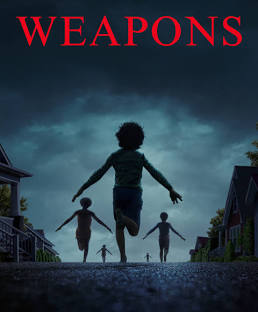
Zach Cregger’s Weapons isn’t simply his follow-up to Barbarian. It’s a declaration that he has no interest in becoming a “franchise horror guy.”
okey-doke If Barbarian twisted genre expectations through sudden tonal shifts, Weapons detonates them altogether. What looks at first like a police procedural about missing children mutates into something far stranger: a meditation on communal grief, paranoia, and the stories towns tell themselves when faced with the inexplicable.
The disappearance of seventeen children from the same classroom is less a plot engine than a wound — the kind of shared trauma that remakes everyone who lives near it. Cregger builds his film as a mosaic of perspectives: a teacher wracked with guilt, a father who thinks vengeance will cure his helplessness, a cop with his own buried ties to the tragedy.
None of them provide clarity. Instead, their fractured testimonies push us deeper into uncertainty. The film is not interested in “solving” the mystery in a conventional sense; it’s interested in how mystery itself corrodes people.
What makes Weapons bracing is the way it fuses the grammar of horror with the quiet rhythms of small-town life. Cinematographer Larkin Seiple frames basements and classrooms with the same severity as he frames dreamlike forest rituals. Long, static shots of ordinary spaces gather dread simply by refusing to cut away.
The sound design — creaking doors, faint voices, the low hum of things unseen — insists that horror is not elsewhere but embedded in the everyday. This is horror not as intrusion but as revelation.
Performances anchor the abstraction. Julia Garner’s teacher is brittle and exhausted, a woman who has lost both authority and innocence in the eyes of her neighbors. Josh Brolin plays grief as if it were an armor he has welded shut, letting rage leak through the cracks. Alden Ehrenreich, as the local cop, is the closest the film comes to empathy. The actors ground the film, making its most surreal turns feel earned rather than indulgent.
Still, Weapons will divide audiences. Its refusal to provide tidy answers risks feeling evasive. Its final act veers toward the metaphysical, layering ritual and symbolism atop what began as a social-realist mystery.
Some viewers will see profundity; others, obfuscation. Cregger wagers that horror works best when it destabilizes, and he commits to that wager. The result is a film that lingers less as a story than as an atmosphere; tense, mournful, unresolved.
In the landscape of contemporary horror, Weapons stands apart. Where so much of the genre has become formula — the haunted house, the possession, the allegory spelled out in neon — Cregger insists on unease without comfort.
The film’s real subject isn’t missing children but the weapons communities wield against themselves: suspicion, blame, denial.
Whether you leave exhilarated or frustrated, you will leave marked. And that, in its own bleak way, is Weapons’ triumph.