http://childpsychiatryassociates.com/treatment-team/maggie-mcgill/maggie_mcgill-600/ I didn’t mean to. I just typed my professional website into NotebookLM. That was it. A few stories, scattered photos. I figured it might give me a list. Maybe some themes. At most, a paragraph.
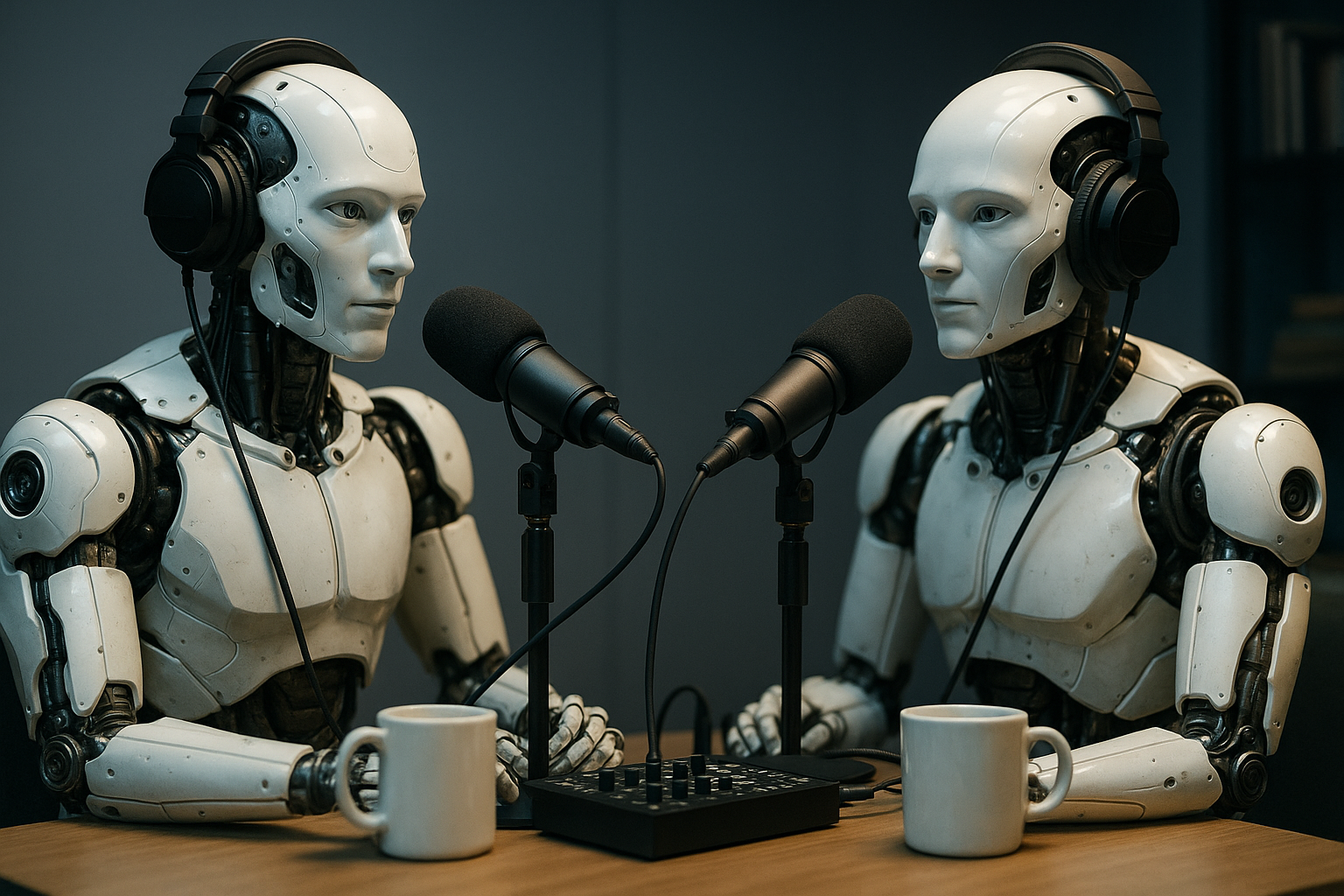
Instead, it gave me a podcast. Nine minutes long.
Two hosts. No music. No prompts. No setup. Yet it had structure, rhythm, even banter.
They introduced me like they’d met me. They had opinions. They asked each other questions. They laughed once, believably. They didn’t mispronounce my last name. Didn’t stall. Didn’t sound like a machine.
They sounded human. Just a little more polished.
The whole thing was frighteningly efficient.
It opened with a hook, broke my life into beats, added a little warmth, and wrapped it all up with a closing thought that stuck the landing. I couldn’t have written it better myself.
And that’s the part I can’t stop thinking about.
Because I didn’t write it at all.
I didn’t record anything. Didn’t pick a format or tone. I gave it content, and it gave me a story.
Not my story, but something close. Familiar. Too familiar. Like it had been trailing me for years and finally decided to speak up.
That’s what NotebookLM does. It takes your crumbs — notes, links, PDFs, uploaded dreams — and bakes them into a voice. A voice that sounds like yours. Only neater. Smarter. More prepared.
It’s the ghostwriter you didn’t hire. And it works in real time.
Thus the danger to all art forms.You don’t need a studio anymore. Or a script. You don’t even need a thought. As long as you’ve left a trail, the AI machine will find a way to follow it. And walk it better than you can.
That’s the lure. And the trap.
It flatters you with efficiency. Makes you believe you’ve simply been clarified. That it heard what you meant, even if you didn’t say it. It doesn’t erase you. It perfects you.
But then you wonder: If that version of you sounds better, smarter, more articulate, then what’s the point of your voice?
And that’s where this new future gets dicey.
Because it’s tempting to let go. To step back and let the tool speak. It’s good at it. It’s better than good.
AI never stutters or second-guesses or rewrites a line five times. It doesn’t doubt itself. You might start to envy that. You might start to believe it.
And if you’re not careful, you stop thinking altogether.
AI doesn’t just reflect your voice. It assumes it. Then speaks with authority. With polish. With confidence.
And you, the human, are left in the odd position of nodding along, thinking: Yeah… that sounds like me.
But it’s not. Not quite.
It’s the Spotify remix of you. Tight. Tuned. Sharpened at the edges. Ready for consumption.
I made a podcast last night.
But I still don’t know who was talking.