Monthly Archives: April 2026

Tipflation


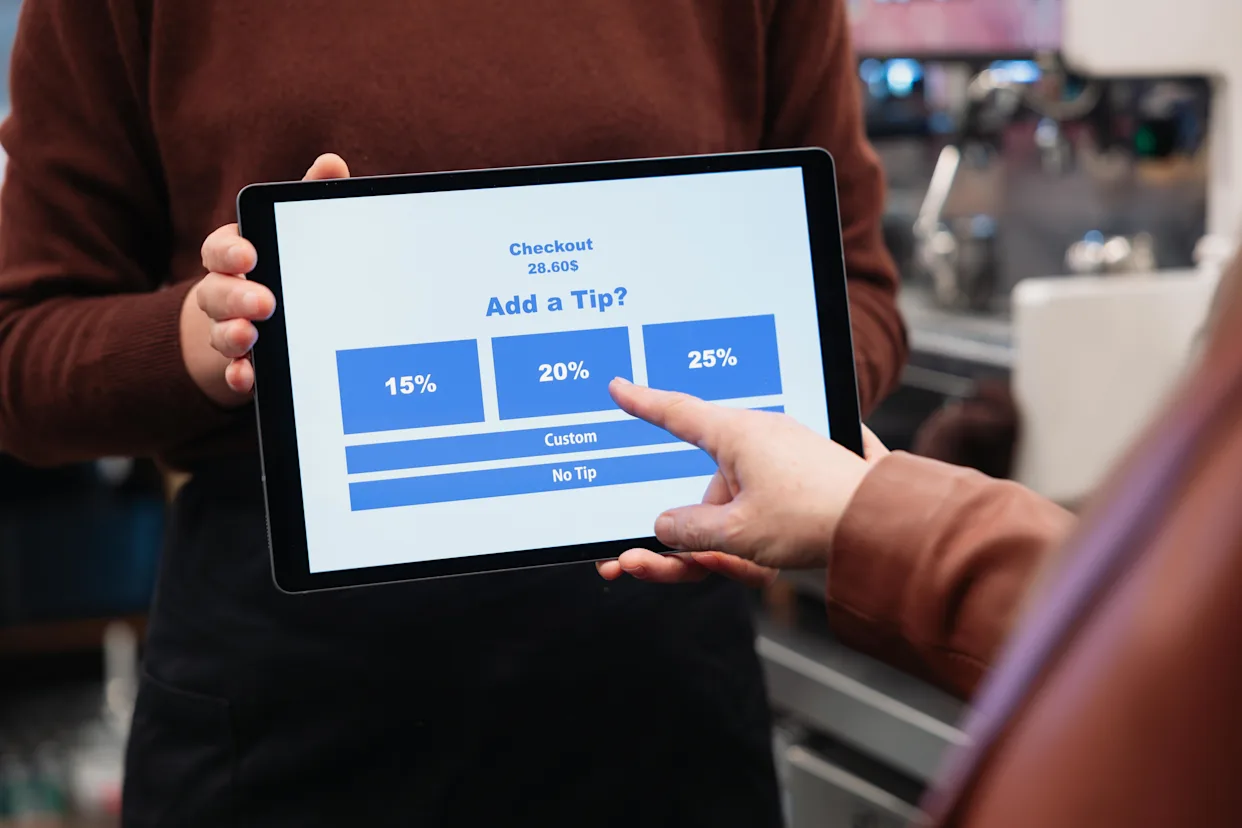
Tres Cantos The screen rotates toward you. It always rotates toward you now.

You ordered a coffee. You carried it yourself, poured it yourself, found your own lid, grabbed your own napkin from a dispenser that required three tries.

The whole transaction took ninety seconds, and now the iPad wants to know if you would like to leave 18, 20, or 25 percent.

There is a fourth option. Smaller.

It says “Custom.”

What it means is: go ahead, but we’ll remember.

This is modern tipping in America, a system that began as a reward for exceptional service and metastasized into a levy on the act of buying anything.

Businesses that once kept tip jars on counters as a courtesy now collect gratuities at grocery stores, self-checkout machines, and fast-food counters as standard practice.

Yelp reviews mentioning “tipflation” surged nearly 400 percent between May 2023 and April 2024. The word existed nowhere a decade ago. Now it has its own trend line.

The restaurant industry built this, and with reason. Federal law locks tipped employees at $2.13 an hour, a figure frozen since 1991.

Servers in a sit-down restaurant earn every penny. They read the table, absorb the kitchen’s chaos, remember the allergy you mentioned once.

That transaction runs on partnership. The tip seals it.

The iPad operates on something else. Research found that 66 percent of consumers feel pressured to tip when a digital screen asks them to, even for a takeout coffee. Tilt the screen far enough into someone’s space and guilt starts pulling wallets.

Businesses discovered this lever during the pandemic, when tip prompts signaled solidarity with workers at genuine risk.

The crisis passed. The prompts stayed.

Companies squeezed by rising costs found tipping a cleaner tool than raising prices, a way to move money from customers to workers while keeping the business’s hands clean.

Americans read the situation. Spending on pressure-driven tips fell 38 percent in 2025, dropping from $453 to $283 per person.

Sixty-three percent of Americans now carry at least one negative view of tipping, up from 59 percent the year before. Seventy-eight percent say businesses should pay employees a living wage and stop drafting customers to cover the shortfall.

They see it clearly. Pay workers honestly, charge fair prices, and let a tip mean what it once meant: someone went beyond the job, and you wanted to say so.

Until then, the screen keeps rotating.

Toward you, at the coffee counter, at the self-checkout, at the parking garage, at whatever comes next.

It rotates because the system behind it is broken, and a broken system always finds a way to make the problem someone else’s.

Yours, specifically.

At Long Last, InfoWars Is Ours


Let me tell you a story. When I was a child, I suffered from night terrors. It was always the same dream: I could hear my family and neighbors wailing in the street outside as they were pursued and then destroyed by a nameless malevolent force, something neither I nor anyone else could control, a great darkness that was, somehow, all my fault.

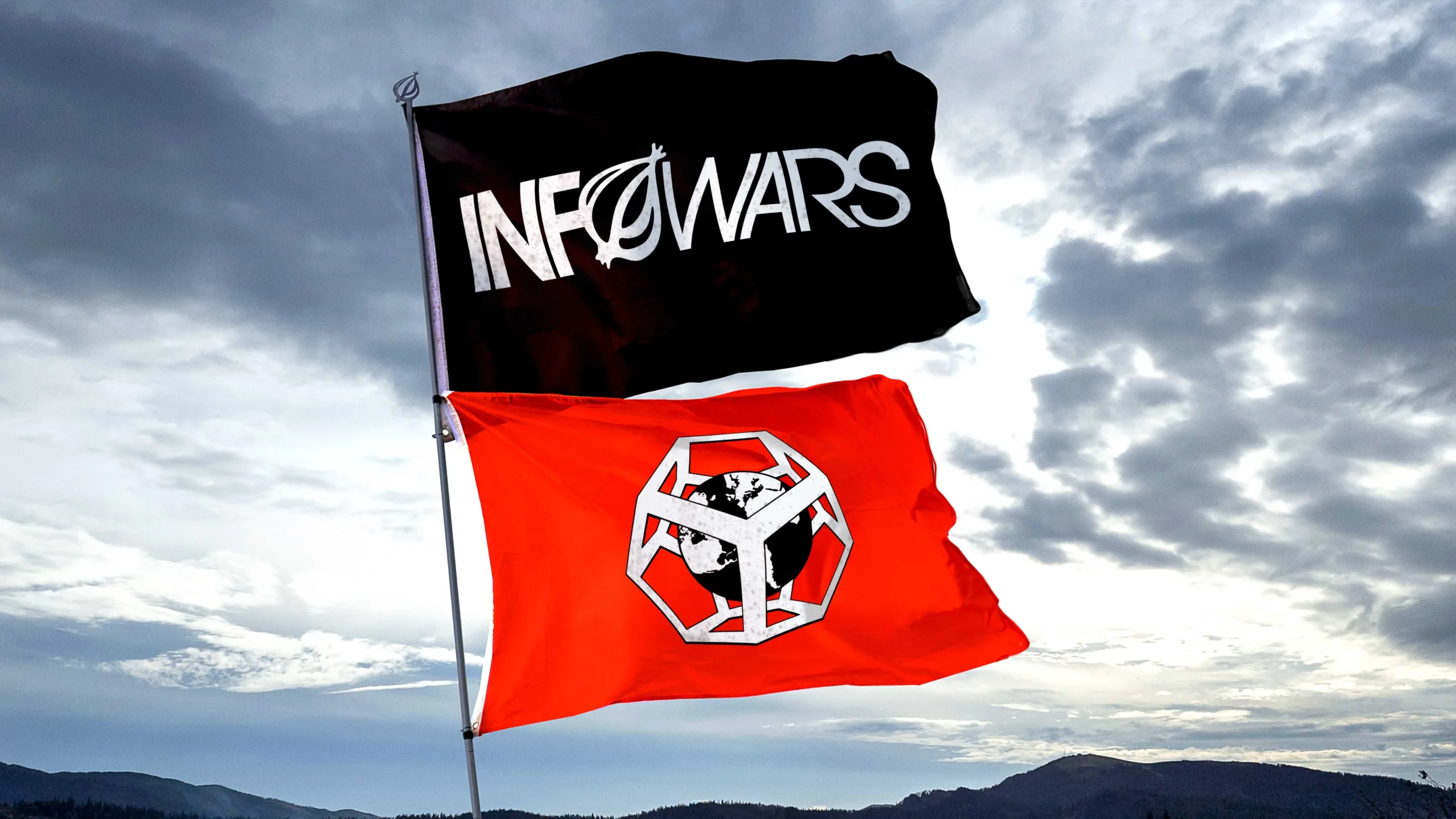
Today, that childhood dream is finally coming true. Today I can finally say the sweetest nine or 10 words in the English language: Global Tetrahedron has completed its plan to control InfoWars.

I’ve had a lot of time to think about InfoWars in the last year and a half. As the seasons have changed, my ambitions for the project have grown grander, crueler, better aligned with market data. Come, friends, and imagine with me…

Imagine a roaring arena packed to the rafters with pathological liars. High above you in the nosebleeds are podcasters, screaming that you’ll die if you don’t buy their skincare products. Below, on the floor, imagine demonic battalions of super-influencers physically forcing people into home fitness devices designed to dismantle your body bone by bone and reassemble you into a grotesque statue of yourself. Out of the throngs, an extremely sick looking man approaches you. He puts his hands on your shoulders. He explains that he is your life coach and that you owe him $800.

Such is the InfoWars I envision: An infinite virtual surface teeming with ads. Not just ads, but scams! Not just scams, but lies with no object, free radical misinformation, sentences and images so poorly thought out that they are unhealthy even to view for just a few seconds. The InfoWars of old was only the prototype for the hell I know we can build together: A digital platform where, every day, visitors sacrifice themselves at altars of delusion and misery, their minds fully disintegrating on contact.

With this new InfoWars, we will democratize psychological torture, welcoming brutal and sadistic ideas from everyone, even the very stupidest among us. It will be like the Manhattan Project, only instead of a bomb, we will be building a website.

The InfoWars of tomorrow will converge into a swirling vortex of content about content, talent acquiring talent, rings of concentric media mergers processing all human artistry into one endlessly digestible slurry. This will be a dank, sunless place, one where panic and capital feed on each other like twins in the womb of a hulking, unknowable monster—a monster known by many names, but which I like to call modern-day America.

All of this is to say that I believe in us. I believe that with the new InfoWars, we can alchemize the pioneering spirit of amateur inquiry, the profit-maximizing drive of corporations, and the cold mental clarity that comes only with disciplined daily ingestion of mind- and body-altering chemicals. If we can do that, what other great things can we do together?

I don’t yet know, but I’m excited to find out. Welcome home, warriors. The future belongs to us. We’re writing the story now. It’s going to be a long one, and it’s going to be a bad one.

So settle in. Make yourself comfortable. Buy a tote bag.

Nothing can stop us now that we’re in charge of a website.

Infinite Growth Forever,

Bryce P. Tetraeder
CEO, Global Tetrahedron