Villa Regina There is no good reason Mad Men should work, which is exactly why it may be the greatest show ever made.
The premise sounds thin on arrival. An advertising executive in the 1960s sells campaigns for soup and diapers. No crime empire. No meth lab. No wiretaps. No bodies.
Put that logline next to The Sopranos, Breaking Bad, or The Wire and it reads like a lesser idea. Those shows come with built-in stakes. Violence carries momentum. Illegality supplies tension.
Mad Men removes that crutch.
What replaces it is the harder subject. Desire. Not the cartoon version sold in ads, but the private, unsteady version people carry into work, into marriage, into the quiet hours when no one is watching.
The show takes the business of advertising and turns it inside out. It studies the people who manufacture longing while trying to understand their own. The product is not soup. The product is happiness. The question is whether anyone involved knows what that means.
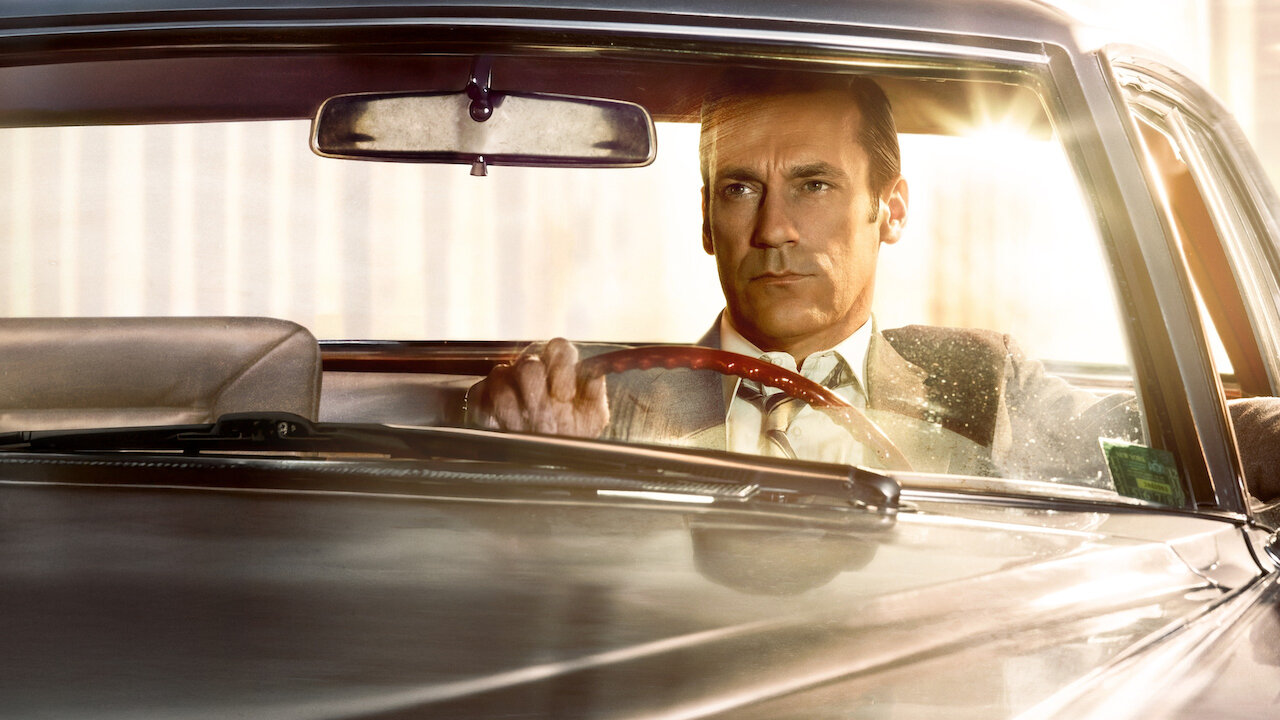
Don Draper stands at the center of that question. He drinks. He cheats. He sells. He builds a life that looks complete from the outside and keeps slipping out of his own hands.
He is a family man and a fraud, a success and a ghost. That tension is not a character quirk. It is the country in miniature. America presents one story and lives another. The distance between those two stories is where the show operates.
That is what separates it from its peers.
The Sopranos, Breaking Bad, The Wire all orbit crime. Mad Men touches it and moves on. Don’s past as a deserter matters, but it is not the engine.
The engine is transactional life. The way people talk past each other. The way relationships become negotiations. The way a pitch meeting can feel more honest than a marriage.
That focus gives the show a different weight. It is not about the edge of society. It is about the center.
The pacing reflects that choice. It is slow. It takes its time. It trusts the audience to sit in a room and watch a look cross a face.
Each episode plays like a contained film. The compositions are deliberate. Freeze any frame and it holds. The influence of Stanley Kubrick sits in the background, not as imitation but as discipline. The camera observes. It does not rush to explain.
The ending completes the argument.
The episode titled “Person to Person” offers the promise of connection. Don reaches a place that looks like clarity. Then he smiles.
He has an idea. The Coca-Cola ad. One of the most famous commercials ever made.
The show does not resolve the tension. It sharpens it. Human connection becomes material. Insight becomes product. The escape from the machine feeds the machine.
That is the final move.
Mad Men examines America’s real life, not its projected one. It shows how people sell versions of themselves and then try to live inside them.
It shows how success can feel hollow and how emptiness can produce brilliance. It turns a modest premise into a study of identity, commerce, and the stories a country tells about itself.
No other series starts with so little and extracts so much.