http://childpsychiatryassociates.com/treatment-team/donner-dewdney
The most successful thing I ever wrote had no heart.
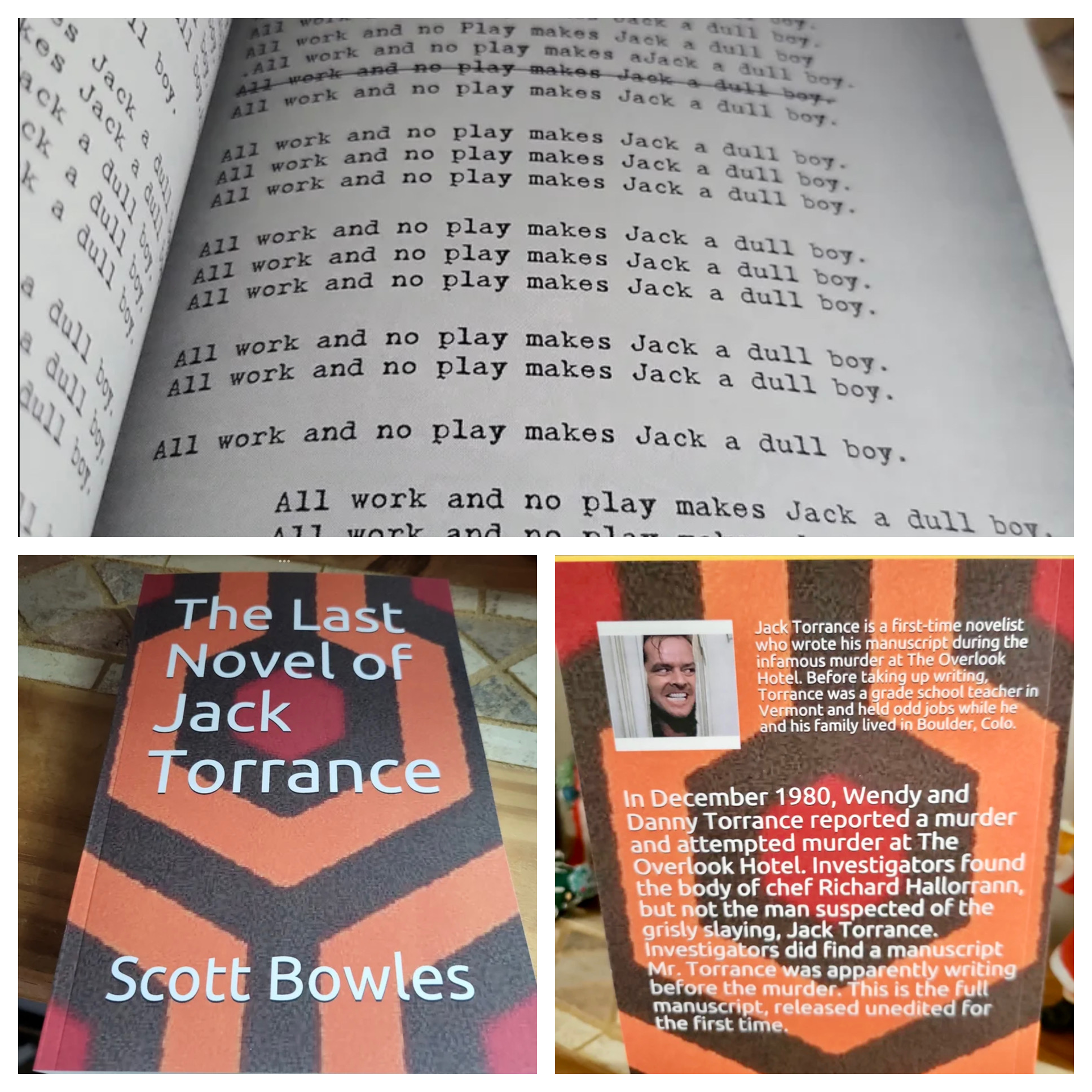
It was The Last Novel of Jack Torrance, a book that isn’t really a book. Just page after page of one sentence: “All work and no play makes Jack a dull boy,” the killer line from Stanley Kubrick’s classic The Shining.
It outsold everything else I’ve written, and that says more about audiences than art. The lesson? Cold works.
Which is why the 1997 miniseries of The Shining, now streaming on Hulu, doesn’t.
Stephen King wrote it himself, as if to correct Kubrick’s version, the 1980 masterpiece he once dismissed as “cold.”
That’s true. It is cold. The walls breathe frost. The hotel hums like a morgue. The characters lose warmth and gain menace.
Kubrick filmed winter, and it is glorious.
King’s version opens the windows, lights a fire, and hands everyone cocoa. And a polo mallet instead of an axe? Why not make it sqeak when it lands squarely on the head.
Jack Torrance, the alcoholic teacher turned caretaker, isn’t a menace in the series. He’s a misunderstood dad. Wendy isn’t terrified. She’s patient. Danny isn’t haunted. He’s special. Even the ghosts seem to be pulling for group therapy.
Horror melts in all that warmth.
Kubrick’s movie traps you in geometry. Every hallway angles wrong. Every word echoes. Jack Nicholson’s grin is both comedy and collapse, a man freezing in his own mind.
King didn’t like that chill, so he thawed it. He gave Jack back his humanity. He made the family’s love visible. And the fear evaporated kettled tea.
The miniseries, directed by Mick Garris, runs nearly five hours. That’s a long time to watch a slow-motion breakdown in soft lighting.
The hotel looks like a ski lodge brochure. The special effects look like leftovers from Tales from the Crypt. You can almost hear the production notes: “Make it warmer. Make it relatable.”
What King forgot is that horror needs distance. It needs the cold space between what you see and what you feel.
Kubrick’s film isn’t heartless; it’s heart-frozen. That’s why it endures. You don’t want to save Jack. You want to escape him. You don’t want to understand the hotel. You want it locked forever.
I wrote The Last Novel of Jack Torrance as a love letter to Kubrick and that kind of frost. Most (though not all) got the joke.
One film built a myth. The other built a miniseries.