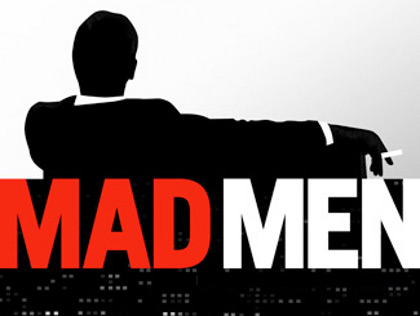
A Farewell to Don, Walter, Omar, and All Those Against the Grain

Osório  

Ask me my favorite television show, and I’ll blurt out “Breaking Bad!” before you can get to “…of all-time.”

But I have to concede. Mad Men, which begins its final arc Sunday, may be TV’s greatest drama.

The difficulty is in separating the two, favorite from greatest. Our inclination is to defend our passions as quantifiable, as if to validate an opinion. My father’s favorite basketball player was Larry Bird, as is mine. I remember dad spending, literally, hours explaining why Bird was the greatest of all-time: the best passer, the most versatile, toughest and hardest working employee of the NBA.

But I’ve come to acknowledge that Bird’s (and my) former arch nemesis, Magic Johnson, as the better player. More head-to-head victories, more championships, more influential in the game we know today. Even taking a learned path in life.birdnmagic But that’s okay. I’ve quit trying to argue my love as something empirical. What’s wrong with conceding a fanaticism — for a show, a drawing, a person, a poached egg — followed just as openly by a confession that what we love most may be flawed, human, non-sensical, perhaps even broken. Does that diminish a devotion? Surrender a defense?

So in deference to Walter White: You are my antiheroes of antiheroes. I am your Jesse. I sizzle the glass with you.

Yet, Don Draper and Mad Men could be the greatest feat in television history.

Consider other dramas regarded legendary: Breaking Bad, The Sopranos, The Wire, ER, Law & Order, The West Wing, 24. All, as do 90% of today’s television dramas, subsist on crime, law (including making) or medicine. It makes sense. Those are exciting worlds, full of irresistibly low-hanging dramatic fruit.

Now imagine the pitch that Matt Weiner must have made to AMC for Mad Men. “It’s a show set a half century ago, in a New York ad agency. We’ll get into specific ad strategy — for Kodak, Lucky Strike, Playtex, Utz potato chips, Sno Ball and Ocean Spray, along with (literally) 76 other real-name clients.” Oh, and it’s a no-name cast, with no crime, law or medicine for subject matter.

That it would earn network approval and an eight-year following is about as miraculous as landing Conrad Hilton’s trust (which Don did, briefly). And much ink and megabyte will be spent praising the show for its look and fashion (all deserved) as well its now-known stars (deserving as well).

But let’s recognize its sheer artistry for a moment, if not first. Consider the ad pitch for the folks at Kodak, in season 1, episode 13, for an episode called The Wheel, a what-if with Draper as pitchman for the carousel projector.


Lady Lazarus, from season 5, episode 8, is as dark and artistic as the Sylvia Plath poem that inspired it, just with a kick ass Beatles finale. (Sorry about the Spanish subtitles; it appears to be the only video of it on the World Wide Intertubes.)

And that’s what makes the show understatedly deft, that straddle between detail and tedium. Sure, it’s stylish and a bit too beautiful. But throughout you’ll see artistic touches — and outright show-long homages — that no show but The Simpsons would dare broach, from Dante’s Inferno to Stanley Kubrik to author Philip Roth. In fact, Don Draper is simply a rendition of the protagonist in Roth’s Portnoy’s Complaint, about an impossibly handsome Lothario who can’t fill his cavernous soul with his conquests. (And wouldn’t that be a kick finale, if the entire show were a flashback as Don spills his guts to a shrink?)

The show also differed in its treatment of time. Normally, shows dread time like Dracula at sunrise. Look at 24, a season created out of one day. M*A*S*H lasted longer than the Korean War. Breaking Bad pretended six years was two; The Simpsons has been on a quarter century, and Maggie is still an infant not yet talking.

Mad Men, on the other hand, bounded through the 60’s as if were tripping acid. Smack into MLK’s and Bobby Kennedy’s assassinations, Nixon, the Vietnam War, the counterculture movement. If most dramas focus on a singular, familiar place — a bar, a coffee shop sofa, a triage unit— Mad Men concerned itself with an era, often brutal. That’s unheard of for an industry whose limited view on time usually includes a future with a zombie apocalypse.

The show had its failings. Like the 60’s literature that littered i story lines, Mad Men can’t help but paint most women as mothering, smothering or emasculating. And no entertainment has glamorized smoking this much since Sergio Leone spaghetti Westerns.

But in bidding farewell to the womanizing, alcoholic Don Draper, we also wave to a vanishing TV breed: the antihero. Perhaps reflecting the mood of a nation already somber by real-life events, execs seem to favor the lantern-jawed heroes of late, particularly when they don spandex. Tony Soprano, Dexter, Mr. White, Omar Little Omar_little(you’ve really got to see him in The Wire) all salute you from television’s cloud circuit, where antiheroes appear headed.

I know you’re a doomed drunk, Don. And Mad Men’s outer-shell shiny emphasis on advertising was really an inner reflection of how we see ourselves. Or, more importantly, want to see ourselves.

Still, through your Old Fashion-addled, oversexed, orphaned logic, you have come upon something profound. That, at our best, we are all antiheroes: flawed, flailing, but fighting nonetheless. And that’s worth another round. Cheers.

Pipsqueak Pit Bulls and the Just Comeuppance


I’ve had her since she could, literally, fit in my palms. But I am just now realizing how badass Esme is.

God knows I bray enough about the dogs, like a granddad with a photo album. And I’ve spewed plenty of wind-baggery on her intelligence, her fetching skills, her TV viewing habits (I can’t watch America’s Funniest Home Video because, when she sees a dog or anything similar, she hops on the TV stand for a closer look). Oz

But, truthfully, Teddy has always overshadowed her. Four times as heavy and eight times as social, he sort of insists on making out with anyone who steps into my house. Esme has to wait for an open lap.

Today, however, on our daily stroll at the dog park, Esme didn’t need a lap, bitches.

As we did our clockwise walk through the park (we’ve always walked in the fenced-off Big Dog Yard; otherwise didn’t occur to us), we stumbled on a thick, gray pit bull. Beautiful, but menacing not only for his maw and baritone bark. A leash hung off his neck, a telltale sign that an owner doesn’t trust a dog to roam free.

The pit wasn’t pouncing other dogs. But it insisted on sniffing every hound there. And when a dog dared lift its head, make eye contact or venture a sniff, he held stock still, as if awaiting a sudden move. When he came up to us, Teddy made the mistake of saying hello. As he sniffed the pit’s ear, I heard a deep growl. I’ve had a pit mix, and I know that sound. They also make it when they see a cat they’re about to maul.

I stepped between the two and ushered an unwitting Teddy away. “The owner’s over there,” I heard a guy say as he nodded in the direction of a woman, perhaps late 30’s, glued to her cell phone. If Darwin is correct, one day the human hand will evolve into a curve to naturally cradle its most vital tool, the cell.

He walked over and said what we all felt. “You need to watch your dog,” he hissed. The woman not only continued on the phone, but covered her other ear to hear the line.

The man held his ground, pointed in the dog’s direction. Without moving the phone from her mouth, the woman screamed “Apollo!” The dog trotted by her side as the man shook his head and joined the other humans and canines. He stopped by me again, introducing Bella the Beagle and allowing me to blather  yet another theory: If you have one long enough, a dog will reflect its owner.

Witness Teddy: Dim-witted but a glass half-full kind of guy; terrible vision but will come along for any road trip; foreign parts in his body and shaved down with the clippers set at No. 8, same as me. I can’t wag like him. I do, however, drool splendidly. wag

As we walked toward the exit, I began to leash up Teddy. Esme trotted behind. Suddenly, I saw Apollo was back, now sniffing the girl. His head, about the size of her torso, nearly lifted Esme by the hind legs as he got a bouquet-full of her rear. I stopped to grab Esme by the collar while I attached the leash.

Too late. Without warning, Esme turned and snarled as I’ve never heard. Faced Apollo, who froze for a second.

I guess that’s all the beta signal Esme needed, because she suddenly lunged at the pit, snapping and snarling. I’m sure, in an all-out fight, Apollo could snap Esme like a twig. But confidence is everything. And she does not lack for it. She was so mad that she not only had the dog on his heels, but the owner dirtying hers.

By the time I picked Esme up (still flared, still growling, still glaring at the pit), the woman was at her dog. She took his leash, castigating him while she checked for (his) blood. If we could, Esme and I would have stepped over the two like Jack Johnson stepped over wannabe contenders.

“Your dog all right?” I cracked, not awaiting an answer. I fixed the leash on the girl and we all climbed into the car.

As we drove home, I remembered once getting suspended in Detroit for scuffling with a student known for picking fights. I was certain Dad would be furious. Instead, that night, he simply offered me a fighting tip: “If you get cornered by a bully, punch him right in the nose, and he’ll back down. Bullies always do. And he’ll stop picking fights.”

I don’t know if bullies will ever stop picking fights. But I guess that’s less the point than standing your ground. And, in all honesty, Esme may never understand why she got a rawhide wrapped in cheese when we got home. sprawled

But she sure is going to enjoy tonight’s America’s Funniest Home Videos.

https://www.youtube.com/watch?v=Vk7g8waRNWQ

Casting Out the Sinister Minister (or How to Pick Your Sunflower)


I believe in god about as much as I do the tooth fairy (come on, TF, if you were real, you’d financially compensate adults who lost teeth, not kids; they’ll just waste it on crap).

But I must confess a love: televangelist Joel Osteen.

This should not be. As the son of an atheist — if there were an official atheist card, dad would have enlarged it to the size of a sandwich board — my earliest memories of TV Bible thumpers were from granny’s shitty 12-inch black and white television, which could hail only the local religious channel. It was CNN for sinners — Hell and Brimstone, 24/7. I would become an ordained minister just for the irony, though it will come in handy soon.

Then one day I channel-stopped on Osteen’s weekly sermon, broadcast to seven million people weekly in more than 100 countries. And though he looks like a TV weatherman with an unfortunate brush with Botox, I can see how he became the nation’s preeminent preacher. osteen

He got less godly.

Listen closely to the gospel from the Lakewood Church in Houston, the nation’s largest house of worship for Protestants (his flock, 43,000 strong, bought Compaq stadium, home of the Houston Rockets). Sure, he ends with a prayer and impossible promise: tune in by show’s end, and you will be saved. And don’t forget our book.

But aside from requisite idol worship, Osteen takes a largely untrod path to faith. He is nearly areligious. He does not use the word hell, or Satan. He invokes the almighty, perhaps, a third as often as other preachers, if that. No fires waging eternal here.

Instead, he talks about taking a righteous path. You could substitute “life,” “karma” or “Fortuna”  for every reference to god, and the message remains largely intact. He waxes not about the demon Lucifer, but the demon within. And just as present, he urges, is an inner angel.

More important, he recognizes religion as analogous, not actualized. He understands parable like a wordsmith. Osteen recently spoke about those circling the post-divorce drain: the depressed amd addicted, the broken-hearted and jobless. Not once did he lay blame, nor did he suggest, ‘You are being punished. You deserve this.’

Instead he did something canny. You are not broken, he urged. You are not damned. You are a super computer with unmatched processing speed. “Your software is just corrupt,” he said. “You don’t need to throw out the computer. You just need to find the virus.”

What a knowing tactic. I can see Maude attending service, yellow umbrella et al. If religion’s stratagem has been to nag until you submit, Osteen’s is to cheer until you conquer. He seems to sense that the realities of today don’t always reward the just and punish the wicked. Some days, you have to do it yourself. He seems one of the few behind the pulpit who understands that the only sermon that resonates is the one you tell yourself.

In a recent interview, a reporter asked Osteen about his glory gospel, why he refers to “the enemy” instead of Satan, why he does not engage in the cautionary tales of a vengeful, omnipotent father who has grown sick of his children.

“When I grew up, the Devil was a reason why I had a headache or got mad,” he answered. “I like to make it broader. Sometimes the enemy can be our own thoughts, our limited way of thinking. We can excel. But some people preach about Hell like you’re already going there.”

Amen, brother.