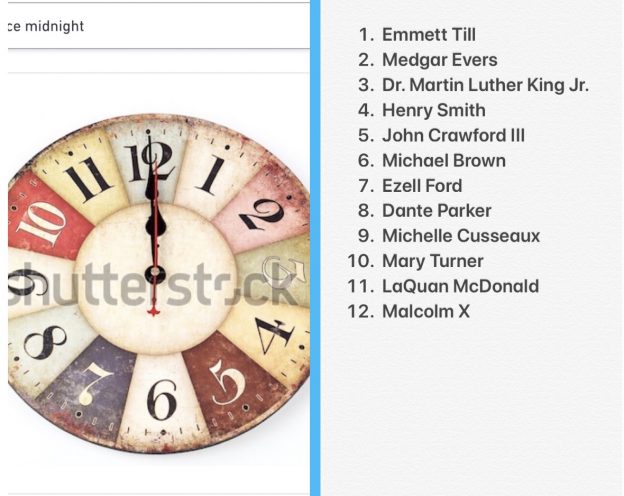
North Miami Beach Here’s a magic trick to show kids or families/friends with a youthful streak. The names come from babynames.com, which highlighted the names of black lives cut short by violence. Consider the trick a silent nod to all.
The trick:
Think of any number on a clock.
Look at the clock pictured above and find your number.
Find the number OPPOSITE your number.
Subtract the smaller number from the larger.
That is your magic number.
Now look up the name next to your magic number.
That is your magic name…
There’s a terrific contrivance in Blade Runner 2049. The 2017 Blade Runner sequel posits that there was an epic blackout of electricity in 2022 that made it impossible to tell human beings from their synthetic counterparts, Replicants.
What a prescient notion.
For today, Tuesday, June 16, 2020, we experienced a tragic, heretofore unnoticed, blackout across the news landscape.
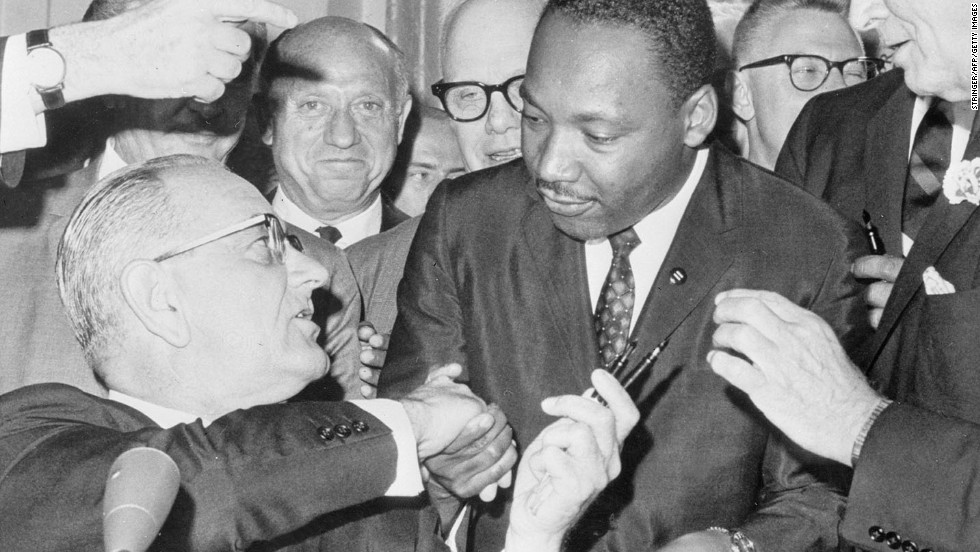
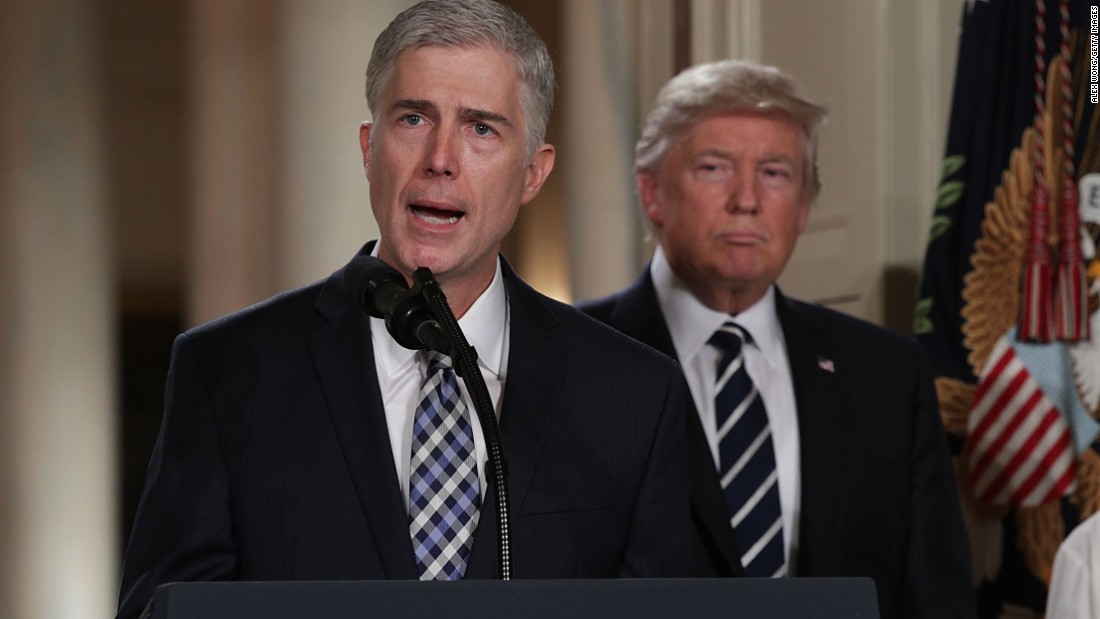
Only the day before, a Republican-run Supreme Court voted 6-3 (a near-unanimous vote in today’s politically bipolar times) that the 1964 Civil Rights Act extends to gay, lesbian, and transgender employees from discrimination based on sex. On top of that, Trump’s first appointee to the court, Neil Gorsuch, wrote the majority opinion.
When the news broke, it thundered and properly shook homes in all news neighborhoods, from print to TV to online. It was at least a 7.0 Richter scale rumbler, and was properly compared to the Civil Rights and Women’s Rights victories of the 1960’s.
So why the hell did we not treat it that way the next day?
After reading about the news yesterday afternoon, I immediately tuned to the 24/7s. There, from CNN to FOX to MSNBC, I found nothing but protest and pandemic news. Some to applaud mask-wearers and sign-holders, some to condemn them.
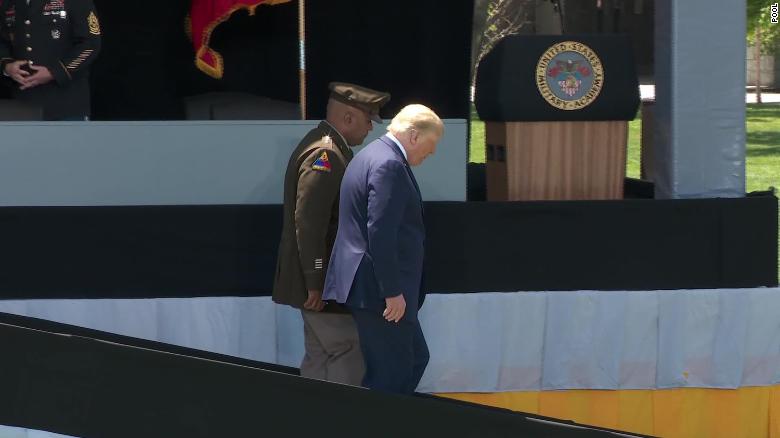
On the late-night circuit, the ruling took a backseat to the shows’ cold-open toppers: Trump geezer-stepping down the ramp at West Point.
This isn’t to say that those stories aren’t news. Both pandemic and protest deserve front-page coverage. The New York Times noted that Trump’s physical frailty, from his arm spasms to slurred words to geriatric gait, could be personal trouble for the president and political trouble for his party.
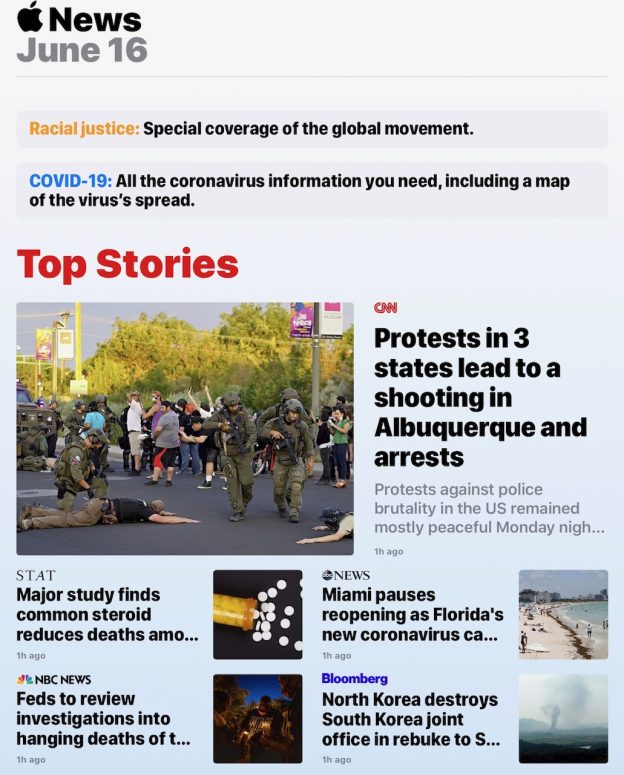
But take a look at the picture atop this post. It’s a screenshot of the Apple News feed from this morning recapping the most important events of the day. A next day.
You will find nothing there about the ruling.
If what happened yesterday was the tectonic shift all outlets claimed, how could that news not merit remaining a top-of-the-fold, lead-the-newscast, editor’s-pick story today? Did we cover passage of the Civil Rights Act with the same short-term memory?
I pray not, and I suspect not.
I get the demands on news that it be clock-current in coverage. We will once think it quaint that we got our news on parchment a day after an event. Now we want a full-blown analysis of the game we just watched waiting for us by the time we get to our phone or computer.
But there is a darker truth about the way we covered the ruling — and news writ large. We largely ignored it because it was good news (at least for those who agreed with the ruling, which is likely a vast majority, given the judicial panel speaking).
That truth becomes undeniably clear when you think of how this story could have been written today. Where are the pieces on joyous reactions of Americans who finally feel recognized? Where’s the story on a worker relieved that she won’t be fired for joining her gay softball team? Those would make for fine TV/online/print/social media articles.
There are also complex news stories to pursue. On Friday, for instance, the Trump Administration finalized erasing Obama-era transgender civil rights protections in health care. The Times noted that Friday’s ruling meant that the Department of Health and Human Services no longer had to recognize gender identity as an avenue for sex discrimination in health care.
Given their leanings, you’d think CNN and MSNBC, at the very least, would be all over this troubling news for the administration, particularly with a presidential election a few months away. Or that FOX would be lamenting the snowflaking of a Supreme Court it once considered it’s literal Trump card. Gorsuch was supposed to be a puppet. Is this dissent in the cult?
Speaking of the Supremes: What does this mean for civil rights, which will inevitably be in the Court’s cross hairs, given the tumult that has followed the George Floyd death and ascending Black Lives Matter movement.
Maybe these stories are being aired. But I need prospector’s luck finding them.
You’d think the story would have gotten more traction simply because it is a new beat in the two-note symphony that has become news.
Perhaps part of the problem was that the initial stories mislead readers. The truth is that the ruling is not on a scale of the Civil Rights and Women’s Rights breakthroughs because it involves fewer people.
It’s important news, to be sure. But it should be put in context, which is that the LGBTQ ruling may have been as big as its predecessor, but the monster wave was in a smaller ocean. Maybe even a lake superior.
This is how news became a Labrador puppy, blindly leaping to get out from under the blanket we call Fake News.
That news, too, should be put in context. We know the cliche If it bleeds, it leads.
“There’s a well-known phenomenon in psychology where people tend to think they are smarter than the average person. For Americans, that belief may approach certainty. A 2018 study found that 65% of Americans believe they have above-average intelligence.
In addition to about 2 in 3 Americans saying they are smarter than most other people, the study found that certainty of one’s superior intellect increased with income and education but decreased with age.
If most of us have above-average intelligence, then that sort of dilutes what the word “average” means, and understanding where you rank means learning where others stand. Despite the risk of creating conflict and drama, we wanted to find a way to quantify which Americans actually are smarter than the rest by ranking the states according to how smart they are.
You can jump to the bottom of the page for our full methodology, but our formula takes into account college degrees, high school graduation, professional or advanced degrees and test scores to create a smartest states ranking.
Smartest States
Our analysis of the available data covering educational achievement and test scores found that the smartest U.S. state is New Jersey, and (sorry to this state) the dumbest one is Idaho.
New Jersey’s total score of 337.8 was safely ahead of No. 2 Utah, with its score of 324. Idaho had the lowest score at 79.5, with the next lowest being Oklahoma at 97.8. Among all states, the average score was 221, and 27 states scored above that mark.”