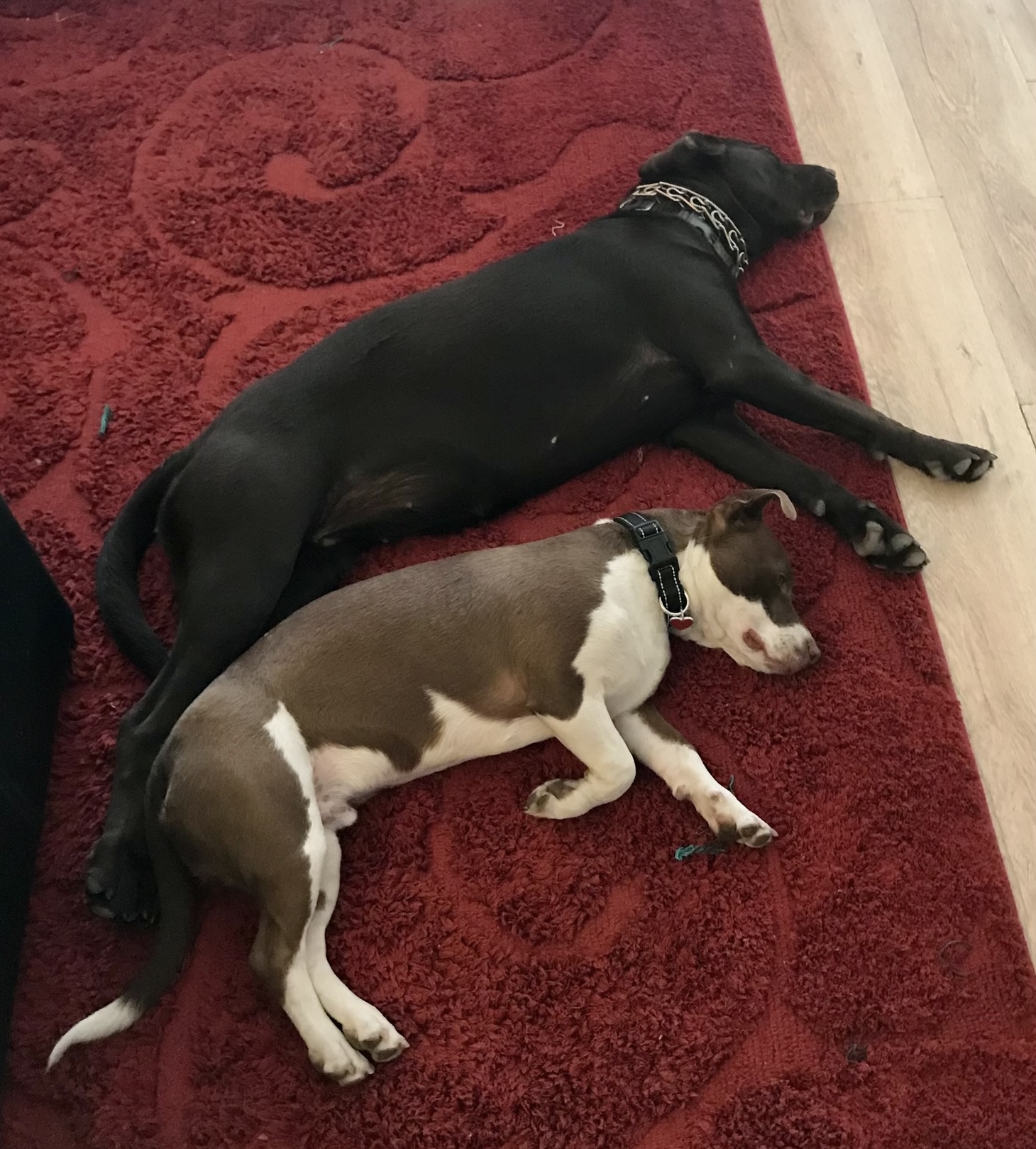
They curl like commas in the sentence of a day, already drifting before the thought of sleep occurrs.
No ritual. No bargaining. Just the gravity of surrender.
I watch as they slip between this world and next with the ease of a thief who knows braille.
I want that kind of faith. That clean exit from the noise, without checking locks or guessing tomorrows.
But I stay up, counting wounds in ceiling paint, composing treaties with yesterday, while they chase silent rabbits on smooth ice at the edge of waking.
This weekend,, the Wall Street Journal confirmed what conspiracy theorists have long believed—and completely misunderstood. UFOs aren’t a cover-up of alien visitors. They’re a cover-up of something far more terrestrial: us.
Specifically, the U.S. military.
According to the WSJ, the Pentagon deliberately seeded disinformation about unidentified flying objects for decades. Not to suppress a world-altering truth, but to hide something far more mundane and menacing: secret aircraft testing and weapons development.
And like a cruel joke played on the paranoid, those conspiracy theorists were both right and spectacularly wrong. There was a cover-up. Just not the one they wanted.
The piece is a cautionary tale about what happens when an entire nation prefers fantasy to fact—especially when that fantasy feels more comforting than the truth.
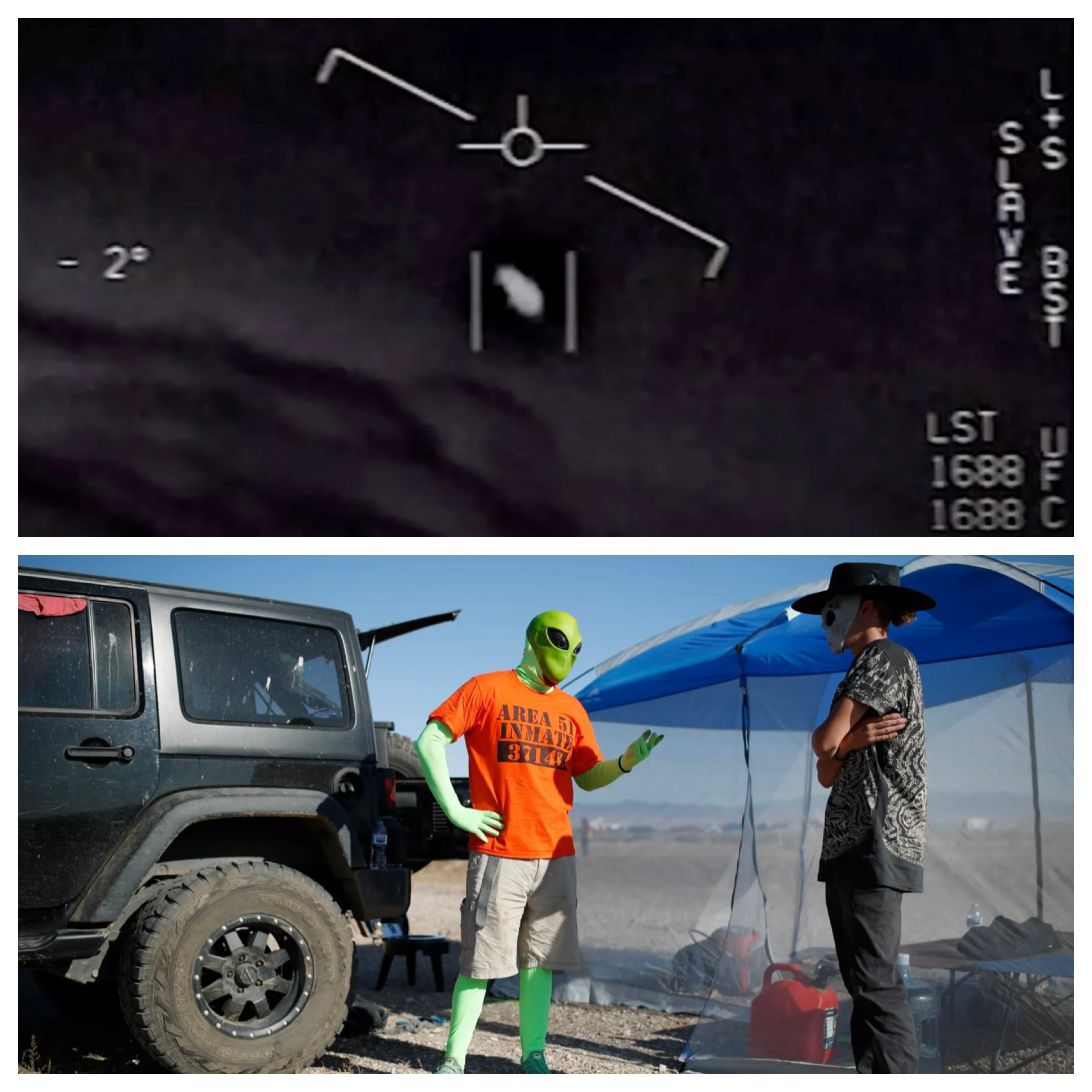
Take, for example, the reports from the 1980s. The Air Force, desperate to keep its stealth programs under wraps, planted fake “flying saucer” photographs in bars near Area 51.
They knew locals would gossip. They wanted them to. Better for civilians—and Soviet spies—to think aliens were involved than to risk leaking the existence of the F-117 Nighthawk.
Then came the psy-ops. Intelligence agents leaked phony documents to UFO researchers, staged light shows in the desert sky, and even conducted mock briefings in which military personnel were told they were part of a hidden extraterrestrial technology task force. Some insiders called it hazing. Others called it counterintelligence. But make no mistake: it worked.
The disinformation muddied the waters so thoroughly that even now, in the aftermath of the Pentagon’s 2024 report concluding no credible evidence of alien visitation, Congress is still holding classified UFO briefings. Voters are still pressuring lawmakers to “disclose the truth.” Meanwhile, Raytheon and Lockheed continue securing contracts for studying “anomalous aerospace threats.”
The truth—that the Pentagon manufactured myth for strategic ends—should be scandalous. But in today’s America, it’s barely a headline.
Why? Because we’ve trained ourselves to prefer the lie. We crave wonder over evidence. We’d rather believe in ancient aliens than acknowledge advanced drone warfare. We want meaning, not machinery.
And that’s the real damage.
Because this isn’t just about UFOs. It’s about January 6th. It’s about QAnon. It’s about the “deep state.” It’s about a country that has grown so distrustful of institutions that even when those institutions confirm their own wrongdoing, we can’t accept the truth of it. We twist it back into the myth.
Ironically, the people who most fervently believe in UFO coverups were the ones played hardest by the coverup. They weren’t seeking the truth. They were seeking affirmation. And when the facts didn’t affirm their fantasy, they moved the goalposts. If the Pentagon says there are no aliens, it must be because the Pentagon is lying. Again. Still. Forever.
That’s how conspiracies survive: by feeding on the very mechanisms that try to kill them.
There’s something tragic about that. The Pentagon’s original goal—to confuse and mislead—was tactical. It wanted to fool the Soviets. Instead, it radicalized its own citizens. It created a new form of domestic mythology, one that metastasized into talk radio rants, cable specials, History Channel pseudoscience, and now, full-blown anti-government paranoia.
Maybe this should be the final proof that there is no grand, secret government capable of orchestrating a lie this complex. There’s just bureaucracy, strategy, and the occasional bad bet on public gullibility.
But the real scandal is that we took the bait.
Turns out the truth was out there all along—we just didn’t want it.
There were three of them, bold and black as coffee, and I’d left a handful of peanuts on the back patio roof. Never thanked me, of course. That’s not what wild things do. But they left the peanut shells in a little crescent near the rose bush, like a calling card—or a question mark.
This morning, I took to the tub. It’s a ritual now: the heat, the quiet, the iPad balanced on a towel.
And then came the chittering. Sharp, urgent. Squirrel talk. It’s not an altogether pleasant sound, especially first thing.
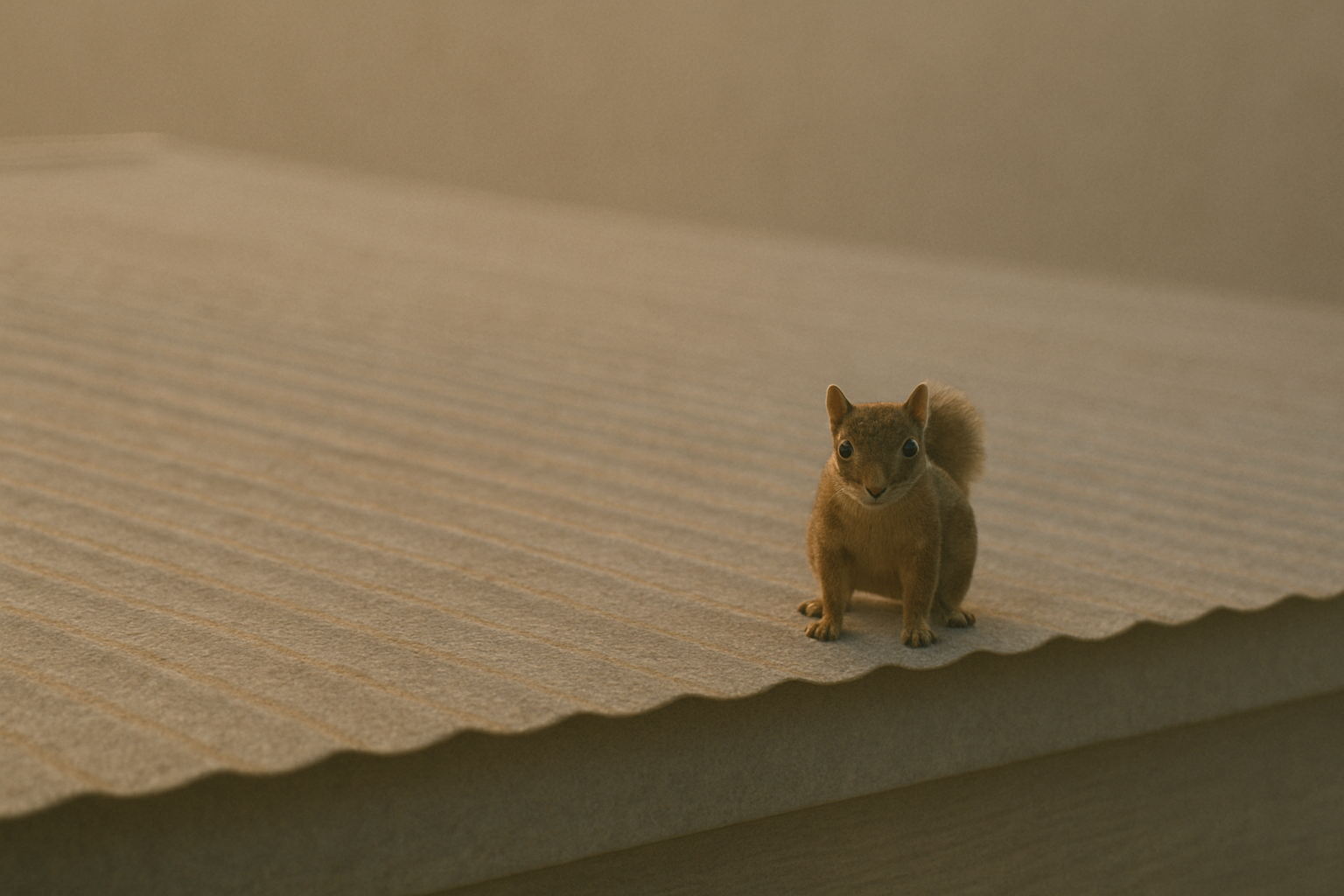
I heard it again, turned. And there he was. On the tin roof’s edge, ten feet from my back. Chittering not at the fence, not at the trees, but at me. He looked me in the eye.
There’s an edge to that kind of gaze, when a wild thing doesn’t look through you but at you. I thought of rabies, of course. This is L.A., and I’ve seen raccoons with with junkie eyes.
I tapped my Gatorade bottle on the tub, a percussion warning. The squirrel turned and vanished as if on cue.
But I sit with that moment. Had he seen me feed the crows? Had he snuck a peanut and come back to barter, or beg, or accuse? Should I come full-handed?
There’s no knowing. Only that the wild has its own memory, and maybe its own economy. I hope I can contribute to it.
I wonder if that works in both directions—if the squirrel’s eyes were his version of a poem, reminding me that no gesture in the natural world goes entirely unseen.