As he ramps up talk of “rigged elections,” “invasions” at the border, and “fighting like hell,” the country inches toward something darker than political division.
Since January 2021, more than 300 acts of political violence have been recorded nationwide, with over 50 in the first half of 2024 alone. Federal data shows threats against election workers, judges, and lawmakers rising each month.
Trump’s rhetoric isn’t abstract.
Before January 6, he told supporters to “fight like hell” or “you’re not going to have a country anymore.” Today, that language persists—now layered with calls to “lock and load,” promises of “retribution,” and boasts about deploying troops to American cities without state approval.
This is not normal political speech.
In Los Angeles this spring, violent clashes erupted around ICE protests. Masked demonstrators. Burning vehicles. Tear gas in downtown streets. Trump responded not with calls for calm—but by praising federal force and urging more. Over 2,000 National Guard troops arrived—without the governor’s request.
And the militias are listening.
Proud Boys, Oath Keepers, Boogaloo groups—all born from Trump’s era—speak openly of “civil war,” “1776,” and “taking back” the country. Many participated in January 6. Many remain armed and ready.
Meanwhile, Trump’s Department of Justice has shifted thousands of agents from counterterrorism to immigration enforcement—over 10,000 arrests last year. Critics warn this tilt undermines true national security, prioritizing political theater over actual threats.
The result? Dissent is reframed as insurrection. Protest is painted as war.
Polls show fewer than 5% of Americans support violence to achieve political goals. But in a nation of 330 million, 5% is a powder keg. And Trump’s words pour gasoline.
Is he calling for civil war outright? No.
Is he stoking grievance, glorifying force, and signaling to armed followers? Without question.
This is a campaign built on menace. Trump doesn’t need a civil war—he needs chaos, fear, and enough violence to delegitimize defeat or justify power grabs.
Elon Musk is about to discover the difference between followers with a small f and followers with a big F.
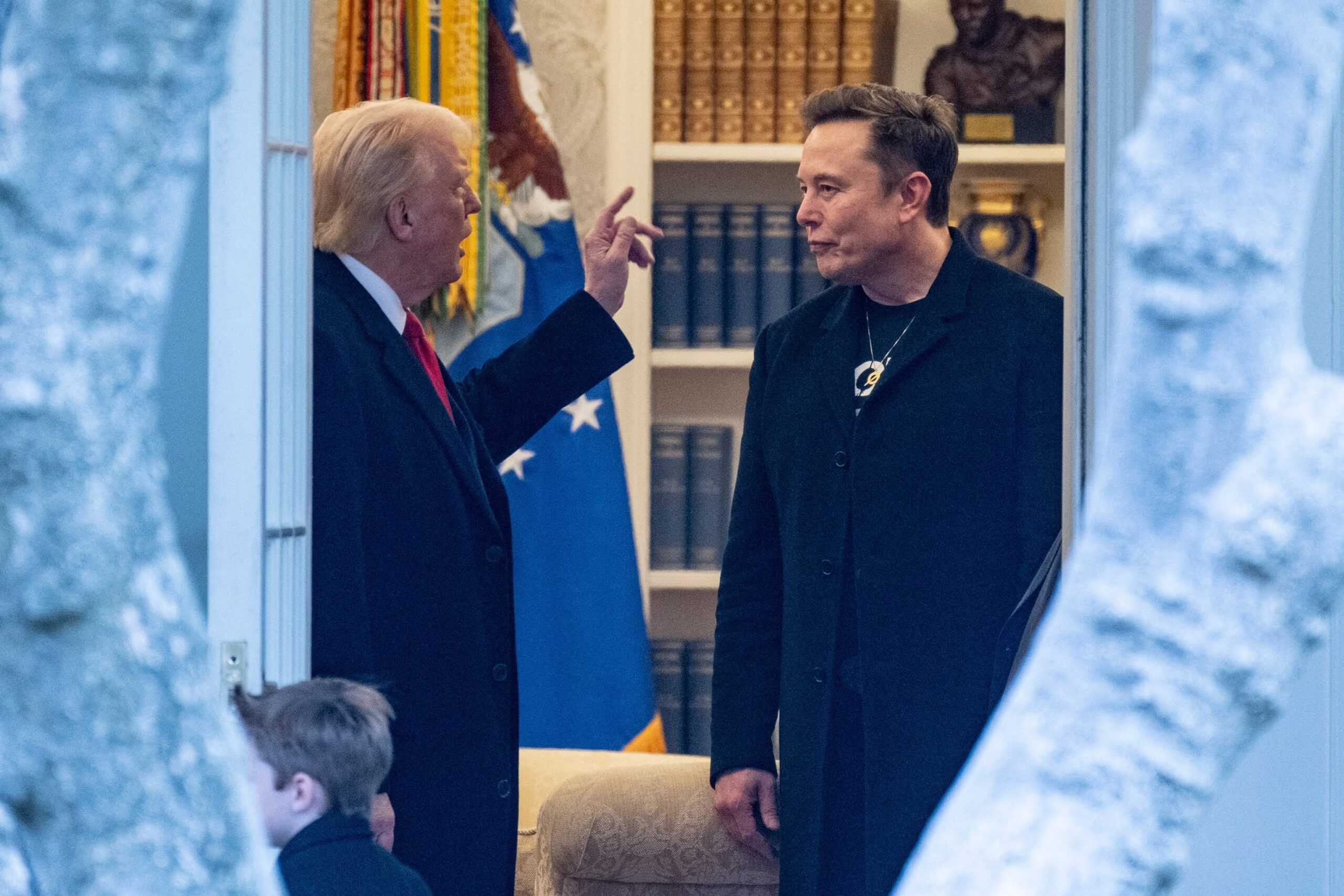
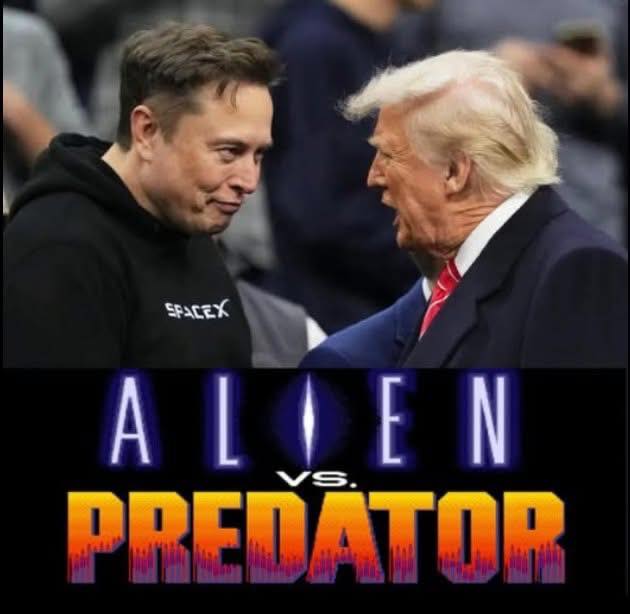
A theater of egos unfolded this week as two of America’s most powerful men collided—not over money or missiles, but over real allegiance. The feud between Trump and Musk isn’t about who’s richer or mightier. It’s about who really commands devotion.
Once allies—Musk funneled staggering sums into Trump’s campaign, led an efficiency czar project in the White House, helped fuel the “America PAC” that backed Trump in 2024—now they’ve blown up in spectacular fashion over policy and performance . Musk slammed Trump’s One Big Beautiful Bill as a “disgusting abomination,” warning it’d drive the deficit into the ground . Trump fired back—threatening to yank subsidies, government contracts, even SpaceX work .
The online aftermath? An algorithmic frenzy: hashtags, memes, Truth Social surging, X usage up 54 percent, Tesla shares dipping 14 percent, Musk’s net worth tumbling $34 billion . But underneath the spectacle lies a deeper test: ideological loyalty vs. technological fandom.
Musk’s audience—those tech bros, convenience usagers, and culture-savvy centrist hopefuls—are “followers” in the digital sense: clicking “follow,” liking a post, watching a rocket launch live. They have foot traffic, attention span, brand loyalty, but not unwavering devotion. When Musk flicks a switch, they log off or scroll past.
Trump’s “followers,” on the other hand, live in a true cult of devotion—they don’t just click “follow,” they rewind speeches, wear MAGA hats, travel to rallies, and echo his word as Gospel. That’s a big F follower. Their loyalty survived impeachment, January 6, policy failures, scandals—because for them, Trump isn’t just a leader. He is their leader .
If this feud is genuine—and not just staged for engagement—it puts Musk against perhaps the only modern American with more zealots than he has nerds. It’s Elon’s first “unbullyable” foe—someone whose base refuses to be swayed by rockets or electric cars. Nancy Pelosi can’t do this. The corporate media can’t do this. But Trump can. And they won’t switch.
That said, it’s good theater. Public feuds between billionaires and politicians feed trending suppressions and public chatter. Musk’s move to float a new “America Party” based on an X poll showing 80 percent middle‑of‑the‑road support fits the drama script . Trump trash‑talking Musk’s mental stability fits his act. Musk threatening to decommission spacecraft fits his volatility . Everyone’s playing to the gallery.
But if real? Then Musk is about to learn that owning X and Tesla won’t render someone immune to cult power. Followers — even algorithmic — won’t relieve him. They watch. They like. But they don’t multiply in the streets.
Trump’s big‑F followers show up. In cabins. In red states. On stage at rallies. With faith. When MAGA called for impeachment, they didn’t flinch. When Musk floated the Epstein files rumor and quickly deleted it, his fans shrugged and moved on . But MAGA loyalists retweeted, reposted, dog‑piled—true believers in every sense .
Generationally, it’s a divide too. Musk appeals to millennials and Gen Z who worship at alt-tech shrines and hashtags. These are followers in the Instagram/X sense: like, reshare, meme.
But Trump mobilizes boomers and older Gen Xers who see him as salvation, a savior of the country. They show up physically and vote in blocs, not just log in.
In essence: Musk has followers; Trump has Followers. Both powerful—but qualitatively different:
Follower (small f): Passive. Digital reach. Brand loyalty. Can switch allegiances.
Trump’s base survived scandals that sank others. His zealots aren’t easily budged by tweets, market drops, or public shaming. They subscribe to his narrative, not just the platform. And that’s why, in this test, Elon may be facing a foe unlike any he’s known.
Which brings us back: Is this feud real? Or calculated theater? Probably both. Both men realize that nothing drives engagement faster than on-screen conflict. Musk’s aim at Trump could moonlight as brand diversification for X. Trump’s attack on Musk could shore up MAGA unity before the next campaign.
But if Musk believes he can out-flip cult devotion with tech savvy, he’s about to get schooled. This isn’t a market he can colonize with better graphics or electric cars. This is religion.
In the clash of clicks vs. creed, tech’s darling may be about to learn that real followers don’t just click—they spit their venom.