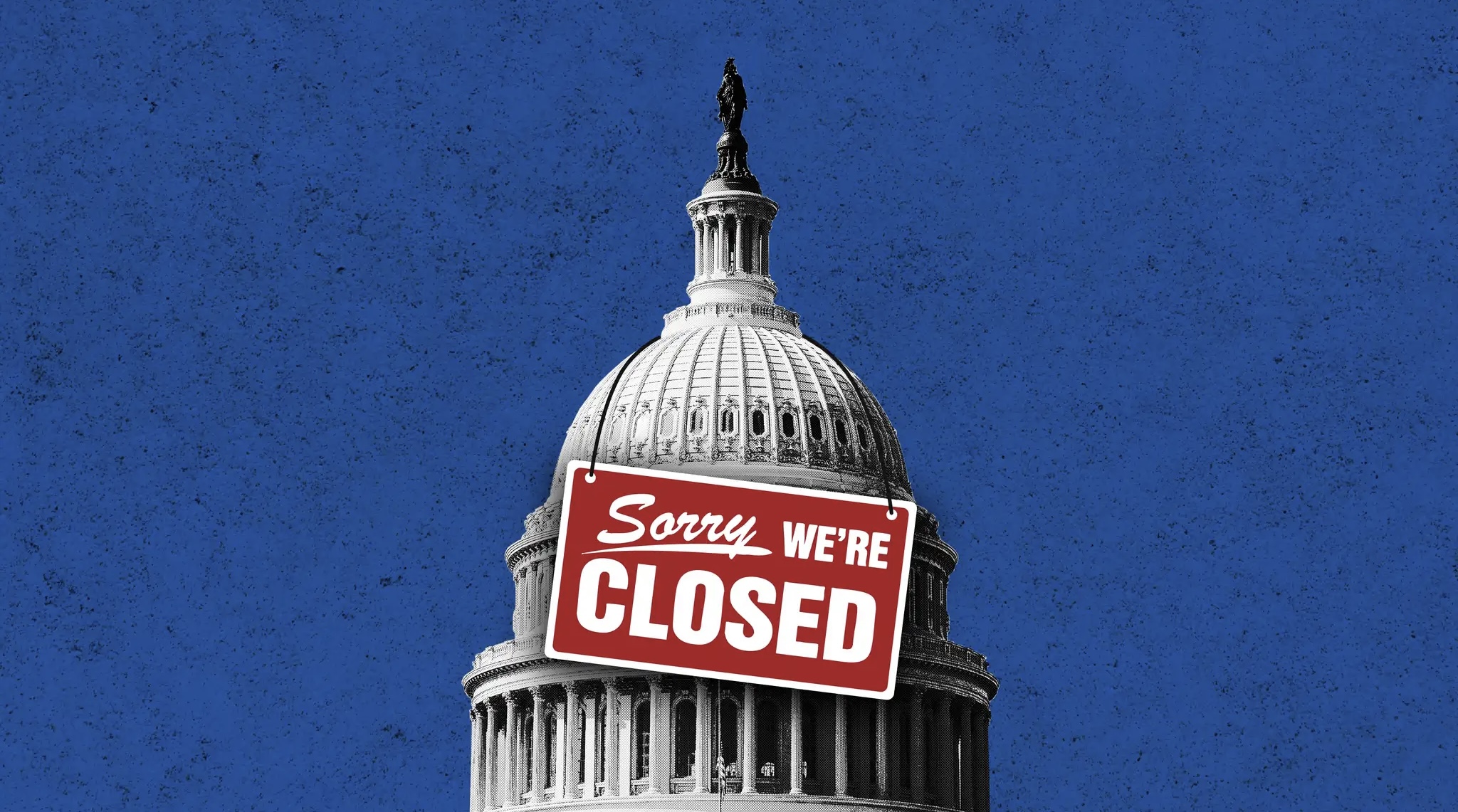
The U.S. federal government is expected to partially shut down at midnight on Oct. 1, following a failed budget compromise between President Trump and Congress. This would mark the 22nd shutdown since 1976.
What’s Driving It
The impasse centers on health care spending. Democrats want to preserve Obamacare subsidies and reverse Medicaid cuts enacted under Trump’s “Big Beautiful Bill.” Without a deal, funding expires at the end of the fiscal year, Sept. 30.
Shutdown Consequences
Furloughs: Hundreds of thousands of federal workers considered nonessential would be furloughed—this time possibly laid off, per OMB guidance.
Unpaid but working: Essential employees—including the military, border security, TSA, IRS, and law enforcement—must work without pay, but typically receive back pay later.
Mail, prisons, and taxes: USPS, federal prisons, and the IRS remain operational.
Historical Shutdowns
Longest: 34 days under Trump (Dec 2018–Jan 2019).
Most days total: Jimmy Carter, 56 days across five shutdowns (1977–1979).
Average duration: ~8 days per shutdown.
The last major shutdown in 2019 left 50,000 Coast Guard employees without pay for 35 days. A repeat now seems imminent.
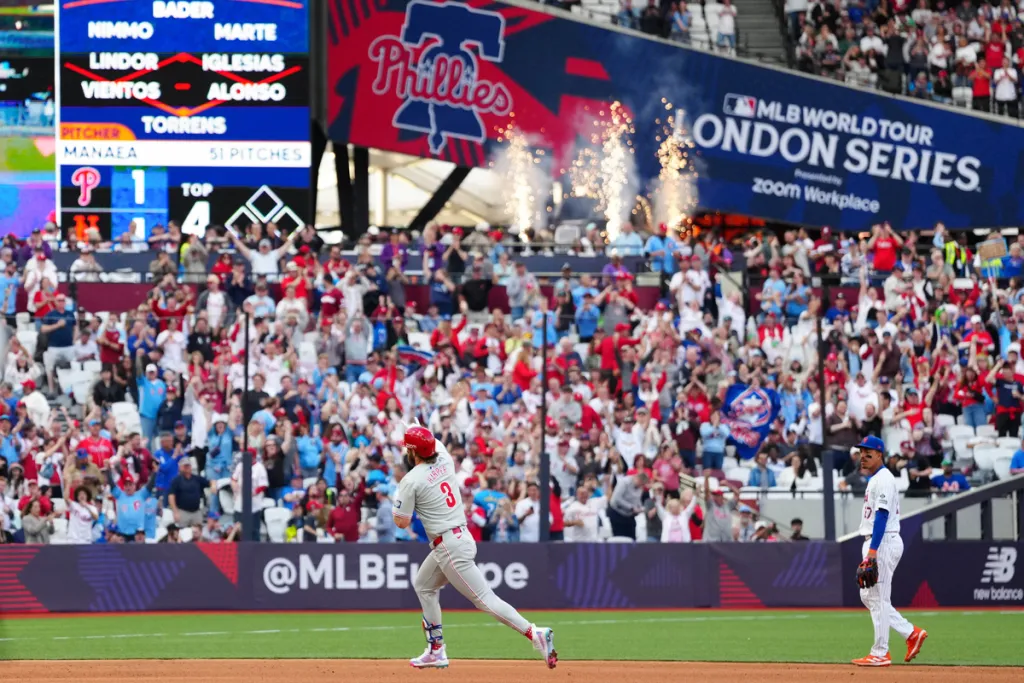
And yes, my Detroit Tigers are in the playoffs. That alone is almost reason enough to pop the cork. Detroit baseball meant futility for years. Now it means October.
Shohei Ohtani made sure the whole sport felt alive. He hit .282, launched 55 homers, drove in 102 runs. On the side, he struck out 62 hitters in 47 innings with a 2.87 ERA. That’s circus stuff, Babe Ruth with turbo.
Aaron Judge wouldn’t let Ohtani hog the season. Judge hit .331, grabbed the batting title, crushed 53 homers, 114 RBIs, a 1.144 OPS. He led in average, on-base, slugging, OPS. Every stat line had his name stapled to the top. He didn’t just have a good year. He had a season that will be recited in Cooperstown.
The stars popped, and that matters. But the real story is the skeleton of the sport. Baseball finally trimmed the fat.
The pitch clock saved the game. Fifteen seconds when bases are empty. Eighteen with runners. No more endless circles around the mound. No more hitters redoing wristbands and prayers between pitches. The game moves. The dead air is gone.
You can feel it in the stands. You can feel it on TV. Every pitch arrives before you can scroll your phone. You miss something if you look away. That’s the pointt. Baseball stopped giving fans a reason to driftAnd then came the ghost runner. Start the tenth with a man on second. The purists cursed. But the tension doubled. No more fourteen-inning graveyards. A bunt matters again. A bloop matters again.
Managers sweat again. Decisions cut fast. Do you bunt? Steal? Pitch around? Every move is magnified.
The league stripped the stalling. It remembered urgency. Baseball always had drama hiding inside it. The clock and the ghost runner just dug it out.
October still plays by the old rules. No free baserunner in the playoffs. No shortcuts. That’s fine. October doesn’t need gimmicks. It feeds on pressure.
And look who’s here. Dodgers, Phillies, Brewers. Yankees, Red Sox. And yes, the Detroit Tigers.
The United States has always been a country defined by statues. We raise them, topple them, argue about them, and sometimes pretend they never existed. From Confederate generals to Martin Luther King Jr., bronze has been our nation’s strangest mirror.
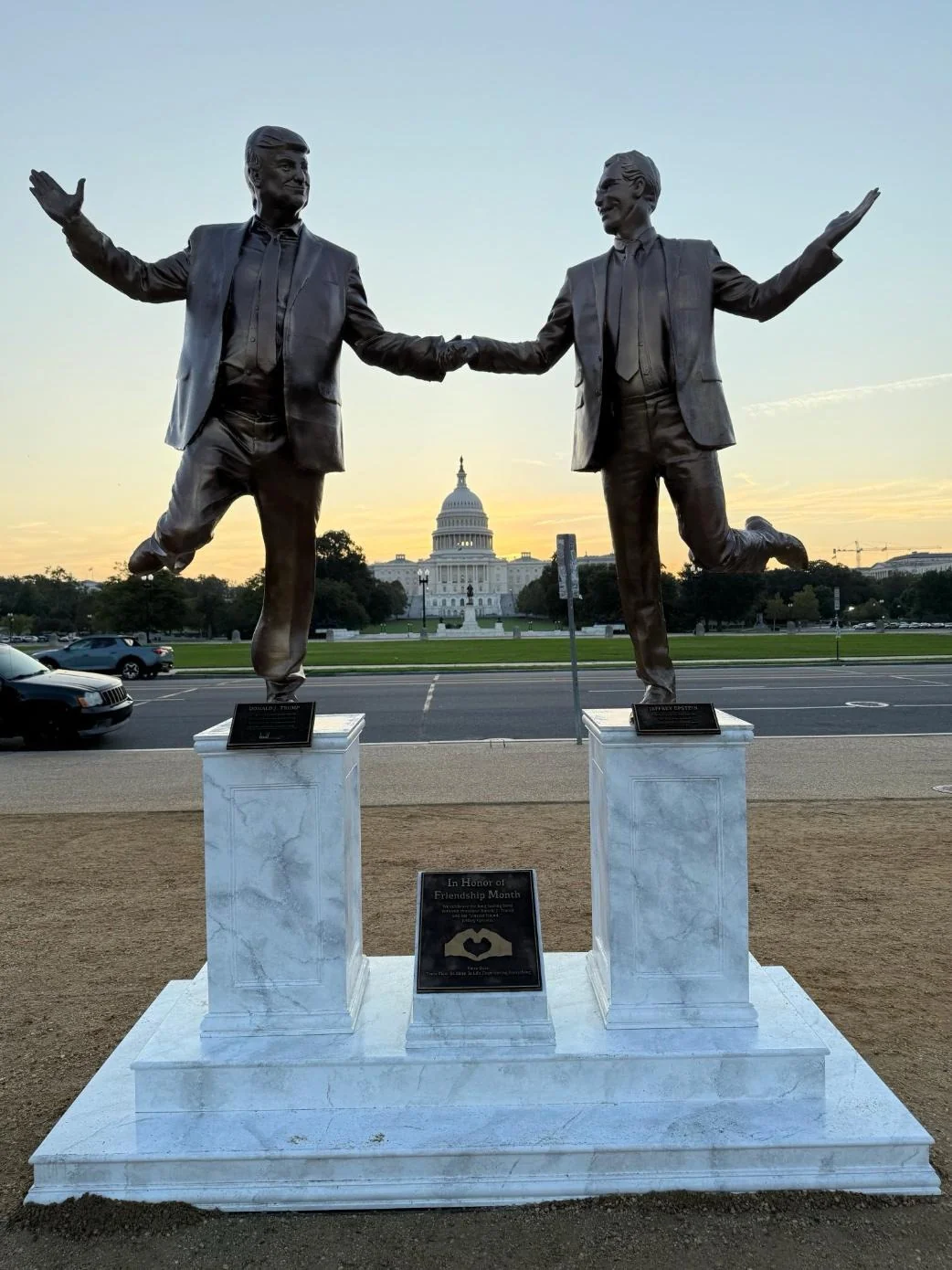
Last week, a new reflection appeared on the National Mall: a gleeful tableau of Donald Trump and Jeffrey Epstein, hand in hand, mid-skip, a plaque underneath reading “In honor of Friendship Month.”
The piece was the work of a little-known artist collective calling itself The Secret Handshake. They called the statue Best Friends Forever, a 21st-century provocation in the same lineage as your Girl With Balloon or the day you shredded your own art at Sotheby’s.
It was placed directly across from the Capitol dome, that most American of backdrops, and it was gone almost as quickly as it came. The National Park Service declared it “non-compliant with its permit” and had it whisked away, like a magician sweeping evidence under a rug.
The choice of subjects was no accident. Trump, of course, is the sitting president, a man who insists on loyalty while dishing out none. Epstein, the convicted sex offender whose death in federal custody still spawns theories, is a specter Trump would rather forget. To pair them, mid-prance, was to take a chisel to the thin veneer of seriousness that Trump has always tried to lacquer over his public persona. The grin on those statues bit deeper than any editorial cartoon or campaign ad could.
And that is why this work matters. It cut through. It reached nerves. It reminded people that satire, especially sculpted satire, can sting harder than slogans. The Park Service may have carried the statues off, but not before cameras captured them, not before social media shared them, not before the image carved itself into the bloodstream of American political theater.
This is where you come in.
Banksy, you’ve made a career of puncturing power with wit and stealth. You don’t build monuments; you stage interventions. Your work thrives in the tension between permanence and disappearance. You know better than anyone that a piece doesn’t need to last in stone to last in memory.
Still, sometimes stone helps. Sometimes bronze makes the jab permanent.
The Secret Handshake has given you an opening. Their statue, for all its sudden impact, was fleeting. Imagine if it were multiplied — not in London, not in Paris, not in Bethlehem, but here, across the United States.
Imagine Best Friends Forever popping up in Miami, in Dallas, in Los Angeles, in the very places where Trumpism burns hottest. Each one a reminder, each one a provocation, each one a photograph waiting to circulate worldwide.
Would it draw outrage? Certainly. Would it be pulled down? Likely. But that is the point. In this country, the battle over monuments is also the battle over memory. We let Lost Cause generals stand for a century, rewriting our Civil War as noble.
Today, we risk a similar whitewashing of Trump, as though his reign were circus without consequence. Statues like this, satirical and biting, would etch a different story into the landscape.
The Secret Handshake did the hard part — the design, the fabrication, the guts to wheel it onto the Mall.
What they lack is the global reach, the mythic weight, the Banksy factor. That’s where you could turn a one-off protest into a nationwide campaign. You don’t need to sign your name. Your presence is implied in the audacity.
Art in America, especially political art, usually withers under the heat lamp of commerce. But every now and then, something pierces through. We need more of it, before the spin cycle of politics erases it.
So here’s the ask, Banksy: Help us remember. Help us laugh. Help us see what power wants us to forget. Erect these statues wherever you can. They will vanish, but the vanishing will be part of the work.
Because nothing gets under Trump’s skin like a mirror. And nothing reflects quite like bronze.