Category Archives: The Everyman Chronicles

Land of The Seen


Botevgrad We have crossed an era where money stopped impressing anyone. The numbers scale too fast.

A billion once felt supernatural. Now it’s starting bid of a franchise owner. A trillion sits on the horizon and awaits a claimant.

Once you can buy anything, the act of buying loses heat. You can own 20 homes and still wake up in the same kitchen. You can fill garages with empty cars. Wealth becomes acreage instead of wonder.

So the country built a new scoreboard. We count eyes now. We count views, likes, reposts, hearts. We live in a market where attention behaves like capital.

A generation once worked to produce things. This one works to appear. The face becomes a product. The voice becomes a brand. People build entire careers by reacting to other reactions, layers deep, like mirrors stacked in a hallway.

They are not chasing applause. They are chasing awareness. They want proof they were seen at all.

Today’s economy rewards that pursuit. A teenager with a tripod can out-earn a surgeon. A stunt filmed in a kitchen can outrank a band touring the country. Presence outweighs craft.

The platforms understand this. They feed it. They pay for it. They rank it. The algorithm hands out value like a dealer sliding chips across felt. Not cash. Attention.

The presidency runs on that same current. We elected a performer who understands cameras better than policy. Trump’s power rises from presence, not plans, and his base treats that visibility as proof of leadership.

Wealth once bought access. Attention builds it from scratch. Influence arrives through viewers, not investors.

This shift reveals something basic. People want witnesses. They want their breath recorded in the memory of others. They want their lives marked, tallied, confirmed. They want existence to echo.

Luxury fades. Visibility lingers.

Walk any city street and watch people film themselves instead of each other. Watch strangers tilt phones upward like votive candles. They are not documenting life. They are auditioning for it.

The audience plays judge. The feed writes history. The account with the most eyes shapes the story.

This era counts itself through screens. It builds pixel monuments. It measures worth in replies.

The question behind all of it floats through each post, each vlog, each stream lit by a $30 ring light from Amazon:

Do you see me?
’Things Happen’


Setting the record straight about our murdered colleague.

Washington Post Editorial Board

November 18, 2025 at 5:53 p.m. ESTYesterday at 5:53 p.m. EST

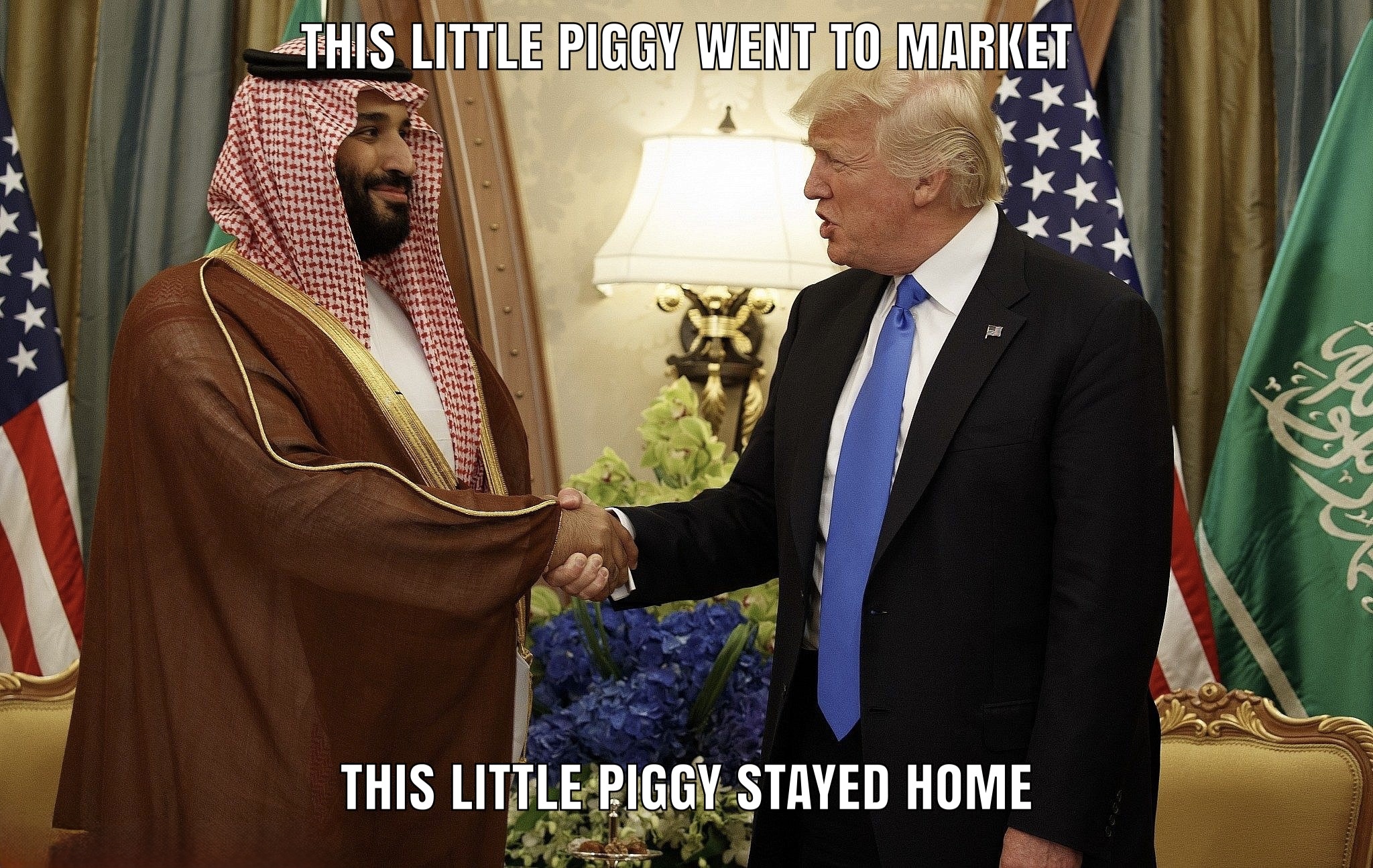
The United States government often advances its national interests by working with nasty people, and Saudi Arabian Crown Prince Mohammed bin Salman is one of the nastiest. It’s one thing, however regrettable, to deal reluctantly with him. President Donald Trump’s performance at the White House Tuesday was something else entirely: weak, crass and of no strategic benefit to America.

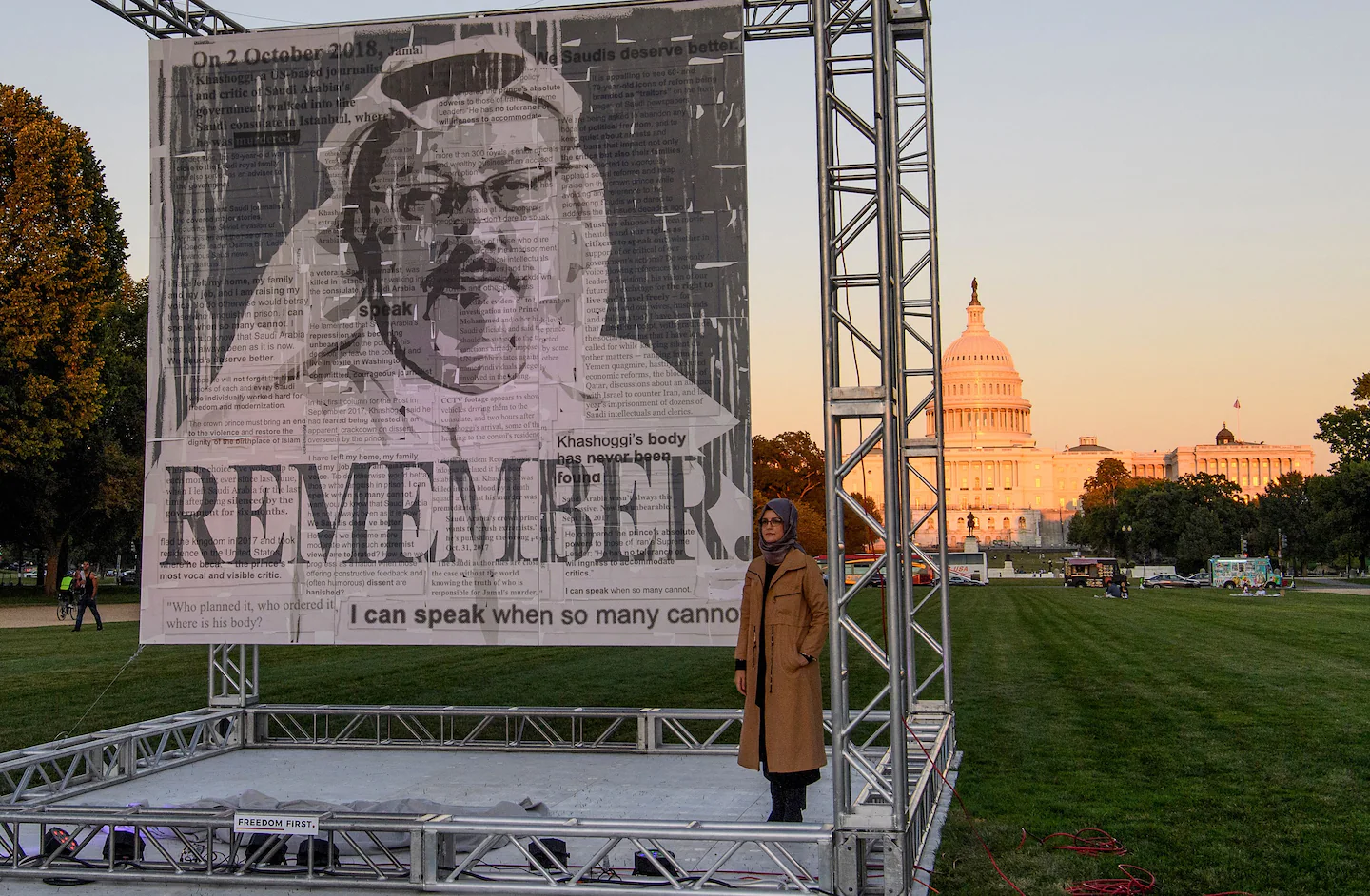
While meeting with the Saudi leader, Trump held forth with journalists in the Oval Office, as he often does. One reporter asked about the murder of Post contributing columnist Jamal Khashoggi in October 2018. “A lot of people didn’t like that gentleman that you’re talking about,” the president responded. “Whether you like him or didn’t like him, things happen.” He added that the crown prince “knew nothing about it.”

These distortions dishonor Khashoggi’s legacy, stand at odds with the facts and are beneath the office of the president.

Exiled in Virginia, Khashoggi wrote on these pages about the Saudi regime’s repressiveness at home and recklessness abroad. This got under Mohammed’s skin. So, the CIA concluded in 2018, the crown prince ordered Khashoggi’s assassination. He was lured into the Saudi Consulate in Istanbul, where a hit team, including members of Mohammed’s personal security detail, used a bone saw to dismember him.

Mohammed, at the White House Tuesday for the first time since 2018, acknowledged the murder but denied responsibility. “We’ve improved our system to be sure that nothing happened like that,” he said. “It’s painful and it’s a huge mistake. And we are doing our best that this doesn’t happen again.” This was offensive and insufficient yet somehow better than Trump’s response.

During the joint appearance, Trump called Mohammed “one of the most respected people in the world” and said that they talk on the phone at all hours. Trump also upbraided a reporter from ABC News for asking Mohammed about Khashoggi. He called it “horrible, insubordinate and just a terrible question.” He added that the network’s “license should be taken away.”

The reality is that while Trump advocates peace through strength, he showed nothing but debility. No doubt other dictators took note. Legitimizing and defending Mohammed this way will embolden him and his ilk to mistreat not just journalists but any Americans — knowing that they’ll probably face no real consequences.

Trump has an unconventional foreign policy that can achieve unexpected results. See Gaza. But it’s possible to protect U.S. interests without insulting Khashoggi’s memory. It would be more effective to ensure that someone like Mohammed is held accountable, understands who the more powerful partner in the relationship is and comes back begging for forgiveness – not be greeted cost-free with an honor guard of black horses, herald trumpeters and fighter jets.

The relationship with Saudi Arabia still produces some benefits, but even in a complicated world, an American president should be able to respect Khashoggi’s legacy while conducting the messy business of statecraft. Forgetting Mohammed’s brutality and Khashoggi’s warnings is a choice, and Trump made the wrong one.

Dextrārum Iunctio

Dextrārum Iunctio

you pour a drink
for the monster
because he laughs at your jokes

he calls you by your first name
asks about the family
says he understands

and there you are
nodding along
like a dog waiting on scraps

you say he’s misunderstood
everyone has blood somewhere
the world needs tough men

but at 3 a.m.
you sweat through clean sheets
because you know:

you walked into darkness,
coat pressed, smile rehearsed
sweathands damp and eager

you grew comfortable
with the smell of gasoline,
called it cologne

how much of him
rubbed off on you
when you shook his hand?

and why
does it still
feel good?