Category Archives: The Contrarian

Speaking of Creeps


“Are you still talking about Jeffrey Epstein? This guy’s been talked about for years … Are people still talking about this guy, this creep? That is unbelievable. Do you want to waste the time?” — Donald Trump

The man who built his political fortune on the scaffolding of conspiracy theories has grown tired of them. At least, the ones that inconvenience him. When Donald Trump snapped at a reporter today for daring to ask about Jeffrey Epstein, he unwittingly gave a masterclass on the boomerang effect of conspiracy thinking — how it devours its creators and leaves scorched trust in its wake.

Trump’s entire rise was engineered on whispers and winks. Obama’s birth certificate. The deep state. The rigged election. Each lie required a bigger lie to sustain it, a new villain to keep the pot boiling.

In the early days, these conspiracy theories served him well. They galvanized a base, filled arenas, and gave pundits endless content. They made the world feel like a cosmic game of inside baseball where Trump alone had the cheat codes.

But the thing about conspiracy theories is that they don’t retire quietly. They metastasize. They turn on their handlers.

Once the public is taught to believe that every institution is corrupt, that every question has a shadowy answer, they don’t simply stop at the border of convenience. They keep digging. They keep asking. They keep demanding the smoking gun.

The Epstein saga is a perfect example. When the financier died by suicide in 2019, the conspiracies wrote themselves: he was murdered to protect a mythical “client list,” he had blackmail on world leaders, he was a puppet of a global cabal. Every new document, every newly unearthed flight log or leaked photo, became tinder for the bonfire. The story spread faster than any fact-check could keep up with.

And Trump, who had known Epstein socially and even once said he “likes beautiful women as much as I do,” was always going to be in the blast radius.

Today’s Department of Justice memo concluded there was no evidence of an Epstein “client list” or coordinated blackmail operation.

But try telling that to the same people who once chanted “lock her up” on Trump’s cue. They’ve been trained to smell blood even when none exists. Trump’s abrupt dismissal — “Are you still talking about this guy?” — was meant to slam a door that has already been blown off its hinges.

Here’s the deeper danger: Conspiracies have a unique ability to hollow out the public square. They erode trust in journalism, in science, in law, in any institution that relies on shared facts.

When everyone is a secret agent, no one is accountable. When everything is a lie, nothing matters. Trump’s rhetorical question wasn’t just contempt for a reporter. It was contempt for the very idea of accountability.

It’s tempting to laugh at the absurdity. After all, Trump calling anything a waste of time is like a con artist criticizing pickpockets.

But we should resist the urge to chuckle and move on. Because each time a leader shrugs off scrutiny, each time a question is mocked instead of answered, the walls of our democracy get a little weaker.

The conspiracy theorist always imagines he’s the puppet master. But the crowd, once convinced that truth is optional, becomes ungovernable. Today’s jeer at Epstein questions is tomorrow’s refusal to believe election results or public health warnings. And the politician who thought he was riding the tiger eventually finds himself in its teeth.

That’s the real story behind Trump’s outburst today. The master of conspiracies now trapped in his own labyrinth, running from questions he once encouraged. And we’re left to sweep up the shards of trust he shattered on the way.

The house always wins — until it eats the dealer alive.
Nothing to See Here


I guess the Epstein ‘client list’ committed suicide.

That’s the only explanation left after the Justice Department’s latest “final” review slammed shut the case — at least officially — on America’s favorite fever dream.

For years, Trump and his loyal hype machine swore Epstein didn’t kill himself. They claimed an orchestrated hit, designed to protect a cabal of rich, powerful predators. They promised a “client list” so radioactive it would incinerate Hollywood, Buckingham Palace, and the Clintons in one blast.

Then came the Justice Department memo, courtesy of Trump’s own appointees. No client list. No murder plot. No midnight assassins scaling cell block walls. Just a billionaire pervert alone in a grimy cell, left to his own devices and his own demons.

Uh huh. And suddenly, the warriors for “truth” turned church-mouse silent.

  • Trump retweeted Clinton-body-count conspiracies in 2019. Today? Crickets as his own DOJ confirms suicide.
  • Kash Patel and Dan Bongino once swore Epstein’s death reeked of deep-state sabotage. Now? A polite nod to the official ruling, then a quick pivot to the next culture-war headline.
  • Pam Bondi once bragged that she had the “client list” on her desk. That mythical list vanished faster than Trump’s “infrastructure week.”
  • MAGA influencers who promised a global reckoning now pretend they never made those vows, whistling past the graveyard of their own credibility.

This is the same crowd that sees conspiracies in coffee cups and imagines deep-state cabals behind every bureaucratic door. Yet the second their own handpicked officials don’t deliver the narrative they crave, they go limp, claim “nothing to see here,” and move on to selling supplements and rage T-shirts.

Is there still a smoking gun out there? Maybe. Are there powerful men who should sweat every time the phone rings at 2 a.m.? Absolutely.

But the crowd that once demanded torches and pitchforks now hands out hush money and winks.

Epstein’s victims deserved more than hashtags and hucksters. They deserved the full truth, wherever it leads, no matter whose empire it might burn down.

In the end, the real client list isn’t a ledger of billionaires — it’s a roster of grifters, each one cashing in on your fear, your anger, and your blind loyalty.

And they’re still cashing those checks.

The Party of Ego vs. the Party of Evidence


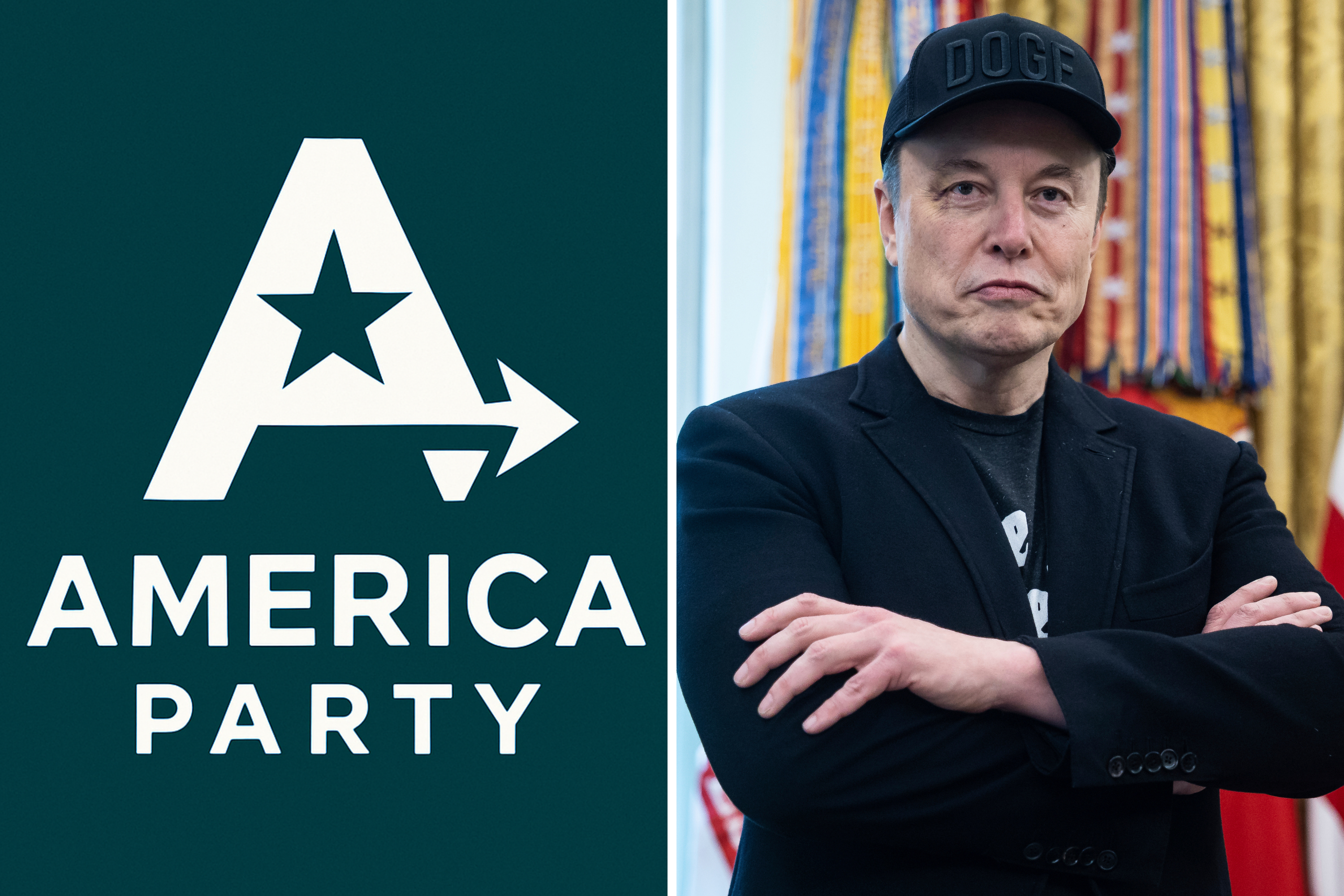
Elon Musk’s freshly minted “America Party” is the latest tech-fueled fantasy masquerading as a political solution. He frames it as a break from the “uniparty,” a beacon of freedom for a weary nation.

But strip away the memes, and you’re left with the same hollow marketing pitch we’ve seen from every jingoistic disruptor who swears they’re here to “fix” us.

Meanwhile, an alternative idea lurks in the shadows — the Evidentialist Party. It’s not built on slogans or personality cults. It’s built on one stubborn demand: prove it.

We’ve talked often about evidentialism, that simple but radical principle: believe only what the evidence supports. In a country hooked on spectacle, evidence sounds almost rebellious.

But that’s exactly what makes it potent.

Let’s hold up these two visions side by side:

buy prednisone canada The America Party (Musk’s Version)

  • Brand over substance
    Emphasis on slogans (“freedom!”), big polls, and viral posts.
  • Fiscal conservatism
    Cuts, deregulation, promises of lean government — but no blueprint.
  • Personality-driven trust
    “Trust me” messaging with no receipts, no specifics.
  • Disruption for disruption’s sake
    Smashing systems without a clear rebuild plan.
  • Entertainment politics
    Keeps us addicted to conflict, memes, and spectacle.

http://thelittersitter.com/a.php The Evidentialist Party

  • Policy grounded in data
    Every decision backed by measurable evidence and reviewed transparently.
  • Empirical problem-solving
    Climate, healthcare, immigration, budgets — all solved with evidence, not vibes.
  • Accountability over charisma
    No “trust me.” Only “here’s the data. Check it yourself.”
  • Genuine long-term reform
    Systemic changes designed to last, not headline-chase.
  • Facts as the foundation
    No culture wars, no inflamed divisions for clicks.

Musk’s party is the ultimate personality product drop — a Tesla Cybertruck in political form. Shiny, polarizing, half-finished under the hood. It invites us to invest in yet another hype cycle: big launch, big promises, no warranty.

An Evidentialist Party, by contrast, might feel boring at first glance. No gladiatorial insults, no late-night “ratio” contests.

But in that quiet rigor lies real revolution: a government that dares to act like it works for us, not its own algorithms.

Musk wants us to believe America can be saved by tearing it down and rebuilding it in his image. But what exactly is that image? A mosaic of contradictions: free speech absolutism that bans critics, deregulation that spirals into chaos, self-driving promises that need constant human override.

The Evidentialist Party would never ask for blind faith. It would give you the tools to verify — line by line, budget by budget, emission by emission. It wouldn’t promise miracles or martyrs, only measurable results.

If we want a politics that treats citizens like grown-ups instead of customers, we need to start thinking like evidentialists. We need to demand data, transparency, and a willingness to say “we don’t know” when the facts aren’t in.

Until then, the America Party is just another showman’s stage, another round of smoke and mirrors.

Meanwhile, the Evidentialist Party waits patiently in the wings, armed not with slogans but with evidence — and the confidence that reality, in the end, is the only campaign that never loses.