Category Archives: The Contrarian

What It Means to Be ‘Woke’ in America


“Woke” isn’t a threat; it’s a pulse check on our collective conscience.

Once upon a time, “woke” wasn’t a slur or a joke line on cable news. It wasn’t shorthand for cancel culture or a lazy catchall for everything certain pundits find inconvenient or uncomfortable. It was a simple, urgent plea: stay awake. Stay alert to the quiet cruelties that pass for normal.

The word’s roots run deep. In 1938, blues musician Lead Belly ended a song about the Scottsboro Boys — nine Black teenagers falsely accused of raping two white women — by warning listeners to “stay woke.” It was literal survival advice: watch for injustice, or it will swallow you.

By 1962, William Melvin Kelley used “woke” in The New York Times Magazine, cementing its meaning as cultural and social awareness. Playwright Barry Beckham later echoed it in Garvey Lives!: “Now that Mr. Garvey done woke me up, I’m gon’ stay woke.”

Today, “woke” has been reduced to a prop, a scare word deployed by those threatened when others begin questioning the status quo. The same voices that once railed against “political correctness” now weaponize “woke” as though empathy were some invasive fungus creeping through America’s moral soil.

At its best, being woke means recognizing that systems don’t heal on their own. Racism didn’t vanish because we passed a few civil rights laws; misogyny didn’t dissolve when glass ceilings cracked; LGBTQ+ people didn’t suddenly gain safety because a court said they could marry.

Yes, there are excesses. Every movement has its noisy fringes, performers more interested in scolding than persuading. But those outliers don’t define the core. They distract from it.

Being woke asks you to look beyond your own comfort and listen. It means admitting that your version of “normal” might rest on someone else’s exclusion or pain. That’s not easy work. Moral growth never is.

But here’s where the misunderstanding blooms: a large part of America now believes we live in a binary world, that there are only two camps — “wokeism” and “Trumpism.”

But wokeism is an overreaction to a real thing. Trumpism is an overreaction to the overreaction. It’s a convenient narrative because it reduces everything to a cartoonish standoff, turning complex moral debates into a shallow spectacle.

Yet moral clarity isn’t a cage match. Wokeism arose as a reaction to real inequities that were too often ignored or denied. Trumpism, rather than offering a thoughtful counterpoint, swelled into a cultural tantrum, feeding off resentment and nostalgia for a world that never truly existed for everyone. It thrives not on solutions but on perpetual outrage.

We can refuse this false dichotomy. We don’t have to choose between purity tests and grievance politics. We can reclaim “woke” as an invitation to stay aware, to keep listening, to act.

Being woke isn’t a curse on society; it’s society’s immune system.
Scaping The Goats

Donald Trump has never met a conspiracy theory he didn’t want to cash in on. Now, the monster he nurtured is pounding on his gold-plated door, pitchfork in one hand, Epstein’s ghost in the other.

For years, Trump and his supporters dined on the Epstein conspiracy buffet. The promise of a shadowy “client list,” the thrilling suggestion that global elites (especially Democrats) were all pedophiles, cannibals, or worse.

Trump teased, reposted, winked. He knew exactly how to keep that carnival running.

But here’s the plot twist: Trump’s own MAGA influencers now demand proof. They want that fabled Epstein list — and they want it yesterday.

The problem? There is no list. There never was. We’re told.

Jeffrey Epstein, the predator who died by suicide in 2019 while awaiting federal trial, remains MAGA’s favorite boogeyman. His death, officially a suicide, is still called a “deep state hit job” in far-right circles. They insist he kept a blackmail ledger on the rich and powerful. Naturally, they imagine it’s filled with Democrats, Hollywood liberals, and a rotating cast of imagined villains.

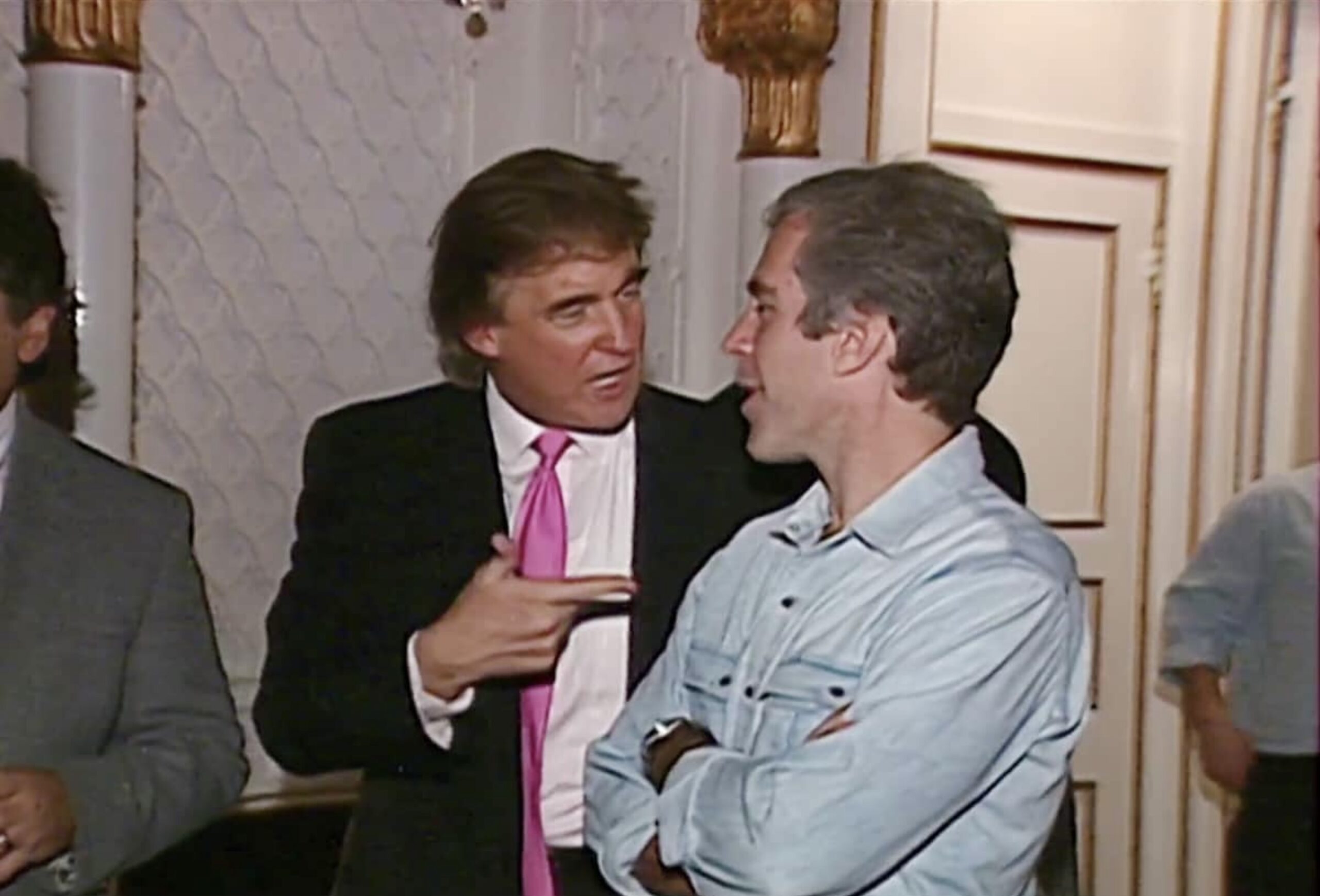
Trump, who once partied with Epstein and called him “a terrific guy,” now finds himself pinned under the conspiracy he once stoked.

Attorney General Pam Bondi, once a MAGA darling herself, is now on the chopping block. Her department recently released a memo confirming two major buzzkills: Epstein killed himself, and there’s no secret “client list” hidden in some Mar-a-Lago broom closet.

Cue the meltdown.

Steve Bannon called Bondi’s memo “deep state propaganda.” Charlie Kirk said he was “profoundly betrayed.” Even Roseanne Barr, from her lawn-chair studio in conspiracyland, demanded Trump “handle” Bondi immediately.

Trump reacted like a man caught sneaking out of a side door: he praised Bondi as “fantastic,” but also told followers “some people just don’t understand the big picture.” He lobbed cheap shots at Rosie O’Donnell and tried to redirect to Hunter Biden’s laptop. But even his best deflection skills can’t outrun this one.

MAGA influencers make their fortunes selling rage and the illusion of hidden knowledge. Without Epstein conspiracies, they lose donations, clicks, and relevance. They don’t want Trump’s version of the truth — they want the myth.

Trump knows that feeding them is cost-free — until it’s not. He has dropped movements before. Remember Birtherism? He milked that cow from 2011 to 2016, baiting the base. When it no longer served him, he blamed Hillary Clinton and took credit for “solving” the fake mystery.

Then came QAnon. Trump flirted with its fever-dream nonsense, calling its followers “people who love our country.” By 2020, he reposted Q memes hundreds of times. And when that ship began to sink? Overboard they went.

This time, the Epstein conspiracy isn’t cooperating. MAGA wants a sacrifice. And Bondi is first in line.

Trump’s reluctance to throw her overboard shows a rare weakness: he’s running out of scapegoats. Eventually, you run out of flunkies and find yourself alone at the microphone.

Trump still might Houdini his way out. He might find a new fake enemy, inflate another scandal, or declare that “fake news” twisted everything. But the fractures are visible. He’s already trying to frame Obama as first author.

But MAGA influencers smell blood. And they’re hungry.

When you build your empire on conspiracies, sooner or later, they show up to collect.

Waking Superman


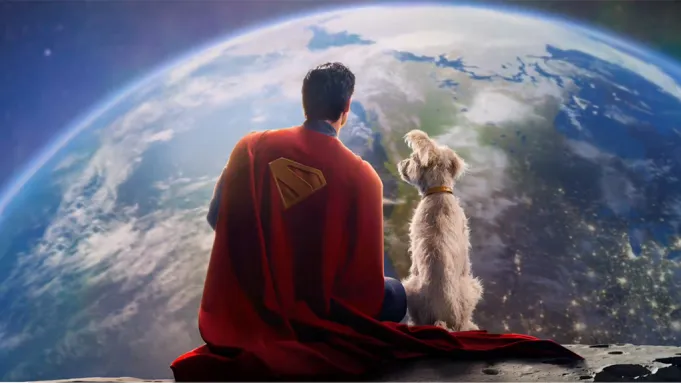
Of course Superman is an immigrant story — he’s America’s greatest flying love letter to the outsider.

James Gunn, the director of the upcoming Superman film, kicked off a firestorm this July 4 when he described the Man of Steel as “an immigrant story,” emphasizing that his new take would focus on “basic human kindness.”

Gunn’s brother, Sean Gunn, took it even further, saying if you don’t understand Superman as an immigrant, “you’re not American.”

The backlash was swift and loud.

Dean Cain, the former Lois & Clark star and a longtime cultural commentator, argued that Gunn was making Superman “woke,” calling it a mistake that would alienate audiences and hurt ticket sales. On Fox News, Jesse Watters mocked the idea outright, quipping that Superman’s cape might as well read “MS-13,” invoking an immigrant gang to undermine the point. Laura Ingraham framed Gunn’s comments as yet another example of “Hollywood’s endless politicization” and declared she would skip the film. Conservative sports radio host Clay Travis took to social media, calling Gunn “an absolute moron” and suggesting the film would bomb.

These critics see Gunn’s immigrant framing as a new, politicized twist on a beloved American icon. But they’re missing the most crucial point: Superman has always been an immigrant story. In fact, he’s one of our best.

Created in 1938 by Jerry Siegel and Joe Shuster, both sons of Jewish immigrants, Superman was envisioned as a refugee hero from the start.

Kal-El didn’t stroll into Kansas with a visa and a voter registration card. He arrived alone, as a baby in a spaceship, fleeing a dying world and landing in the heartland. He was taken in by the Kents, taught American values, and ultimately chose to dedicate his life to defending the very country that adopted him.

Here’s the truth that often gets lost in the culture war crossfire:

  • part Kal-El is literally an alien: Shot from Krypton to Kansas, he arrives as an orphan, no birth certificate, no papers, no proof of identity.
  • http://reborn-babies-dolls.com/?paged=2 He is raised by American farmers: The Kents teach him to blend in, to care deeply for others, and to hold kindness as a core value in a country that has always struggled to make room for the new.
  • He embraces America’s ideals: Truth, justice, a better tomorrow — Superman embodies these not because he inherited them but because he chose them.

The idea that Superman is “just a farm boy from Kansas” isn’t wrong — it’s incomplete. His story is about reinvention and choice, two hallmarks of the immigrant journey. Superman doesn’t simply assimilate; he enhances. He lifts America to its best imagined self.

Some pundits argue that pointing out these truths is “politicizing” a character who should be above it all.

But Superman has always been political in the truest, deepest sense. He fought Nazis in the comics long before America officially entered World War II. He stood up for workers, immigrants, and the powerless in his earliest issues. He’s never just been a muscle-bound symbol of strength; he’s a moral compass, designed to show us who we could be at our best.

Gunn’s timing, right before the film’s release and during a patriotic holiday, is no accident. As America lights up fireworks and waves flags, Superman stands as a reminder that the American story is the immigrant story — not just a series of star-spangled slogans but an ongoing experiment in welcoming, uplifting, and transforming.

A 2023 Pew survey showed that nearly 70% of Americans believe immigrants strengthen the nation through their hard work and talents. Superman embodies that faith more powerfully than any statistic or stump speech.

Gunn isn’t injecting a new ideology into Superman. He’s recovering the original. Superman isn’t just strong; he’s compassionate. He doesn’t just protect; he believes. He arrived from the stars, adopted our values, and chose to fight for us, even when we fail to live up to those ideals ourselves.

If we can’t see Superman as an immigrant, we risk losing sight of the most aspirational part of our own story.

He didn’t just arrive on Earth; he chose America. Like all immigrants.