Category Archives: The Contrarian

Bad Bunny and The Paper Towel Presidency


http://relaxapartmanitara.com/oregon-payday-loans-online-no-credit-check-instant/as-a-borrowing-from-the-bank-alternative/

http://gowstakeout.com/tag/thin-crust-pizza/ The president says he’s never heard of Bad Bunny. That tracks.

Donald Trump told Newsmax this week he had “never heard of” the Puerto Rican megastar headlining next year’s Super Bowl halftime show.

“I don’t know who he is,” Trump said. “I don’t know why they’re doing it. It’s ridiculous.”

That’s a curious stance toward one of the most streamed artists in the world — three straight years atop Spotify, six chart-topping albums, and a world tour that sells out in minutes. Then again, Trump has a gift for turning ignorance into identity.

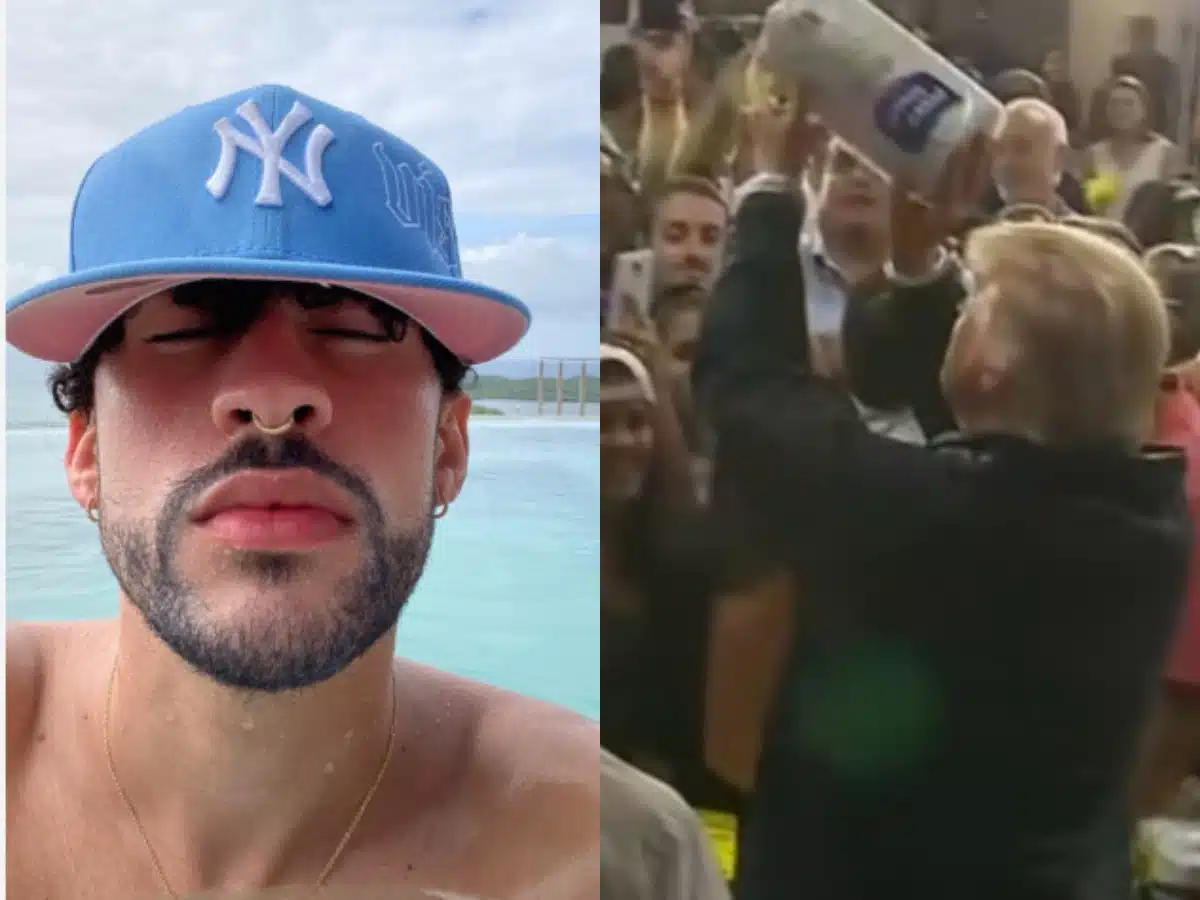
Bad Bunny, born Benito Antonio Martínez Ocasio, didn’t seem surprised. His career has been a long, rhythmic rebuke to the paper-towel presidency — that image seared into memory from 2017, when Trump tossed rolls of Bounty into a Puerto Rican crowd after Hurricane Maria killed nearly 3,000 people.

Bunny has been replying ever since.

In 2017, he performed at a hurricane relief concert wearing a shirt that read, ‘Eres Twitero o Presidente?’ — “Are you a Tweeter or a President?” In 2024, when a Trump-rally comic called Puerto Rico “a floating island of garbage,” Bunny shared Kamala Harris’ post condemning the remark, reminding fans that Trump “offered nothing more than paper towels and insults.”

His new video, “Nuevayol,” opens with the Statue of Liberty draped in a Puerto Rican flag. A Trump-like voice on the radio apologizes to immigrants — Mexicans, Dominicans, Puerto Ricans, Colombians, Cubans — before dissolving into static. It’s mock repentance with a beat.

So when Trump allies erupted over the NFL choosing Bunny for the Super Bowl, the music industry just shrugged.

Corey Lewandowski, now a Homeland Security adviser, joked that ICE agents might “attend” the halftime show. DHS Secretary Kristi Noem promised to send immigration officials to Levi’s Stadium, calling the NFL “weak.”

Bad Bunny, meanwhile, keeps playing his own field. His sixth album, Debí Tirar Más Fotos (“I Should Have Taken More Photos”), a love letter to Puerto Rico, sat atop the Billboard 200 for weeks. He sings mostly in Spanish, which may be his most subversive act in a country where even empathy gets translated before it’s believed.

In a September interview, he explained why his current world tour skips the United States. “There were many reasons,” he told I-D Magazine, “but one was, like, (expletive) ICE could be outside my concert.”

That wasn’t paranoia.

The irony is that their feud feels inevitable; the loudest voice in politics meeting the loudest voice in music. Both built empires on volume. Both understand performance. One plays stadiums. The other plays the country.

But only one does it for joy.

Bad Bunny’s work drips with affection for the Caribbean that raised him. Trump’s politics run on grievance. Bunny wants to move the crowd. Trump wants to move the goalposts.

Their clash says less about music than about how culture changes power, and how power, when it loses rhythm, mistakes silence for dominance.

In truth, they need each other. Every rebel requires a tyrant. Every tyrant needs a soundtrack.

When Trump feigns ignorance of Bunny, he’s doing what he always does — elevating the opposition by pretending it doesn’t exist.

Next February, the world will watch a Spanish-language halftime show in California — dancers, horns, verses — while the president scowls from somewhere safe and soundproof.

He’ll say he never heard of Bad Bunny.

Bad Bunny will make sure that he does.
Fact Social


The Times needs a Trump Truth beat.

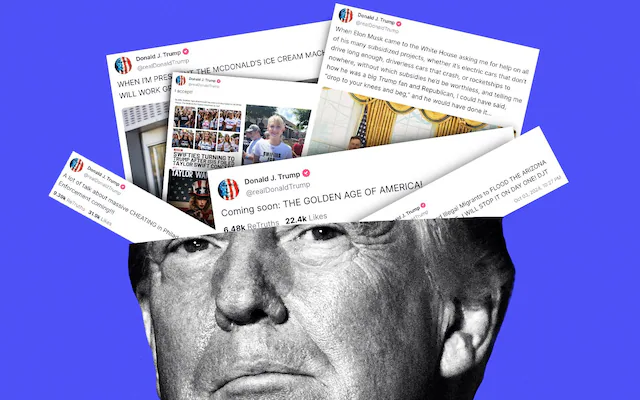
For a newspaper that bills itself as the paper of record, the New York Times is falling short on one of the strangest and most important stories in American history: the fact that the sitting president communicates with the country through a self-made social media echo chamber, largely unfiltered, often unhinged, and always revealing.

Even if you argue these rants are not traditionally “newsworthy,” the sheer accumulation of them demands attention. What matters is not whether they pass the usual editorial test, but that they show the unfiltered state of mind of a commander-in-chief whose words reach millions.

The case for a dedicated Trump Truth beat is straightforward. This is not about platforming every outrageous claim. It is about chronicling history in real time.

When Franklin Roosevelt took to the radio for his Fireside Chats, the press covered them not because they were universally wise or profound, but because the president of the United States had chosen that medium to speak directly to the people.

The same is true now. Truth Social is Trump’s version of a fireside chat, only the fire is gasoline.

To understand the scale of what the Times is ignoring, consider just a handful of recent posts:

  • Trump branded the Democratic Party “the party of hate, evil, and Satan.”
  • He amplified an AI-generated video mocking Chuck Schumer in a yarmulke and Hakeem Jeffries in a sombrero, reducing them to crude ethnic stereotypes.
  • He accused the FBI of planting more than 270 undercover agents to incite the violence of Jan. 6.
  • He threatened to cut federal funding to colleges that allowed what he called “illegal protests.”
  • He shared a campaign message that included the phrase “unified reich,” language pulled from the darkest corners of 20th-century history.

Each of these is unprecedented for a U.S. president. Each of these is worthy of front-page coverage, not buried in the back of the paper or left to cable news chatter.

By failing to treat Truth Social as a daily reporting assignment, the Times leaves the record to partisan outlets and second-hand summaries. That is a disservice both to readers and to history.

There is an argument, of course, that coverage only magnifies Trump’s messaging. The Times fears becoming a megaphone.

But journalism is not about comfort. It is about bearing witness. The paper’s editors know this, which is why they report on war atrocities even at the risk of amplifying propaganda.

Truth Social is a battlefield of its own, one where the commander in chief fires off salvos at his enemies, at institutions, at democratic norms. To ignore those salvos is to deny the public the raw evidence of what leadership looks like under Trump.

Think, too, of the practical function of a dedicated beat. A Trump Truth reporter would do what no single journalist has time for now: track every post, confirm its accuracy, trace its origins, and place it in context. Was that meme lifted from a fringe site? Did that accusation come from a debunked conspiracy? What is the intended audience?

These are not questions for an op-ed. They are questions for the news pages, and they deserve daily answers.

The Times has always understood that the presidency demands special scrutiny. It maintains a White House team, a Capitol Hill team, even a Supreme Court desk.

Yet the loudest, most revealing channel of presidential communication has no dedicated reporter. Instead, Truth Social slips by piecemeal, covered sporadically, with the most explosive posts often filtered through outside sources.

Imagine future historians combing the archives and finding scattered references, instead of a steady record. The absence would look deliberate, as if the Times chose to shield readers from their own president’s words.

A Trump Truth beat would also provide accountability. By cataloging posts in real time, the Times would make it harder for Trump to revise or erase his statements. Already, he deletes or edits posts once they draw fire. A beat reporter would capture those digital footprints before they vanish. That is journalism at its most basic: preserving the record.

The public appetite is there. Readers want clarity about what is true, what is false, and what is dangerous. A single column or occasional news story cannot provide that clarity.

A beat can. And in a media environment where outrage travels faster than fact, the Times could reclaim its role as the steady hand, the trusted ledger.

Trump has given the country a daily window into his thinking. He has chosen Truth Social as the glass. The New York Times should choose to look through it, directly and consistently, not with one eye closed.

History is watching, and the record is being written with or without the paper of record.