Category Archives: Reviews

Tiger King’s Court of Jesters

Joe Exotic in 'Tiger King'

Here, in the stark luminescence of a worldwide pandemic, we can be honest with each other, human to human. And here’s the truth: Cat people are weird.

You know it. I know it. And Netflix sure as hell knows it: Over winter, the streamer had the documentary of the season with Don’t F*** with Cats, a terrific true-crime tale. Now, they have the series of spring with Tiger King: Murder, Mayhem and Madness.

The series kicks off with the crazy-cat-lady premise, and then which proceeds to prove it — and then some — over seven jaw-dropping episodes. Netflix has made a lot of noise with unscripted programming, but it’s going to roar with this beyond-bizarre docu-series distraction, which demonstrates that outlandish people who love filming themselves are a formula for TV that’s grrrr-reat.

It’s hard to know, frankly, where to begin with all the strange twists and turns, but directors Eric Goode and Rebecca Chaiklin rightly assume that it’s easiest to work backward from the (almost) end: Joseph Maldonado-Passage, an eccentric keeper of tigers, lions and other big cats in Oklahoma who goes by the name “Joe Exotic,” allegedly having orchestrated a murder-for-hire plot against Carole Baskin, a woman who runs a facility called Big Cat Rescue, who had lobbied to shut down operations like his.Image result for joe exotic
After that, though, there’s a whole lot to chew on. Big cats, it turns out, are a kind of aphrodisiac, inspiring what can only be described as cultish devotion — including Joe’s marriage to not one but two men; another big-cat owner, Bhagavan “Doc” Antle, who is basically a polygamist; and Jeff Lowe, who comes into Joe’s orbit later and brags about using exotic pets as a come-on to find partners for threesomes.
But wait, there’s more: The colorful characters that Joe attracts to work for him (including one who loses a limb to a tiger attack); Joe’s desire to create his own media kingdom, enlisting a former Inside Edition correspondent, Rick Kirkham, to oversee his TV efforts; and finally, Joe’s forays into politics, running for president before mounting a libertarian bid for governor of Oklahoma, despite being a little unclear on what a libertarian actually is.
Finally, there’s Baskin, who would seemingly be the voice of reason in all this, objecting, as she does, to people housing and trading in dangerous cats. Still, she finances those efforts largely through the fortune she inherited from her late husband, who disappeared under the kind of mysterious circumstances that even a Dateline NBC producer might consider too good to be true.
Because the big-cat owners are showmen (beyond the zoo, Joe fancies himself a country-and-western singer), there’s a whole lot of vamping for the cameras. They also tend to document their actions extensively, which makes the occasional use of reenactments here feel especially gratuitous.
Still, even by the standards of reality TV — a genre populated by exhibitionists and those seeking their 15 minutes of fame — Tiger King is so awash in hard-to-believe oddballs that lean into their image it genuinely feels like a Coen brothers movie come to life, the kind of thing any studio would return to the writer saying the screenplay was too over the top.
During the final chapter, one of Joe’s employees says there’s “a lot of drama in the zoo world.” That’s about the only thing that’s understated in Tiger King, which — even amid the current glut of true crime — is the kind of binge-worthy game that’s almost impossible to resist.

The Disposables

Image result for lost girls movie

Sex workers are fairly disposable in Hollywood. Few deaths in movies are handled with the contempt that some filmmakers show the murders of those in the trade.

It’s one reason that the true-crime drama Lost Girls feels so bracing: It humanizes women often represented as disposable, more props than people. When a mother in the movie laments that her missing daughter, a sex worker, has been forgotten along with other women, her words feel like an accusation. When “our girls” are remembered, she says, it’s never as “friend, sister, mother, daughter.”

That condemnation runs like a pulsating current through Lost Girls, which centers on Mari Gilbert, a flinty heartbreaker played by Amy Ryan. A sober chronicle of victimization and empowerment, the movie tracks Mari’s search for her daughter Shannan, who vanished after meeting a client. The world sees a missing prostitute as an inevitability rather than a tragedy or outrage; Mari sees a beloved child and, in time, a cause that’s as political as it is personal. It’s a good, righteous fit for the director Liz Garbus, a documentarian drawn to stories about social justice, here making her fiction-feature debut. (Her docs include What Happened, Miss Simone?)

The real story is grim and shrouded in mystery. Early on May 1, 2010, Shannan Gilbert, a 24-year-old sex worker who advertised on Craigslist, called 911 screaming, “They’re trying to kill me.” She then disappeared.

Late that same year, a police dog sniffed out the corpse of a different woman in the same Long Island area where Shannan was last seen. Other bodies and body parts were recovered; one victim traced back to the mid-1990s. When most of the victims were identified as prostitutes, a detective said it was a “consolation” that the killer didn’t seem to be “selecting citizens at large.”

It’s easy to imagine Garbus reading that comment and becoming incensed. (The line appears in Robert Kolker’s Lost Girls: An Unsolved American Mystery, the sympathetic book on which the movie is based.) There are different ways to describe Garbus’s telling of this mystery: it’s serious, respectful, gravely melancholic.Image result for lost girls movie

Yet anger best describes the movie’s atmosphere, its overall mood and its authorial tone. In some scenes, anger seems to hover over characters, as threatening as the movie’s permanently dark skies; at other times, it erupts, flushing faces and distorting voices.

In time, Mari’s personal ordeal opens into a haunting examination of gender and power, men and women. On one side of this divide the movie offers dead, grieving, angry, activist women; on the other it presents men who, with few exceptions, uphold the noxious status quo whether as suspects or members of the largely male police force that includes a weary commissioner (Gabriel Byrne).

The Lost Girls ebbs and flows; every so often, it spills over until you feel it seeping into you.

The girls would have wanted it that way.

Netflix’s ‘Confidential’ Doldrums

(AP)

Netflix must be pretty depressed about the Oscars. After two high-profile, big-budget attempts at a Best Picture Academy Award, Netflix apparently decided to flush its money down the toilet in a petulant rage.

Time was, Netflix put out a healthy dose of dramatic gems, from The Irishman to Roma to The Two Popes to Wedding Story, all of which got Oscar’s attention, if not gold.Image result for roma

In response, we’ve been gift-wrapped turds for 2020 like The Last Thing He Wanted (which was probably this movie. The latest is Spenser Confidential, another film with a big star and a tiny punch. While it’s less fecal-dipped than Ben Affleck’s Wanted, it’s hardly a coil above. Hopefully, the streaming service is jettisoning excess gas before landing this coming award season.

It’s back to Boston for Mark Wahlberg in Spenser, so you know what that inevitably means, right?

There’s eventually going to have to be a fight with dirty cops in an Irish bar — sorry, it’s pronounced “bah” — while the Red Sox are playing on TV. Those are the rules.

Sure enough, the bar brawl arrives 30 minutes into this meandering film that tries to piggyback on the good will created by novelist Robert B. Parker’s wisecracking boxer-turned-private eye Spenser, played on TV by Robert Urich.Image result for spenser robert urich

Spenser Confidential  is a bit of a mess tonally with a plot that keeps attracting new weird layers, like lint on a sweater. It wants to be funnier than it is. It hopes to be deeper than it is.

Wahlberg as Spenser is an ex-con and an ex-police officer who gets out of prison only to stumble into a conspiracy that includes crooked cops, Dominican street gangs armed with machetes and dirty business investors pursuing gentrification and gambling. How high does it go? “High up,” he learns.

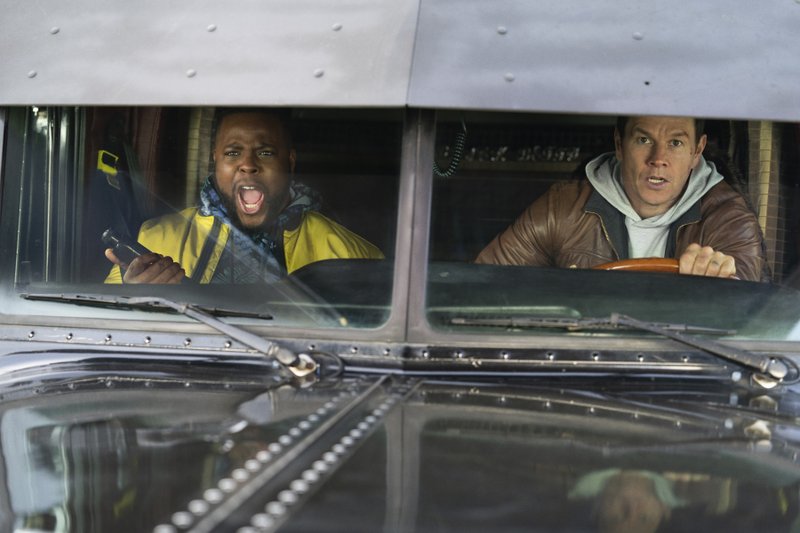
If there’s a Spenser, there has to be his buddy Hawk, and this role is filled awkwardly by Winston Duke. He’s a fine actor but screenwriters Sean O’Keefe and Brian Helgeland haven’t really integrated him well, making Hawk into Spenser’s roommate, an oat milk drinking, MMA fighter who adores animals.Image result for spenser Winston Duke

This Spenser is such a good guy that even one of his enemies calls him a “choir boy.” Just ask his ex-girlfriend (Iliza Shlesinger), who has a love-hate relationship with him but admires his “strong moral code” even though she tells him: “You are incapable of real intimacy.” Contradicting herself sometime later, she screams “Go, Sox!” during sex with him, which is the most Boston thing to do.

Spenser was only sent to prison because he beat up his crooked police chief, who was, in turn, beating up his wife. He comes out of prison and immediately the chief is killed gruesomely. Spenser sticks his neck out to clear the name of a cop who has been framed for the murder. “Why are you doing this?” the widow asks Spenser. “Because it’s the right thing to do,” our good guy replies.

Like a stage musical that is propelled by its songs, this film moves thanks to its frequent violent outbursts. Director Peter Berg evenly spaces out the fight scenes so you can tell one is coming every 10 or 15 minutes. “Man, you get beat up a lot,” Hawk tells Spenser. (Everyone in this Boston seems to be a member of a boxing gym.)

In between the fights, Spenser Confidential reaches for film noir, like a Chinatown in Beantown (one character even has a toothpick sticking out of his mouth at all times). Sometimes it tries be a Dirty Harry movie or to ape the dark feel of Gone Baby Gone. Other times it tries to be a buddy comedy but with few actual laughs, unless you consider the line “Did you just kick me, bro?” funny.

Berg and Wahlberg have previously worked together on Lone Survivor, Patriots Day and Deepwater Horizon. Playing a renegade good guy is right up Wahlberg’s alley and to say he sleepwalks down that alley this time isn’t too harsh. On the positive side, some nifty acting turns are offered from Post Malone and Marc Maron.Image result for Lone Survivor, Patriots Day and Deepwater Horizon

But there are some head-scratching moments, including a man-versus-dog fight that serves no purpose and an attempt to reach for a sequel when the first one hasn’t been earned. And why does Spenser sometimes write down all his clues, pointlessly circling and underlining words on a notepad like “Why?”

It’s not even clear why the film is called Spenser Confidential. There’s nothing hush-hush about it except this: Everyone associated with the film might want to keep that to themselves.