Category Archives: Reviews

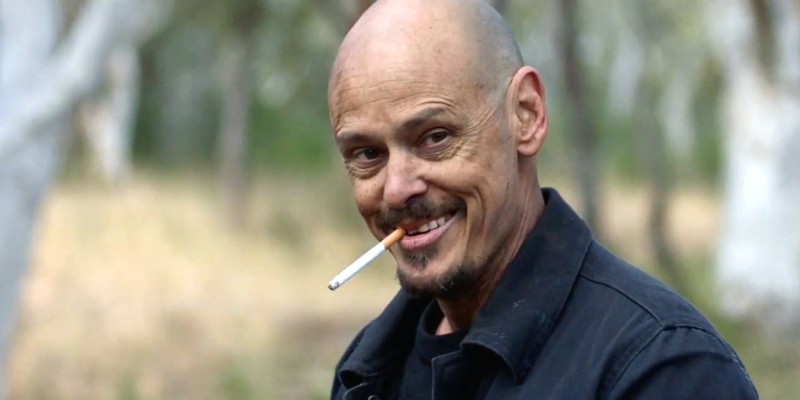
’Mr. Inbetween’ Masterfully Handles Margins


http://cowmanauction.com/olux.php Ray Shoesmith makes a living ending lives, but the real trick is keeping his own together.

http://roi-mi.com/?s=全球篮球比分-【✔️推荐AC68·CC✔️】-德州扑克牌-全球篮球比分q59io-【✔️推荐AC68·CC✔️】-德州扑克牌qmsh-全球篮球比分002n8-德州扑克牌b7e8 Mr Inbetween wastes nothing—not time, not words, not bullets. Every scene serves a purpose, every exchange matters, and every action has weight.

Scott Ryan, who created and stars in the series, plays Ray with the kind of quiet control that makes him more dangerous than any loudmouth gangster. He doesn’t threaten. He doesn’t show off. He just does what needs to be done.

The show doesn’t ask you to love Ray or hate him. It just presents him as he is—a father, a friend, a man with a code, and a contract killer who sees his work as nothing more than a job.

One moment, he’s putting a bullet in someone. The next, he’s making his daughter laugh. The contrast isn’t forced, and it isn’t romanticized. It’s life, and life doesn’t separate the good from the bad so cleanly.

The violence, when it happens, is fast, ugly, and real. No drawn-out fight scenes, no dramatic last words. Just action and consequence.

The world Ray moves through isn’t filled with masterminds or criminal empires. It’s small-time crooks, men who think they’re tougher than they are, guys who talk too much and don’t know when to shut up. Ray knows when to shut up. He knows when to act. That’s what keeps him alive.

There’s humor in Mr Inbetween, but it comes from the silences as much as the words. The dialogue is sharp, but it never feels scripted. The jokes land because they come from real people in real situations. Ray can be terrifying in one moment and deadpan hilarious in the next, and neither feels forced. The writing doesn’t waste lines.

The direction is as lean as the script. No flashy shots, no unnecessary cuts, no swelling music telling you what to feel. The camera stays close, letting the weight of a look or a pause do the work. It knows that sometimes the quiet is more dangerous than the noise.

But as much as Mr. Inbetween is about Ray, it doesn’t work without the people around him. Damon Herriman plays Freddy, Ray’s boss and middleman, a man who thinks he has more control than he does. He talks big, but he depends on Ray to keep things running. Then there’s Gary, played by Justin Rosniak, Ray’s best friend, a lovable screw-up who doesn’t always realize how close he is to disaster. Gary is the kind of friend Ray should probably cut loose, but he doesn’t, because even in his line of work, loyalty still matters.

More than anyone, though, Ray cares about his daughter, Brittany, played by Chika Yasumura. She’s the one thing in his life that’s pure. He never lets his world touch her. He picks her up from school, he jokes with her, he makes sure she knows she’s loved. In those moments, he’s not a hitman. He’s just a dad.

The weakness of the series is its brevity—a problem that could have been solved with a little more strategy. But maybe that was the point.

And that’s the heart of Mr. Inbetween—a man trying to keep his world from falling apart while doing the one job that makes it inevitable.

The Supporting Anti-Hero Algorithm


For some reason, YouTube keeps sending me videos about anti-heroes. Maybe it’s the algorithm trying to tell me something.

Maybe it’s the scoundrel in my father, the rebel in my sister, or just the part of me that enjoys watching good people break rules.

Whatever the reason, I always find myself drawn to supporting characters—especially the ones who bend the law, stretch morality, or at least make the lead characters’ lives more interesting.

A great supporting character can make or break a show for me. I can forgive a dull protagonist if the side players bring enough depth, chaos, or dry humor to keep me engaged.

In some cases, I don’t even care about the main character—I’m just there for the guy skulking in the shadows or the woman quietly outsmarting everyone else in the room.

That’s what brings me to these four: Omar Little from The Wire, Peggy Olson from Mad Men, Richard Harrow from Boardwalk Empire, and Bart Curlish from Dirk Gently’s Holistic Detective Agency.

Omar Little, played by the late, great Michael K. Williams, is one of the best characters ever put on television, and I will die on that hill. A shotgun-wielding Robin Hood who robs drug dealers while whistling The Farmer in the Dell, Omar is as terrifying as he is principled. He has one rule: he never harms innocent people. He also has no problem strolling through Baltimore in a silk bathrobe, proving that confidence is 90% of survival. Omar doesn’t just add depth to The Wire—he steals every scene he’s in, often while literally stealing something else.

Then there’s Peggy Olson, played by Elisabeth Moss, who starts Mad Men as Don Draper’s wide-eyed secretary and ends it as a whiskey-drinking, cigarette-smoking, pants-wearing powerhouse. She’s ambitious, she’s sharp, and she slowly realizes she might be more talented than every man in the office combined. Watching Peggy’s rise through the misogynistic world of 1960s advertising is as satisfying Don Draper’s tortured monologues.

Plus, she walks into the office once with a cigarette in her mouth and an octopus porn poster under her arm, and if that’s not character development, I don’t know what is.

Richard Harrow, played by Jack Huston in Boardwalk Empire, might be the most tragic figure on this list. A World War I sniper with half his face blown off, he wears a tin mask to cover his injuries and speaks softly, as if trying not to take up too much space. He’s an assassin, but a polite one. He’ll shoot a dozen gangsters in one scene and then read a bedtime story to a child in the next. Richard never fully believes he belongs in the world of crime—or in the world at all—which makes his story all the more heartbreaking.

And finally there’s Bart Curlish, played by Fiona Dourif in Dirk Gently’s Holistic Detective Agency. If you haven’t seen the show, first of all, I’m sorry, because it was canceled far too soon.

Bart is a “holistic assassin,” which means she kills people at random, trusting the universe to guide her toward the right targets. She’s equal parts terrifying and hilarious, barreling through life with the certainty of someone who’s never questioned whether murder might not be the answer. Somehow, she’s also one of the most lovable characters in the show, mostly because she doesn’t care what anyone thinks—about her, about fate, about anything.

Now, before anyone asks why Jesse Pinkman isn’t on this list: Breaking Bad doesn’t count. Jesse and Walter are co-leads, not supporting characters. The same goes for The Sopranos. Every character in that show revolves around Tony, so no matter how great Paulie Walnuts or Christopher Moltisanti are, they don’t quite fit the bill. And The Simpsons? Too animated. Literally.

These characters aren’t just background players—they’re the reason these shows work as well as they do. They break the rules, they bend the story, and in some cases, they outshine the leads entirely.

Maybe that’s why I love them. Or maybe it’s just the YouTube algorithm leading me down another rabbit hole.

Either way, keep the algorithms coming.

The Oscar Bump Is Broken. Now What?

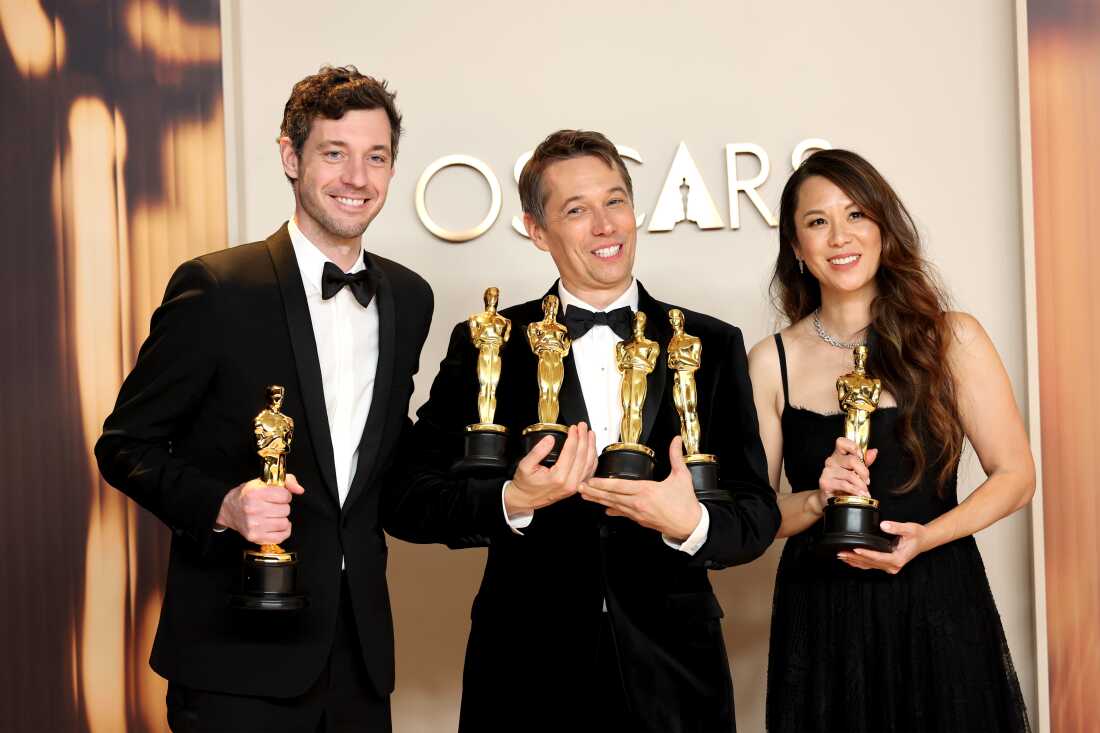
HOLLYWOOD, CALIFORNIA – MARCH 02: (L-R) Alex Coco, Sean Baker, and Samantha Quan, winners of the Best Picture for “Anora”, pose in the press room during the 97th Annual Oscars at Ovation Hollywood on March 02, 2025 in Hollywood, California. (Photo by Mike Coppola/Getty Images)

An independent film just won big. That’s not new.

Anora took five Oscars, including Best Picture. Sean Baker’s film beat out blockbusters and studio darlings. That used to mean a box office surge.

But two weeks later, Anora will be on Hulu.

That is new.

The “Oscar bump” once meant millions. A small film could double its ticket sales. Word of mouth spread. People who had never heard of a movie bought tickets. Theater chains added showtimes. Studios extended runs. A Best Picture win was a second wind.

But the wind has shifted.

Now, Anora will land on streaming before most people have even heard of it. It will sit next to sitcom reruns, reality shows, and whatever the algorithm shuffles forward. There is no scarcity. No urgency. Theaters have no time to rebook the film. There is no second wind.

So what is an Oscar worth?

Studios once spent millions for an award season push. The prestige translated to ticket sales. Then home video. Then DVD and Blu-ray. Even streaming, in its early days, treated Best Picture winners as special. Now, the model has changed.

Now, Anora is in the same boat. Its moment of victory came with no economic ripple. Theaters won’t benefit. The studio won’t see a sudden wave of ticket buyers. The audience won’t feel like they discovered something rare.

In 2019, Parasite won Best Picture. Its box office shot up $40 million after the win. That was the last true Oscar bump. By 2021, Nomadland won, but it was already on Hulu. It barely moved the needle. CODA won in 2022, but it was an Apple TV+ exclusive. It never had a real theatrical presence. The Oscar didn’t change that.

What’s left?

Glory.

That is what the Academy Award now offers. Not a box office bump, not a long theatrical run, not a surge in physical media sales. Just a footnote in film history.

That’s not nothing. For independent filmmakers, it’s still the biggest prize in Hollywood.

But the business has changed. If Oscars no longer boost revenue, how long will studios care? If a Best Picture winner drops on streaming two weeks after its victory, what does the victory even mean?

That is the question now.

Anora won big. It will be on Hulu soon. And in a world where content floods every screen, it might vanish just as fast.