Category Archives: Muddled Musings

In a Galaxy Not So Far, Far Away…


I recently had an amazing conversation with a six-year-old, which I guess is redundant.

We sat across from each other during a celebratory Mexican luncheon for a high school grad (we both were fuzzy on the details), and I noticed he was holding a bright, yellow book.

“Whatchya reading?” I asked.

“Super Fly Guy,” he answered, explaining the book’s subtext: the crazy adventures of a fly that loved the school cafeteria, but wasn’t always so welcome there. superflyI asked to see the book, thumbed through it, complimented the artwork, asked him what else he liked.

“Star Wars,” he said without hesitation. “I’ve seen five of the (six) movies.”

He could have told me he was a double-organ transplant journalist from Detroit, I felt such an immediate kinship. “Me too!” I blurted. “What characters do you like?”

“Darth Maul,” he said, equally confident. “Padme. And Chewbacca.” We chatted about the next installment, due in Christmas. Neither of us could wait. He leaned forward, a bit hushed. “I like Darth Vader, too.”

And suddenly, I got the genius of the franchise. What other entertainment leapfrogs the generations so effortlessly? Here was a 50-year-old ancient swapping stories with a boy who couldn’t remember life without an iPad. We may criticize the new generation of films for surrendering vision for commercial tie-ins. But the truth is that we have aged, not the series, which has always spoken directly to the DNA encoded in every human boy.

The boy’s father offered a canny theory: “Star Wars is a black and white world of good and evil. Plus it’s got lasers.” I challenge an academic for a better answer.

“Lemme know what you think of the new Star Wars,” I told the boy as we prepared to leave. And I thought of the first time I saw the movie, in Detroit, as a 12-year-old.

There’s no underestimating the anticipation of the first one, in 1977. We’d never seen a trailer like that. The effects. The costumes. The masks. The lasers.

So on opening day, mom dropped me off at the mall theater to get my geek on while she did some browsing at Hudson’s. When I turned the theater corner, I saw two lines, both a block long, waiting for tickets. Uncertainly, I walked to the end of the interminable lines.

Suddenly, a middle-aged black man walked between the lines, calling out. “I got an extra ticket! Who needs a ticket?” I watched him walk the length of the line before he got to me. “I’ll take it,” I told the man.

As I pulled out my money (and he the ticket), we were suddenly swarmed by other customers. “I’ll take it!” one grown-up said. One offered to pay more than ticket price.

“Nope, nope,” he said, waving off the crowd. “This young man was first. He gets it.”

As we were finishing the transaction, an usher called out that the movie was sold out. He introduced me to his family, including a gaggle of his young boys. I followed them into the theater, where mom held the seats. We walked in just as the film started, on the iconic scene of the Imperial Cruiser bearing down on a rebel ship. I did not move in my seat, and would see the film 14 more times. At least.

But no film experience will ever match that moment. It was years later that I realized that the crowd probably took the man for a scalper. Or held a suspicion based on color I did not yet know existed. And when they saw the real ticket, that he was legit, they pounced.

Still, he held ground like Obi Wan. I’ll never forget him waving them off. Calling me a young man. Giving me a seat.

Indeed, Luke. The Force runs strong with this one.

vader

To Phil, the Real Marathon Man


Perhaps because I’ve felt as if I’ve finished a couple, but my eyes have been drawn to marathons of late.

Maybe it’s that irritating commercial from Marathon Oil, whose new jingle implores you to “put a tankful of freedom” in your guzzler. (Does that make the Prius the official vehicle of the Socialist Marxist Party?). Maybe it was catching the classic film again.

Or, most likely, it was yet another documentary I consumed, this one on the famed run of 26 miles from Marathon to Athens, which gave birth to the modern day sporting event. The documentary touched on all the rote facts, including the roots of its distance, how it became the symbol of national pride in Boston, and how more than 300 are held annually in the U.S. alone.

But I began to wonder about the guy who ran the first. Why wasn’t he celebrated? I mean, he did die trying.

Turns out, the guy is as heroic as any of the A-list Greek gods, from Apollo to Zeus. And the guy was real.

His name was Pheidippides (Phil to his bowling pals), and he was born about 530 BC.

phil

Phil didn’t exude celebrity.  Not hulking, not that powerful, not even that cunning. Not…Herculean.

But Phil could run. And run. Like, further than you’d have the patience to drive run. And Phil believed in doing his share. So when he joined the Greek Army, they unwittingly turned him into one of the world’s first professional couriers, sending him to dispatch news between armies separated by miles.

Around 500, Persia was planning its biggest New World invasion yet, with Marathon as ground zero. What that documentary (and historical memory, for some reason) failed to mention is that Phil ran more than 150 miles over two days to get to Sparta and plead for help.

Sparta did, and helped repel the Persian army. And it was on that run, to Athens, that Phil died, giving the news of victory. Historians say his final words to the Assembly were ‘Joy to you, we won. Joy to you.’

Where’s  Phil’s pomp and circumstance?? His fable? His book deal? His summer blockbuster biopic?

Maybe his name was too tough to spell, let alone pronounce. Maybe we don’t like heralding those who die trying.

But don’t we all feel his pain, even a little? I can’t help but see him as that Everyday Greco Joe, who played to his strengths to get through the day, tried to keep his head down at work and do what feckless bosses commanded.

Bad news, Pheidippides. Bosses are still trying to run Joes to but a nub.

But you’d be proud of how much of your stride we emulate. Joy to you, Phil. Joy to you.


I’d Like to Teach the World to Sting


can you buy disulfiram over the counter in uk Warning: spoilers and curves ahead

Mad Men was a profound show that flirted with a profound ending.

Instead, it chose a mildly ambiguous one. Which, by today’s standards, could qualify as profound.

But you couldn’t help but feel unfulfilled by the final chapter of the eight-year odyssey of Don Draper. The slick adman and reality escape artist was grinning like Buddha at show’s final scene, having come up with the ad pitch of all ad pitches: the I’d Like to Buy the World a Coke jingle.

Don-Draper-AMC-Buddha2

Much hay has been made over the finale (sorry, Don, there’s no escaping your farm roots), which has been heaped with praise for neatly wrapping characters’ story lines and giving viewers the Matt Weiner sendoff we never got in The Sopranos. And no finale ruins the legacy of a series (look at M*A*S*H*, or Seinfeld, or any series finale).

But just as Tony Soprano’s final scene remains under-appreciated (in a television first, the viewer got whacked), Mad Men‘s final episode has attracted fawning like a gleaming blue Cadillac; it’s over-praise, and fleeting.

The problem may have been in the show’s genius concept: How the appearance of happiness often trumps the appreciation of it.

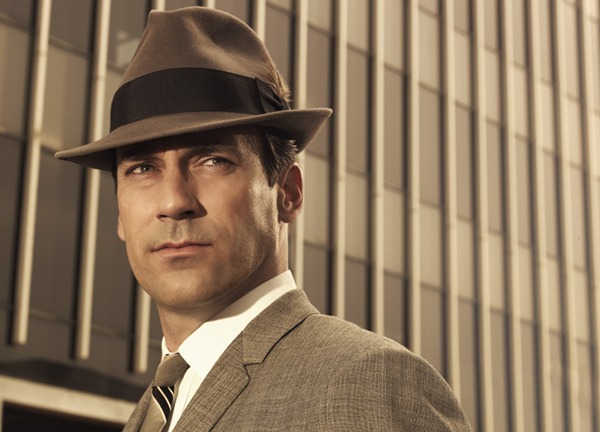
And for eight years, Weiner and writers took an unflinching look at that inner-conflict, creating one of the most complex anti-heroes in television history in Draper (played with deft narcissism by Jon Hamm). His was a protagonist capable of great nobility — and unspeakable trespasses.

Which is why Mad Men shouldn’t have ended on a punchline, however brilliant.

And there’s no arguing the cleverness of the joke. The real ad was conceived by the minds at McCann-Erickson in 1971. Draper was working for McCann-Erickson on the show, which also had reached 1971. And Mad Men can perhaps boast a television first: the only series to end on a commercial. Normally they’re followed by one.

But the real ambiguity of Mad Men is not in the finale’s contents, but its intent. What are we to make of Don’s last smile? That it takes a human touch to be a good salesman? That work can’t equal happiness? Or can it? That, if you run fast enough from your past, you can start over?

Perhaps Weiner telegraphed the ending in the opening graphics of the series eight years ago. Every week, the show began on a familiar graphic: A suited man, plummeting from a skyscraper hued by womens’ silhouettes, only to land neatly on a couch, still coiffed, cigarette perfectly in place. Maybe that was the setup to the punchline.

We may never know, which may be the point. Or perhaps the show ended on a punchline that Weiner had in mind years before the show’s final bow (he said often that he knew how he wanted the series to end).

Either way, there was no shaking the sense that we’d just seen a great sales pitch. And like most ads, the promise is far more grand than the payoff.