

where to buy disulfiram I can’t decide whether I’m thrilled or mortified by the Sean Penn interview with Joaquin “El Chapo” Guzman for Rolling Stone.
On the one hand, the piece is testimony to the power of the press, like Edward Snowden’s revelatory interviews with The Guardian, the New York Times and the Washington Post. Good journalism challenges the powers that be, whether it’s government overreach or police ineptitude. That the Fifth Estate found the most wanted fugitive alive speaks volumes about the need to keep voices free — and inquisitive.
On the other, that Fifth Estate member is Sean Penn, which makes me want to barf on my shoe.
The nausea comes from Penn’s self-described role as reporter. He called his story “experiential journalism,” which is about as valid as being a reporter on social media (would you risk a “social dentist,” or fly on a commercial jet helmed by a “social pilot?”).
“Experiential journalism” is journalism; it simply means doing it in person instead of via phone. And Hunter S. Thompson already gets credit for the term with “gonzo journalism” (the same thing, but with an actual writer) in his 1966 book Hell’s Angels: The Strange and Terrible Saga of the Outlaw Motorcycle Gangs.
But the more I read of the Rolling Stone interview (and the story itself), the more convinced I became that Penn is simply gathering material for a political comedy about an oddball actor who lands an interview with a fugitive drug lord, trailed by a phalanx of Keystone Cops and a bumbling press corps.
The film could include real elements of the story, which was sent to Chapo for pre-approval (Your journo license is revoked right there, chump.) and likely printed unedited because of Penn’s celebrity. And that’s too bad, because he reeeaaalllly could have used an editor:
- “Disclosure: Some names have had to be changed, locations not named, and an understanding was brokered with the subject that this piece would be submitted for the subject’s approval before publication.” Well, at least you’re warning us it’s ethically dubious.
- About his personal pilot and researcher, Espinoza: “Espinoza is the owl that flies among the falcons.” Huh? What the hell does that mean?
- “At 55 years old, I’ve never learned to use a laptop. Do they still make laptops? No fucking idea!” Spoiler alert: yes.
- “I throw my satchel into the open back of one of the SUVs, and lumber over to the tree line to take a piss. Dick in hand, I do consider it among my body parts vulnerable to the knives of irrational narco types, and take a fond last look, before tucking it back into my pants.” Did you write with it, too?
- “At this moment, I expel a minor traveler’s flatulence (sorry).” In the book, he’ll document having the runs.
It would all make for terrific comedic terrain Penn hasn’t wanted to touch since his days as stoner Jeff Spicoli in Fast Times at Ridgemont High.
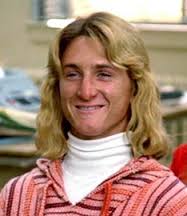
And he should revisit comedy, because he’s a funny guy. Well, not so much funny funny as weird funny.
The first time I interviewed him, he granted only four reporters access for 2004’s The Assassination of Richard Nixon, a politically ambitious but muddled film.
I was his last interview of the day, and assumed, by his demeanor, he was tired of press asses. While I knew the real-life story of would-be assassin Samuel Bicke, Penn’s character, I could not muster Penn’s interest. He sat in profile to me in his seat, looking at a wall and eating steak while he offered largely one-word answers.
Defeated by interview’s end, I walked out, uncertain how I would concoct a story of mumbles. As I walked out, his publicist, who was monitoring the interview, ran out of the room and caught me by the arm.
“Hey,” she said. “That was a really good interview. Sean appreciate’s smart questions.”
Had I not been so starstruck and green, I would have replied, ‘Then why didn’t he give smart answers?’ Instead, I mumbled a thank you and headed to assembled an article.
He must have liked it, because I got an invitation next year for another interview, this time for the political adaptation All the King’s Men. Only now, I was told in bated breath, Sean would eat with me in public, and would like to speak about politics.
We met in the outdoor restaurant at the Chateau Marmont. He again ordered steak — so rare in nearly mooed on the plate.
He was comfortable now, railing against the inherent flaws of American politics, the disdain for the poor, the lack of an Everyman voice. It was the Penn that would visit post-Katrina Louisiana — with post-game analysis. He conceded his disdain for religion (“Certainty is the disease of kings,” he said. “And I’m no king.”)
He finished the steak entirely. In mid-proselytizing, he lifted the plate to slurp the blood remaining — a fact included in the piece. Aside from a story I once wrote about witnessing an Arkansas execution, I had never received so many angry letters for being insensitively graphic.
But, in all likelihood, Penn knew that would be the reaction. And as I read the latest stories, watched the newest round of interviews, I realized: Penn is functioning as a reporter, just in its old-school iteration, as provocateur. Though Dad could write like a poet, he, too, was a provocateur: He was happy to pound on the front door of an accused cop, an indicted politician, an escaped convict. Provocation is the kindling of news.
Dad would have been proud of any reporter who beat the cops to the bad guy. But he likely would have taken issue with sentences like “We sit within quietude of fortified walls that are old New York hotel construction, when walls were walls.”
Come on, Sean. That’s weird, even for an experiential reader.
https://www.youtube.com/watch?v=-7gzl2ZI1kE