Category Archives: Muddled Musings

Making the Wrong Side of the Bed


There’s an idiom in contemporary politics that goes, approximately, like this: Republicans wake up angry; Democrats wake up sad.

It would seem an inescapable truism, particularly given the rancor that freights this presidential campaign. While it will go largely unnoticed, Mike Pence did something extraordinary Sunday: He promised the nation that his party would peacefully accept the results of the election.

Think about that. Simply as principle, Democracy relies on an assumption that those involved understand the rules of engagement. Rules that weren’t in question say, during the presidential primaries, which were similarly rife with vitriol.

But in watching Pence, I realized that some Republicans must be waking up sad, too.  They also see where this path inevitably leads: To self-cannibalization.

Michael "Mike" Pence, governor of Indiana, pauses during an interview in New York, U.S., on Thursday, May 16, 2013. The largest-ever U.S. municipal junk bond sale remains in limbo after Indiana learned that a Pakistani company backing a fertilizer plant financed by the biggest borrowing in state history is linked to explosives causing the most U.S. casualties in Afghanistan. Photographer: Andrew Harrer/Bloomberg via Getty Images

Consider: In 2009, the Tea Party was borne of Republican worry that a newly-elected Barack Obama would usher a Caligula-like era Washington, reeking of liberalism and federal handouts. The party concocted a 10-point Contract from America (not “with,” interestingly). It called for, among other things, that Obamacare be repealed and that all new laws “identify the specific provision of the Constitution that gives Congress” authority to pass new laws.

Alas, the Supreme Court nixed the first provision and voters the second. In response to the non-response, the GOP drifted further right and began to consider Karl Rove’s parting advice to colleagues: expand the base by including more outliers — voters who would normally drift toward fringe candidates.

Thus the birth of Sarah Palin, the least-qualified professional since Marlon Brando whimsically hired a NYC cab driver as his agent (true story).

palin

And now Trump, who makes Palin look MENSA cerebral. Trump has already put the GOP on notice that they will pay just as dearly as Democrats for angering him. Paul Ryan — a founding father of the Tea Party — has been particularly pilloried for non-neo-support. His political career (let alone his hold as House Speaker) is as clear as puddle water.

The pit bull has turned on its dog-fighting owner. Unshackled, if you will.

But Pence’s jaw-dropper followed another: Michelle Obama’s speech days earlier concerning the state of politics, specifically the NC-17 turn it’s taken. While she has traditionally eschewed stumping (she was opposed to her husband’s decision to run for president in 2008), she may have struck an apolitical nerve. One that prompts political action.

There’s a reason the crowd erupted at “enough is enough.”

That’s the tricky thing about energizing bases. You never know their mood when they finally wake up.


Something Whatzit This Way Comes


I’ve always been a sucker for gadgets, gizmos and whatzits.

Perhaps it was the gimmicks in the cheap magic tricks I bought as a kid. At least that’s what I rationalize when I continue to feed my addiction to odd purchases. Like the spy pen camera I bought I last week.

I had no need for one, as I’ve really cut down on my pen writing and spying. I can’t even really tell you why I was looking at them. But I knew when I wanted one: When one reviewer who raved about the device admitted that he bought it it “because when I was a kid I always dreamed of having one.”

spy-pen

That’s enough for me (along with a price tag of $35; funny, the cost of dreams). Alas, the toy was broken upon arrival, and I had to reluctantly return it.

The psychosis spreads to my vehicles, many of which will become historical footnotes of bad engineering. There were the two Fieros. The Yugo. And one of my favorites, a purple X-90 that’s the closest the auto industry has come to a bubble car. x90 I’m currently driving a smart car because the Fiat 500 seemed too big, having a backseat and all.

I drive another ridiculous contraption now, a Can-Am Spyder that is, in essence, a reverse trike — two wheels in front, one in back. Think a dyslexic Big Wheel. The bike flummoxes insurance companies and state DMVs, which aren’t sure how to categorize it. You don’t even need a motorcycle license to drive one, which is about as insane as not needing a license to work an AR-15.

But the gizmo has turned into an intellectual whatzit. The purchase was borne of the stubborn realization that driving on only two wheels is insane in Los Angeles. But I can’t bring myself to give up the roller-coaster high that is any motorcycle ride.

So now I drive the equivalent of either a Batbike or a bike for circus clowns, and love it. I take 6-mile rides along Lake Balboa to pick up a donut three blocks away. The thing has such a cavernous trunk I take it grocery shopping, as it can hold a 24-pack and two grocery bags. It’s the first motorcycle to earn a thumbs-up from my mother, which is either a very good or very troubling sign.

It has come at the cost of some hubris. Once I rode a Harley, and I’m still too embarrassed by the training wheels to pull into a Harley shop, lest I be discovered for the fraud I am.

biker-wannabe

But there’s something to that third wheel, more assuring than I expected. A good friend recently confided he rides his Harley now to simply keep it running. “But it’s a 700 pound bike,” he told me. “If that drops, I won’t be able to pick it up.”

I hear you, brother. And I’m only a half step behind you in my burgeoning caution.

But on the ride to buy cake donuts this weekend, I came upon a group of boys, all brandishing skateboards and spasming cell phones. They geared up, headed out of the shop, and surrounded the bike. “What the hell is that?” one asked loudly to no one.

And I realized: He’d found the through line to much of my life. From magic tricks to handheld gadgets to the motorcycles and cars that ferry me, I’m undeniably drawn to any whatthehellisthat?

Fortuna may insist that my body age. But she is powerless against my towering immaturity.

Nyah Nyah Nyah.

Now what’s that spy pen website?

Children of Men and the Latin New Wave Movement


A world in chaos. Terror attacks run rampant. Deportation is the hottest issue on a worried public consciousness as walls keep immigrants from interacting with native citizens.

A documentary? A nightly newscast? A Trump political ad?

Try Children of Men.

Ten years after it hit screens, wowed critics and cemented the reign of the “Three Amigos” over Hollywood, Alfonso Cuaron’s ominous tale of an infertile human race remains as prescient and topical now as it was a decade ago.

If anything, it has grown in stature, becoming a video cult favorite, spawning academic debate and influencing films today in what critics consider a new wave of cinema akin to the French films of the 1960’s and 70’s.

Not bad for a commercial flop.

From its stunning opening to a sprint of a finale, Children proved two hours of frenzy on film. Utilizing handheld cameras and seamless tracking shots, the picture would earn a raft of critic top-10s with its story of a government paper pusher (Clive Owen) who finds himself the charge of humanity’s last pregnant resident, Kee (Clare-Hope Ashitey).

The film would earn three Oscar nominations — best writing, editing and cinematography — on its way to 41 other movie awards and nominations. Roger Ebert compared it to Metropolis and Nosferatu. metropolisnosferatuThe New York Times called its final battle sequence one of finest “ever seen on film.”

Yet it never really took off at the box office. With ticket sales of about $35 million, the grim tale collected less than half its production budget. When it opened on Christmas weekend 2006, it did a paltry $180,000 in limited release — about the catering cost of a Michael Bay opus.

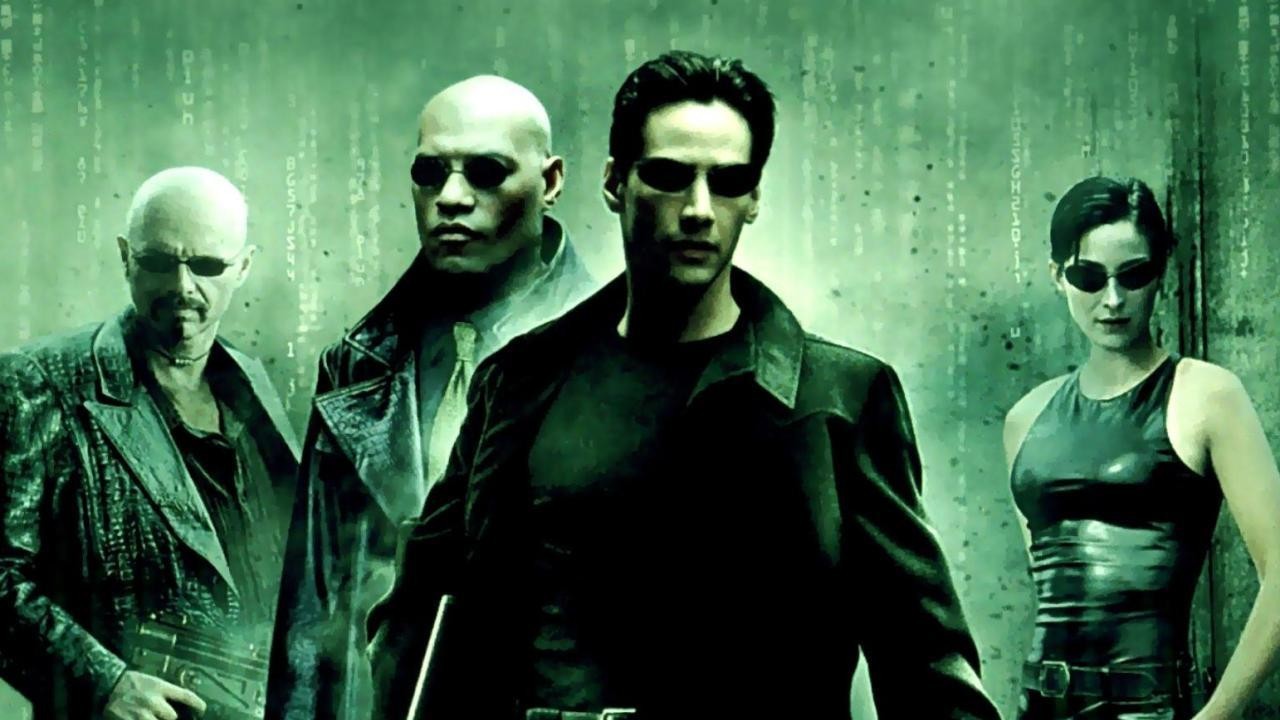
But like The Matrix and Blade Runner, the dystopian cautionary tale found an audience over the years. matrixblade-runnertAnd like those films, Children has become a benchmark for science fiction — largely for its timeless nature. Word of mouth and steady video rentals would ultimately make the $75 million film a tidy profit for distributor Universal Pictures.

And its audience continues to grow. Children has become a springboard for debate among academics such as Stanford senior fellow Francis Fukuyama, author The Origins of Political Order and The End of History. Fukuyama tours the nation with the film, using it as the fulcrum for geopolitical debate over a growing populace squabbling over a shrinking natural resource pool.

Indeed, there’s no escaping the topicality of Children. The movie’s Muslim-Christian tension resembles BBC footage. The story’s narrative kindling — the percolating firestorm over immigration — could have been come from the teleprompter of the Republican National Convention. The story’s immigration center is located in Bexhill, England. (Brexit, anyone?)

Technically, the film’s shaky, handheld camera — usually holding on long, extended takes — is the hottest flourish in Hollywood, thanks to editing technology that makes cuts a stylistic choice, not a filmmaking necessity.

Consider the brutal car ambush scene (spoiler alert), which takes place about a half hour into the movie. In addition to putting the film into overdrive (and killing a character in stunning fashion), the bloody chase/shootout lasts more than four minutes without a visible cut. (Orson Welles’ classic one in Touch of Evil lasted three, once considered an eternity.)

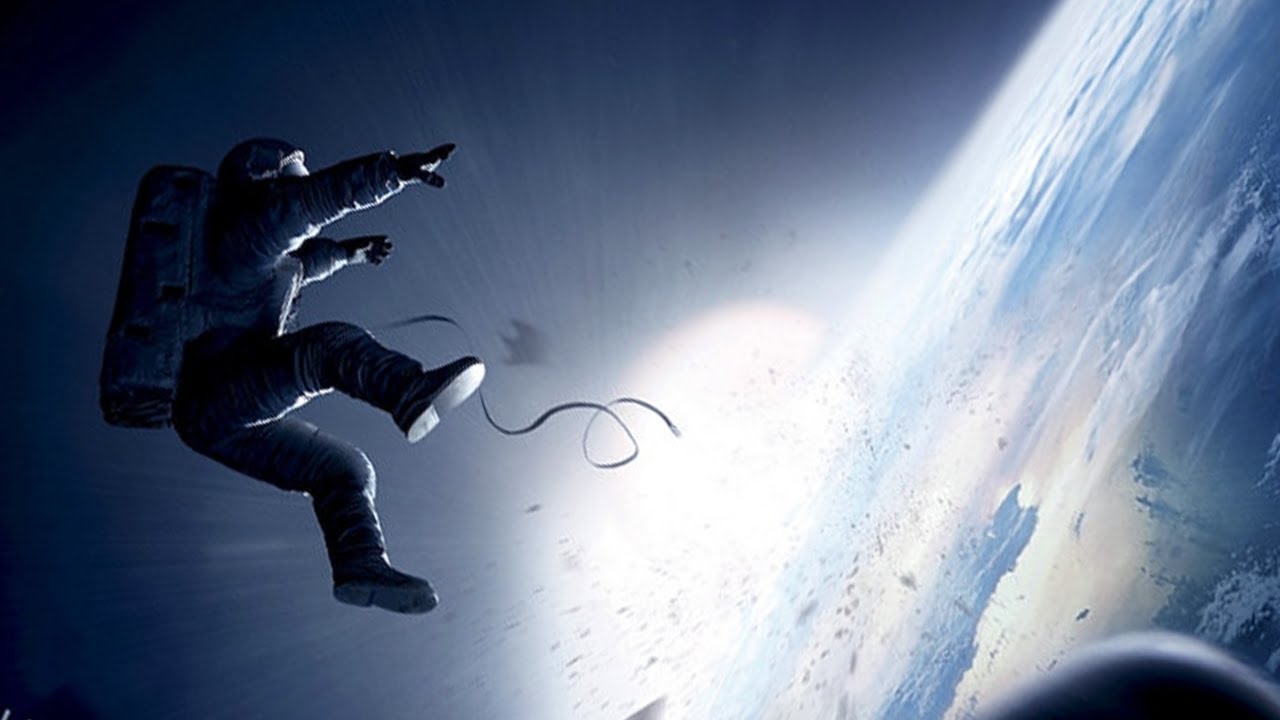
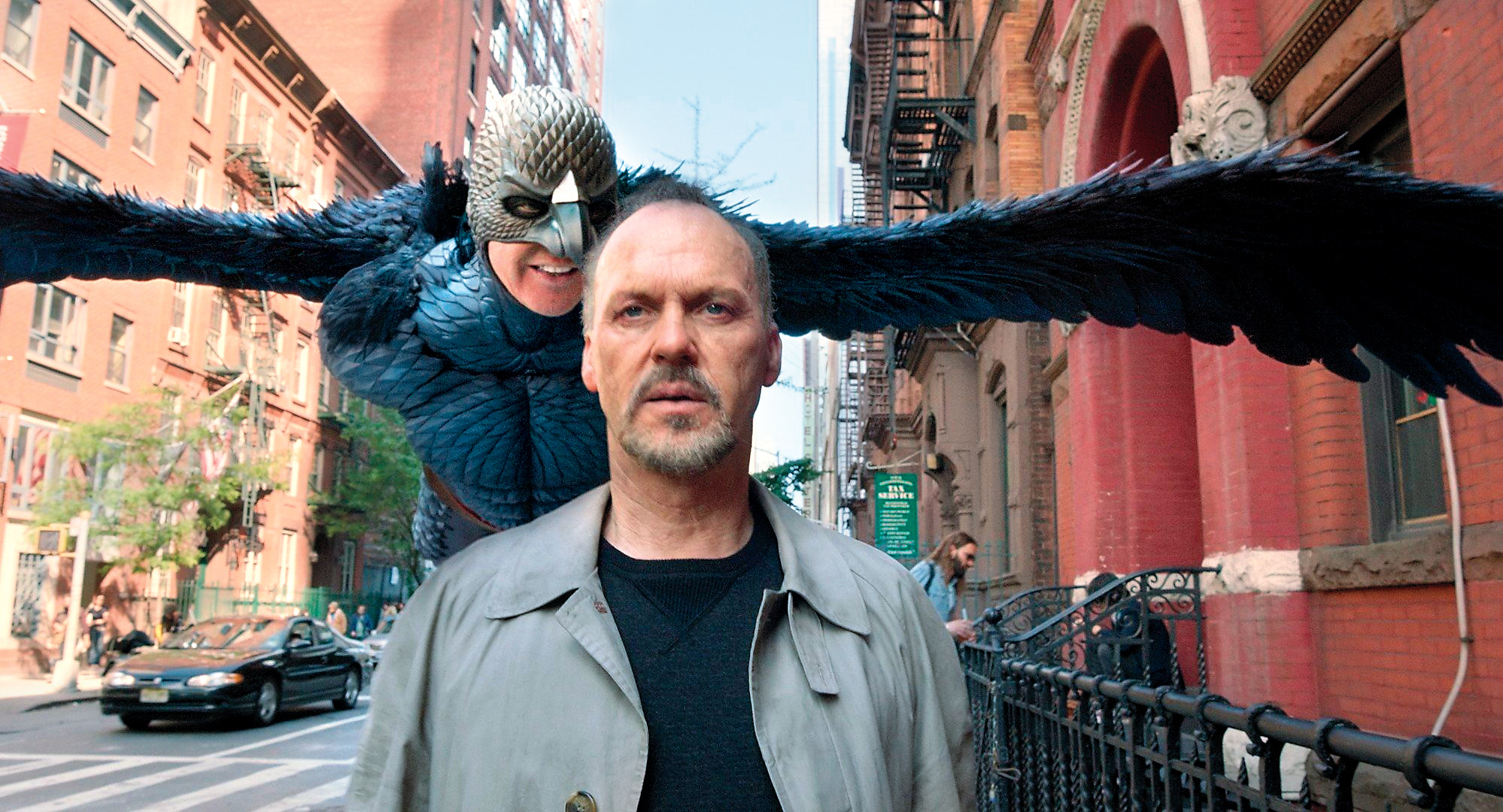
Since Children, directors have engaged in a contest of tracking shots, essentially seeing who can hold their breath the longest; Cuaron’s Gravity opens with a tracking shot that lasts an epic 17 minutes. Birdman, the 2014 film that captured Best Picture, plays as one entire tracking shot, without a single visible take.

gravitybirdman

Speaking of which: Those movies came courtesy of Cuaron and Alejandro Gonzalez Inarritu. two-thirds of Hollywood’s “Three Amigos” trinity. Along with third member Guillermo del Toro (Pan’s Labyrinth, Pacific Rim), the men have have hurtled the industry into a technically-savvy style not unlike the movies of the French New Wave movement. Last year, Inarritu became the first filmmaker to win back-to-back directing Oscars (Birdman, The Revenant). Consider it the Latin New Wave movement in cinema.

Both movies took their aesthetic cues from Cuaron’s bleak vision of the world 20 years in the future.

“It is above all the look of Children of Men that stirs apprehension in the heart,” mused Ebert. “Is this what we are all headed for?”

It may be the end of the world as we know it, but on the big screen at least, it all looks fine.