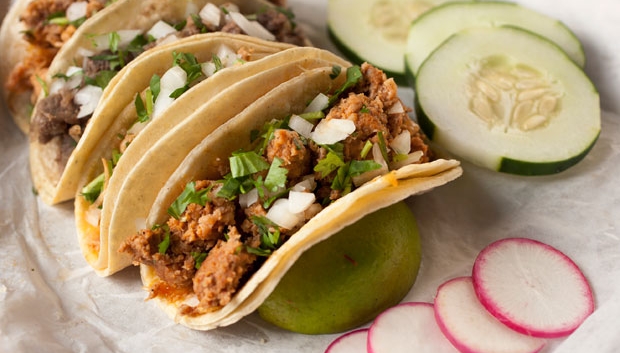
where can i buy Clomiphene and metformin In honor of National Taco Day, we offer a FactSlap column with just a dash of salsa:
- Tacos predate the Europeans in Mexico and were discovered to be the food of choice by the indigenous folk in the Valley of Mexico. Obviously the Spanish wanted to stake their claim on such fine fare, and dubbed them “tacos.”
- Taco Bell started as Bell’s Hamburgers and Hot Dogs in San Bernardino, CA back in 1950 by Glen W. Bell Jr.. Bell’s Hamburgers and Hot Dogs began as a hamburger stand selling fast foods such as burgers, hot dogs, fries, and shakes. Then, taking advantage that his stand was located in a Hispanic neighborhood, Bell started selling crispy-hard-shell tacos at 19 cents each.
- Taco Bell uses at least 600,000 cows’ worth of beef per year. According to Taco Bell’s own website, they serve an average of 295 million pounds of ground beef every year.
- Ensenada, Mexico is said to be the birth place of the fish taco.
- A “Taquería” is a Spanish word meaning taco shop. Originally, the term “taqueria” was used to refer to street vendors, although the term has come to be used more generally to refer to any sort of establishment which serves authentic Mexican food.
- One of the first taco trucks is thought to have started in New York when in 1966 two New York housewives operated an early version of the taco truck. Although the truck did not have a full kitchen, it was available for catering.

/https://www.thedailymeal.com/sites/default/files/slideshows/copy/71-hughbabys_0.jpg)