quietly We have become a nation well trained in the first person.
online Seroquel order We think about ourselves. We talk about ourselves. We talk to ourselves. Even when we listen, we often wait for our moment to speak rather than actually exchange an idea.
We have become a nation of first-person citizens, led by the ultimate first-person president in Donald Trump. The MAGA movement may be the first-person point of view made manifest: my country, my grievance, my truth, my loss, my victory.
Social media probably helped get us here. Then again, Trump may be a product of social media, which may be a product of us. The whole thing may be circular.
Regardless, we have gotten very good at the first person.
There is a rarer class of people who can find the second person. They can find you. They can stop long enough to consider the person across from them. What that person wants. What that person means. What that person may be trying to say while we are busy preparing our response. That is harder than it sounds.
But there is an even rarer breed: the third-person citizen.
I do not mean people who refer to themselves in the third person. That may be the most obnoxious mutation of the species.
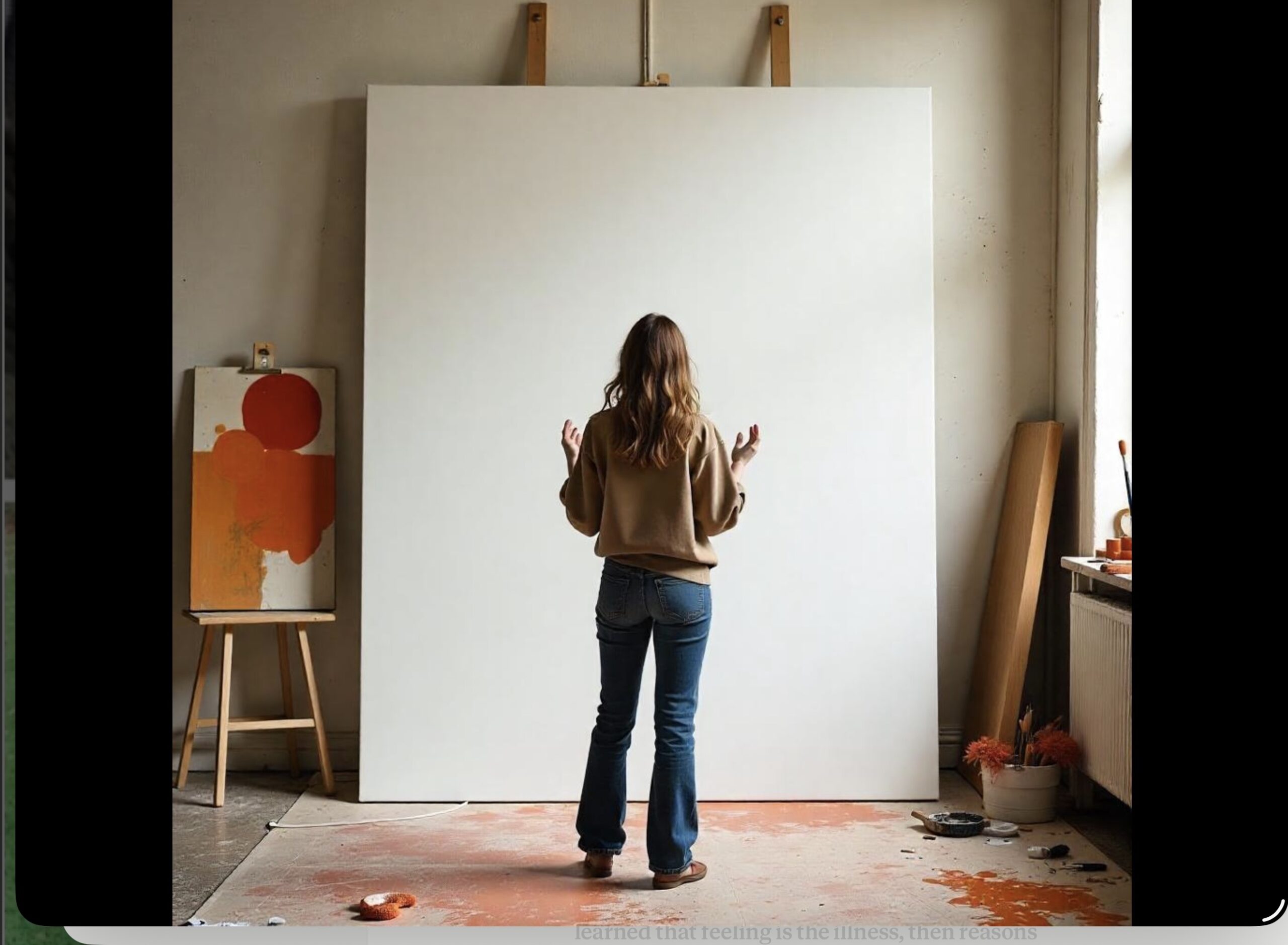
I mean the ability to step outside yourself and see the person you are presenting to everyone else. To watch yourself from across the room. To hear what you just said as though somebody else said it. To see your behavior as though you were watching yourself in a movie.
This is particularly difficult for white men. I know because I am one.
I try not to mansplain. I try to listen. I try to understand what another person is telling me. And I still catch myself doing exactly what I think I am avoiding.
I explain what I want. Someone responds. Then instead of absorbing the response, I explain my reasoning again.
Maybe with different words. Maybe more slowly. Maybe with more detail.
As though the problem could not possibly be my argument. It must be their failure to understand it.
That is when I lose the third person.
Because if I could step outside the conversation for a moment and watch the scene, I might see something entirely different.
I might see a guy who thinks he is explaining himself clearly. Everyone else might see a guy who refuses to listen.
Third-person thinking is not empathy.
Empathy is valuable, but it is a double-edged sword with a razor-blade handle.
You do not always need to feel what another person is feeling. Sometimes you cannot. Sometimes you should not.
Third-person thinking comes before that. It lets you see the scene well enough to decide whether empathy is necessary.
Think of your life as a movie.
Everything you say is dialogue. Everything you do is action. Other people are watching the character you play, whether you realize it or not.
We have spent decades being told to speak our truth. Find our true selves. Be authentic. Tell the world who we are.
Maybe we have spent so much time looking inward that we have forgotten to look at the screen.
Because you are the star of exactly one movie. Yours.
There are eight billion other biopics playing simultaneously. In those movies, you are not the star.
You may be the spouse. The parent. The friend. The boss. The asshole at the grocery store.
You may walk through one scene and disappear forever. Most of the time, you are not in the movie at all.
Finding the third person means understanding which role you are actually playing.
It means occasionally leaving the star’s chair, walking into the audience and watching yourself perform.
You may discover that the character you thought you were playing is not the character everyone else sees.
That perspective may help save a country obsessed with the first person.
It may also save something larger.
Your place in eight billion other movies.