Author Archives: Scott Bowles

We’re the Kids in America

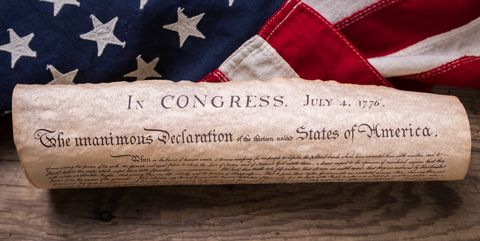
declaration of independence

No, that rumble you heard today was not the Four Horsemen of the Apocalypse come to level Los Angeles for its gay marriages, legal weed or traffic. Just an earthquake. Sorry Donnie and the Believers

And since Mother Nature got the party going early, lets sync with her with some fireworks and Factslaps to commemorate the immigrants who left an oppressive government, risked and lost lives to cross hostile borders, and finally sought asylum in the home of the free. Sound familiar?

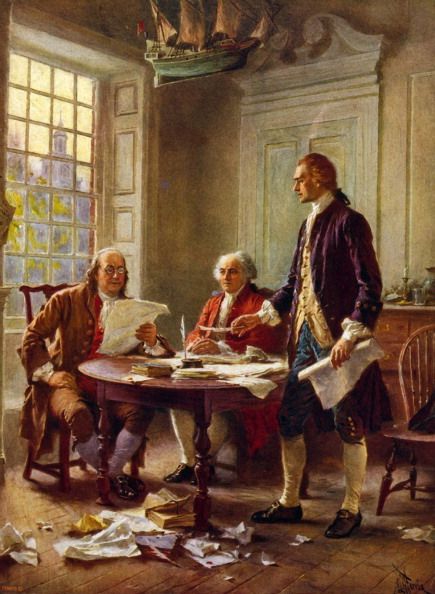
  • Thomas Jefferson was the main author of the Declaration of Independence. Four others were also on the committee: Roger Sherman, Benjamin Franklin, John Adams, and Robert Livingston.image
  • John Hancock was the first person to sign the Declaration of Independence. He made his mark in the center and it’s the largest signature on the document, likely because he was President of Congress at the time, according to the National Archives.john hancock signature
  • Independence Day should have been celebrated on July 2, 1776. Although the document was dated July 4, congress actually voted for independence from Great Britain two days prior on July 2, 1776. It apparently wasn’t signed by everyone until August 2, 1776.
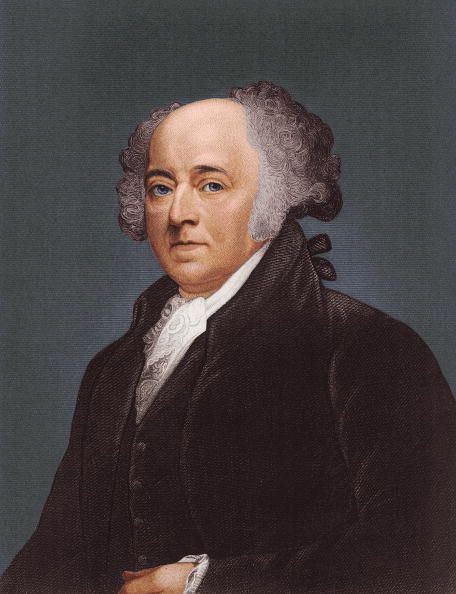
  • John Adams wrote a letter to his wife about how memorable Independence Day would be in American history. He was obviously right — in his letter, he said the day should be celebrated with parades, bonfires, and fireworks.image
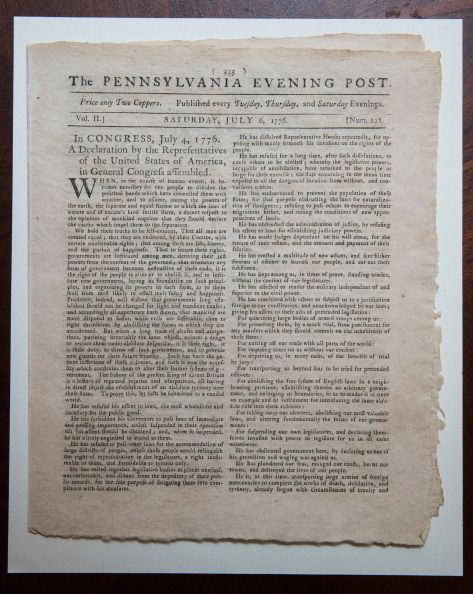
  • The Pennsylvania Evening Post was the first newspaper to print the Declaration. It came out in the newspaper on July 6, 1776 for everyone to see, after a local printer named John Dunlap produced copies of the declaration’s manuscript.image
  • An estimated 2.5 million people lived in the nation in July 1776. As of July 2017, about 325.7 million people live in the U.S., according to the United States Census.
  • Three presidents who signed the Declaration of Independence died on July 4. John Adams and Thomas Jefferson both died on July 4, 1826 — on the 50th anniversary of the country’s independence. James Monroe died five years later on July 4, 1831.
  • Independence Day was once celebrated on July 5. The holiday fell on a Sunday in 1779, so the country celebrated on July 5th instead.4th of july parade
  • U.S. soldiers got a special treat on the 4th of July in 1778. George Washington helped the troops celebrate by allowing them a double ration of rum, according to Live Science.
  • Americans spend over $1 billion on fireworks every year. According to the American Pyrotechnics Association, the numbers continue to go up every year. The biggest celebration is the Macy’s 4th of July Fireworks show, which takes over 8,000 hours to prepare.fireworks show
  • There are 33 places in the United States with the word “liberty” in their names. According to the U.S. Census, four of them are counties — Georgia, Florida, Montana, and Texas have a Liberty County.
  • It didn’t become a federal holiday until 1870. It took nearly 100 years for it to be recognized as such, but when it finally happened it was up in the ranks with Christmas and a few other holidays.kids on 4th of july
  •  Around 150 million hot dogs are consumed on Fourth of July. According to the National Hot Dog and Sausage Council, that’s enough dogs to stretch from Washington D.C. to Los Angeles more than five times.Image result for hot dog july 4

Hearts Versus Skins

Image result for skin in the game movie

What do you call a movie that is so well-meaning it’s hard to criticize, yet so sporadic in execution it’s hard to be effusive? In this case, you call it Skin in the Game, a nobly-intended thriller about human trafficking that tackles an issue long deserving big-screen Hollywood treatment, but undercut by tropes that veer it into TV crime territory.

“Inspired by true events,” as the film pointedly notes, Skin has the difficult task of spotlighting a vital social topic without descending into exploitative sex and violence . And for the most part, it succeeds, but the low-budget movie occasionally resembles an episode of Law & Order: Vigilante Unit, with cardboard villains and little character arc.

Directed by first-time filmmaker Adisa and written by Steven Palmer, Skin takes a topic Hollywood typically relegates to impoverished nations and brings it stateside, in this case Los Angeles. We are introduced to Lena (Erica Ash), a former prostitute who has turned her life around by dedicating herself to helping abused women out of the sex trade business.

It’s a strong intro, and perhaps the best scene of the movie. Lena, called to a seedy hotel to retrieve a prostitute from an abusive pimp, sets the film’s tone immediately: the language is rough, vulgar, misogynistic and authentic. Violence is to be accepted, not avoided, and Lena’s understanding of that world saves the young woman’s life. It’s an effective prelude to the world we assume we’re about to enter.

Suddenly, however, that tenor changes into a buddy cop thriller when 15-year-old Dani (Sammi Hanratty) is abducted in broad daylight off a suburban sidewalk and finds herself immersed in the human trafficking underworld. To Skin‘s credit, the film takes care to show multiple angles of the trafficking plague, from criminals to victims to the cops trying to sort one from the other. Skin also emphasizes that women can victimize, too; Dani finds herself in a prostitution ring led by the ruthless Eve (Angelica Celaya), a character so vile she’d make a good Bond villain.

After learning police cannot act on a missing persons report for at least 24 hours, Lena and Dani’s mother Sharon (Elisabeth Harnois) take matters into their own hands, triggering the movie’s unsteadiest moments. The women comb the streets like veteran detectives, banter like buddy cops, and threaten to kill uncooperative suspects with a gusto that would make Charles Bronson proud.

Alas, what Skin needs is more humanization. The film explains that Lena and Sharon were once close friends (Lena is Dani’s godmother), but never reveals the fracture that ended the friendship and kept them from talking for years. The film is also strangely lit, sometimes as artificially brightened as a prime time TV show; Skin oddly rejects the use of much shadow for a story about the shadowy world of sex trafficking. And “inspired by true events” is too vague here, particularly for a film on this issue: we get no epilogue about the characters portrayed, their fates, or whether they were even real.

Still, it’s Ash (Starz’s Survivor’s Remorse) who keeps the film propelled and, at times, even riveting. Lena is utterly believable as a woman who entered prostitution unwillingly and paid the price for leaving the profession. She keeps joints in a cigarette case and gumption in her heart; her tough questioning of former colleagues and employers gives Skin its heart, even if it is an occasionally melodramatic one.

Skin in the Game is hardly going to set the standard for human trafficking films. But given the rarity of movies on the issue, particularly in the U.S., setting the standard may be less important than setting precedent.

Mother of Exiles


The New Colossus

Not like the brazen giant of Greek fame,
With conquering limbs astride from land to land;
Here at our sea-washed, sunset gates shall stand
A mighty woman with a torch, whose flame
Is the imprisoned lightning, and her name
Mother of Exiles. From her beacon-hand
Glows world-wide welcome; her mild eyes command
The air-bridged harbor that twin cities frame.
“Keep, ancient lands, your storied pomp!” cries she
With silent lips. “Give me your tired, your poor,
Your huddled masses yearning to breathe free,
The wretched refuse of your teeming shore.
Send these, the homeless, tempest-tost to me,
I lift my lamp beside the golden door!”

Emma Lazarus — November 6, 1883

Postscript: Two days ago, a publishing company in New Brunswick, Canada, terminated its contract with cartoonist Michael de Adder after a drawing he did of President Donald Trump standing over the bodies of two drowned migrants went viral on social media. After much non-signifying sound and fury of the “right,” many outlets removed the cartoon, just as they de-imaged after 12 cartoonists at Charlie Hebdo were slaughtered for cartoons of Muhammad, including the one below. 

Fuck that.  If you’re not exercising your First Amendment rights, give them to someone who will.