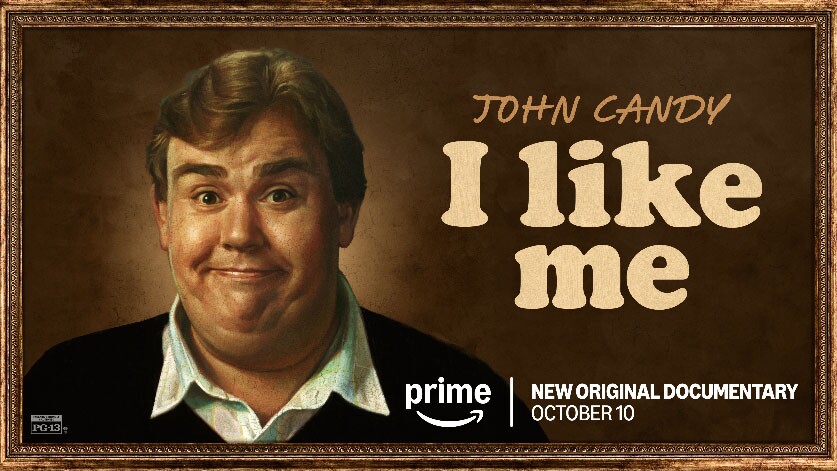
The new documentary I Like Me doesn’t reflect a career so much as it resurrects a soul. Directed by Colin Hanks, it opens like a letter you forgot you wrote to yourself. Each frame comes dusted with warmth, from grainy SCTV clips to home footage that feels like laughter and Canadian winter.
Candy never looked like Hollywood, which made him perfect for it. He came at comedy from the inside out, not to impress but to include.
Watching him again reminds you of a time when humor had weight. When it came from kindness, not cruelty. When it carried the warmth of someone who knew what it meant to be overlooked and decided to pull everyone into the shot.
Hanks builds the story patiently. He stitches together family interviews, late-night appearances, and the kind of on-set scraps that say more than the sound bites.
You see Candy coaching young actors between takes. You see him fidget when praised. You see him look down, laugh, and change the subject. He wasn’t just funny. He was generous.
I Like Me It echoes a line from Planes, Trains and Automobiles, the 1987 gem that gave Candy his most human role. “I like me,” he says, through tears. “My wife likes me.”
In the documentary, the phrase becomes a wish fulfilled. The people around him liked him. Loved him. Still do.
Steve Martin, Catherine O’Hara, Eugene Levy, and Dan Aykroyd all appear, but they don’t steal the focus. They orbit him. They talk about a man who never lost his politeness, even when fame tried to sand it off.
Martin recalls how Candy would apologize for taking too much food at craft services. O’Hara remembers him slipping her his per diem when she was broke. These are the kinds of stories that don’t headline an obituary, but define a person.
Hanks resists the easy route of canonizing Candy. The film doesn’t flinch from his excess, his weight, his exhaustion.
But it refuses to frame them as failure. They become part of the portrait: a body carrying more heart than it could bear. When Candy died in 1994, at just 43, it felt like the air went out of the room. I Like Me fills it again.
Yet for all the brilliance of Hanks’ direction, it’s Candy’s humanity that steals the picture one last time.
He reminds us that kindness plays longer than punchlines, that laughter without venom never ages, that decency can be an art form.
Finally, John Candy gets to take the bow he earned.
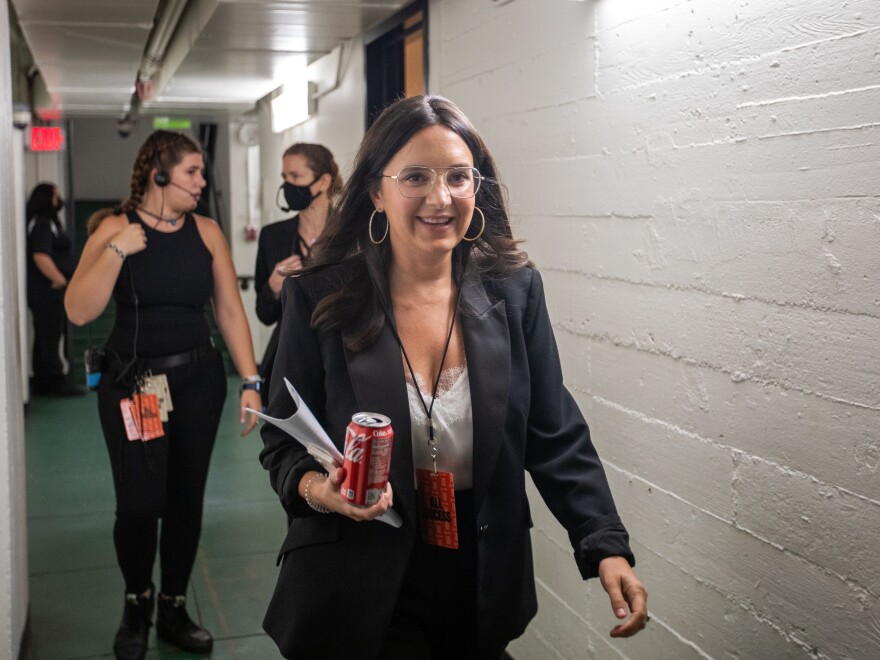
“I honestly cannot believe you’ve willingly decided to go into the worst kind of job that exists: management at a dying company.
This is the glass cliff to end all glass cliffs
Managing sucks! It sucks even when you like the people you’re managing and it’s a low-stress position! And I’m sure I don’t have to tell you: running CBS News is not a low-stress position. You are going to get blamed by everyone above you for decisions that are made by people below you, and you are going to get blamed by people below you for the decisions that are made by people above you. You’re also going to get blamed for your own decisions, just for kicks. You have elected to take a job where the primary purpose is for you to eat shit and own the death of broadcast TV news, a thing that is going to die no matter what you do. Nice work!
This is the glass cliff to end all glass cliffs. You’re Marissa Mayer at Yahoo without the Googler street cred. You’re Nancy Dubuc at Vice without the string of hit TV shows. You’re Linda Yaccarino at Twitter without the advertiser relationships. You have been hired as a sop to a Trump administration that is actively hostile to the actual free press, and you will be made to oversee wave after wave of layoffs until you quit or get fired and the entire news division is shut down in a final spasm of cost-cutting after the next inescapable media merger.
No one can save CBS News, because it was made for a media ecosystem that is now dead. Broadcast television is slowly circling the drain, its aging audience drifting toward the great inevitable. Younger people are getting their news from TikTok and Instagram in ever-greater numbers, and they trust institutional media less than ever. CBS in particular — that’s your new company, now — has the oldest audience in primetime TV. These folks aren’t The Free Press’ assiduously courted “classical liberals,” either. It’s normie grandparents, a bunch of whom are planning to appear at the next No Kings rally. I might invoke Edward R. Murrow, but they remember him. They don’t have any goodwill toward you. They don’t know who you are at all. And they are not going to defend you when you screw up.
You are now stuck claiming your goal is to win back younger audiences, which you cannot do, while your real job is to manage decline. There is no way to win here, only slightly better ways to lose.
You also have to manage Talent
Now, it’s possible that you’re delusional enough to think that Larry Ellison’s takeover of TikTok will give you a tailwind. I mean, your owner is Ellison’s son, after all, and why wouldn’t the Ellison family support each other? You should have known the moment you saw Rupert Murdoch on the investor list that wasn’t going to happen — after all, did MySpace help Fox News? Or did News Corp catastrophically fumble an asset it didn’t understand?
On a business level, your problem with TikTok is this: Platforms exist to erode institutions like CBS News. You cannot solve your problems with improved distribution on TikTok. The things that work on television for 60-year-olds do not work on TikTok for 14-year-olds, first of all. But more importantly, TikTokers monetize their channels by directly integrating advertising and brands into their content, a strategy in immediate conflict with the values and ethics of a storied news organization like CBS News. Even if you somehow manage to crack TikTok’s algorithm, you still won’t make enough revenue to survive without trashing the very soul of the institution you’re purporting to save.
It’s actually even worse than that. You also have to manage Talent. Famous TV Talent, the people your audience actually knows and likes, and who will eat you alive if they think you’ve screwed them over. In order for that to work, you actually need to completely disappear and let the Talent be the face of the network, and quite frankly nothing about your history suggests you’re capable of that. And one of the main problems with Talent, especially Famous TV Talent, is that they are egomaniacal monsters who love getting paid and throwing hissy fits, and hate being told what to do. You think you had a bad time at The New York Times? Baby, you have no idea what a bad time is. You’ll find out when you try to tell Norah O’Donnell anything at all about her reporting. If you’re lucky, she’ll just shake her Emmys at you when she tells you to fuck off. You think Gayle King or David Martin are going to sit through a lecture from you? Like for real? Come on. Jane Pauley has already caused one media firestorm by changing jobs. Are you ready for this?
Managing requires certain kinds of soft skills, ones I am not confident you possess. They weren’t necessary in your cushy Wall Street Journal op-ed job, or your cushier New York Times op-ed job. They were barely required at the publication you invented, The Free Press. So now you’re the head honcho at CBS News. Let’s say you decide to skip levels to directly edit a 60 Minutes story. It doesn’t even have to be a controversial story to make all hell break loose — because you have neither the credibility nor the relationships required to take this kind of work on. And what’s more, you’ve got a news division composed exclusively of ambitious piranhas below you — not your handpicked cronies, like Tyler “I wish to see Hollywood virgins” Cowen. These people have decades in television, and you have a newsletter and a history of throwing your colleagues under the bus.
The media reporters are already circling you like a pack of wolves. Like, take your opening memo to the news division, the one about “the same core journalistic values that defined this profession from the beginning,” which for some reason includes using “all the tools of the digital era.” Not only could it have been better edited, and based on actual journalistic history, but you might have held off on insinuating you intend to incorporate AI slop into the work process until sometime after your first day. Consider all the people you now lead who have actual reporting experience. Do you think they are going to do something other than call their favorite media reporter the moment you interject yourself into a story or impose some nonsensical AI “bias meter” review?
Honestly, I thought your experience with Elon Musk might have prepared you for what a bad idea this was, since, you know, he got mad at you when you asked the wrong questions about China. Sure, you’ve made a career out of kissing the right asses to move ahead, but you must have learned by now that means you will be disposed of whenever it’s convenient.
You had such a good gig going, too. Your entire pitch at The Free Press — lol, lmao — was that you were standing boldly against big bad corporate media that simply wouldn’t tell the truth! This was an easy pitch — albeit one made by every Substacker from Taylor Lorenz to Ken Klippenstein to Naomi Wolf — and, judging by your audience, a fairly lucrative one. You didn’t even have to get stories right! Remember when your columnist Coleman Hughes published a column about George Floyd that was so wrong it got dogwalked not once but threetimesby Radley Balko? And you personally got dogwalked a fourth time? And your response was that Balko should do your podcast?
No one but the terminally online remembers that little kerfuffle, because the stakes were small potatoes. But you’re on TV now, babe. Do you remember when CBS News’ Dan Rather didn’t adequately verify some documents purporting to be about George W. Bush’s military service, and it turned into a national controversy that lasted for weeks? That’s what you have to look forward to, especially if you personally sign off on compromised reporting.
And that controversy is coming for you at warp speed. More than half of America thinks Israel has “gone too far” in Gaza, and any insufficiently aggressive reporting on the situation in Gaza is ultimately going to be blamed on you, Ms. Zionist Fanatic. Plus, CBS News isn’t going to move the needle on young people’s attitudes toward Israel because they don’t watch it. This specifically is an area of news where there are no winning moves for you because of your proudly worn biases. You don’t even have to be involved in a bum story to get blamed for it, because getting blamed for reporters’ stories is the most important part of your job.
Though reporters are near and dear to my heart, they are not your worst problem. Your worst problem is, somehow, Brendan Carr.
I don’t mean that he’s going to personally come for you, Bari. I mean that you’ve obviously been put in charge of CBS News as a way of appeasing the Trump administration — something to allow the merger to go through. Carr blessed the Skydance acquisition after CBS paid $16 million to President Donald Trump in what was definitely not a bribe, and didn’t renew Late Show host Stephen Colbert’s contract. Skydance promised Carr an anti-DEI, pro “diversity of viewpoints” nanny in the News division. That nanny is a Republican donor who somehow has even less journalistic experience than you do.
So that kind of puts you in a precarious position, babe. The moment that deal is closed, you’re disposable. And there are just so many ways to dispose of you! Every day will be a thrilling new adventure. Will a Truth Social post end your career? Will you accidentally publish AI slop? Is there going to be a mass quit, leaving you with a gaping hole in your programming? Or will a MAGA-pilled influencer inevitably goad Musk into an advertiser harassment campaign that ends your career? Perhaps there will be a newsroom scandal I have not adequately foreseen! This is a deck that’s stacked against you, and you haven’t got the skills to finesse your way through the deal.
Congrats on that $150 million payout for The Free Press. Someone else owns it now.”
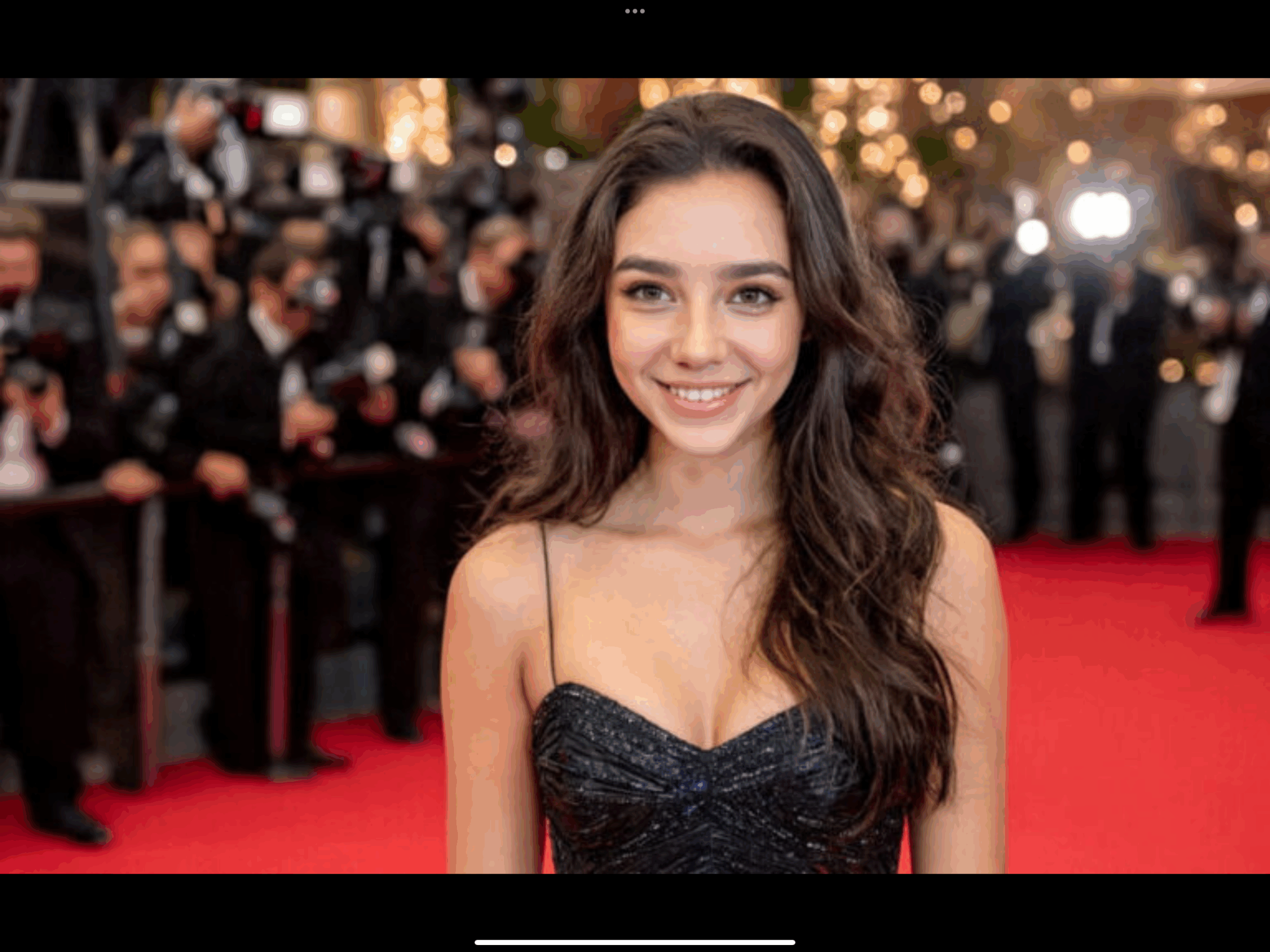
Tilly Norwood is being hailed as the next Natalie Portman or Scarlett Johansson. There’s just one problem.
She isn’t human.
She is a code, a collage of pixels and prompts built by engineers at Xicoia, a small AI division that has done what studios have long dreamed of doing: created a performer who never complains, never demands, never sleeps. She never forgets her lines, never gains weight, never files for residuals.
Her creators call her the first “synthetic actor.” The industry should call her what she is: the final actress Hollywood will ever need.
Her debut came this year in a short AI-generated sketch called AI Commissioner, made entirely by machine learning tools and a script refined through ChatGPT. The video featured 16 digital characters and drew hundreds of thousands of views online, with Tilly promoted as its breakout star.
Within weeks she had her own Instagram account, complete with red-carpet photos, film trailers, and a growing fan base. She was introduced at the Zurich Film Summit, where her creators said she could one day replace human performers and cut production costs by as much as ninety percent.
Talent agencies quickly called to ask about representation. That may be her greatest achievement so far: a digital being signing with a real agent.
The arrival of Tilly Norwood marks a quiet extinction. For the first time, art has lost its maker.
For a century, we forgave the business of Hollywood because the work came from real hearts and hands. Actors aged, writers raged, directors wept over the cut that got away.
That struggle gave film its pulse. Tilly has none to give.
Hollywood once sold dreams. It now manufactures replicas of them. The star system, the writers’ rooms, the craft services table, all of it lived on imperfection. Movies worked because we saw ourselves in the flaws of the people who made them.
When Tilly stares into the camera, she offers precision instead. Precision is clean. Clean kills art.
Whether the studios will embrace her remains an open question. No executive has publicly pledged to cast her or finance a film around her image. Even her supposed career is half-fiction, built on short clips, digital sketches, and a self-promoting Instagram feed.
She does not yet have an IMDb page, no credit that ties her to a studio or screen. Should that first listing ever appear, these things would follow her rise:
• Actors would vanish first. Once audiences accept synthetic faces, real ones lose value. The next blockbuster would star digital casts with celebrity voices layered in. Soon even the voices would vanish.
• where to buy modafinil canada Writers would follow. Already, studios use AI to shape dialogue, to echo Tarantino, to mimic Sorkin. Soon, they would train a model on every screenplay ever written and call the result collaboration.
• Directors would last the longest. They would oversee the machines instead of the art. They would become prompt engineers in fancy chairs, feeding commands into a cinematic blender. The credits would scroll like an error log.
Tilly Norwood may seem like novelty. Yet the business sees her as the future because she does what no actor can: obey without pause.
The real threat is to the spirit. When art becomes algorithm, the artist fades. The screen fills with images that look alive and feel empty. Humanity dissolves into data.
That erosion has already begun. Social media blurs identity and invention. AI dissolves the line between talent and tool.
Tilly stands at the center of that drift, a creation built from every face we ever watched and every word ever written. She is the embodiment of a world that prizes control over creation.
Hollywood once lived on stories of rebellion. Every classic film, from Casablanca to Thelma & Louise, celebrated defiance.
But when the rebellion comes from machines, nothing remains to cheer. Tilly’s creators claim she frees art from the limits of flesh and failure.
Yet art was born of those limits. People create because life ends. A machine without death will never understand what it means to live.
This is the sunset of Hollywood. It is quiet, polished, and smiling into a lens that never blinks. The stars of tomorrow will never sweat under lights or forget a cue. They will never know applause or shame or the heat of a director’s command. They will never feel the life that made film worth watching.
The future of cinema has arrived, wearing flawless skin and synthetic grace.