‘Through the Perilous Fight’



Mto wa Mbu
“Let the woman learn in silence with all subjection. But I suffer not a woman to teach, nor to usurp authority over the man, but to be in silence. For Adam was first formed, then Eve. And Adam was not deceived, but the woman being deceived was in the transgression.” Tim. 2:11-14
“Slaves, obey your earthly masters with fear and trembling, with a sincere heart, as you would Christ.” Ephesians 6:5
With the gunfire of Kenosha still ringing in our ears, I am hearing a lot lately about systemic injustice in America. Systemic racism. Systemic sexism.
The question runs so deep it has birthed the only two political movements to find footing in the past decade for Democrats: The #MeToo and Black Lives Matter movements. As we bear down on a presidential election, we find ourselves grappling with just how racist and sexist we are, at almost every level of American society: economically, politically, even constitutionally.
What we seem determined not to examine is the racism and sexism rampant in our core belief system.
After all, it’s verboten to attack someone’s faith. That’s a private matter, we’re told. One of personal conscience (as opposed to, say, your occupation). Religion has always gotten a pass in this area.
But we can afford no more Get Out Of Jail Free cards when it comes to matters of faith. If we are going to honestly reflect on our biases as human beings, how can we not include an examination of the foundational system that underpins all subsystems?
Yet I’ve heard no academic, politician or member of either political movement suggest looking into religion’s role in the glacial political advances for women and people of color in America. Does it really feel like we’ve made more than a half-century’s worth of progress since the Voting Rights Act of 1965?
Consider race relations, arguably as raw and divided as the 60’s. I recently watched Good Trouble, Apple’s terrific documentary about John Lewis.

The film is full of touching moments, including of Ebenezer Baptist Church, where Lewis and Dr. Martin Luther King Jr. sought guidance from the Bible.
But there’s no acknowledgement of the passages that sit just a few pages away from the beautiful hymns and gospels that inspire the men in the movie. Passages like Exodus 21:20-21:
“When a man strikes his slave, male or female, with a rod and the slave dies under his hand, he shall be avenged. But if the slave survives a day or two, he is not to be avenged, for the slave is his money.”
I wonder how they viewed God’s warranty on slightly-used humans for sale. I wonder if contemporary leaders do at all.
This is from the MeToo Movement website: “To support and activate survivors, The ‘me too’ Movement engages an innovative model of survivor leadership with a ‘whole-self approach’ to healing from sexual violence, that grows out of understanding survival. Pathways to healing must include wrap-around interventions and support mechanisms to best embrace survivors as their whole selves. This includes healing through engagement in community organizing, where survivors are empowered to fight sexual violence with courage and conviction.”
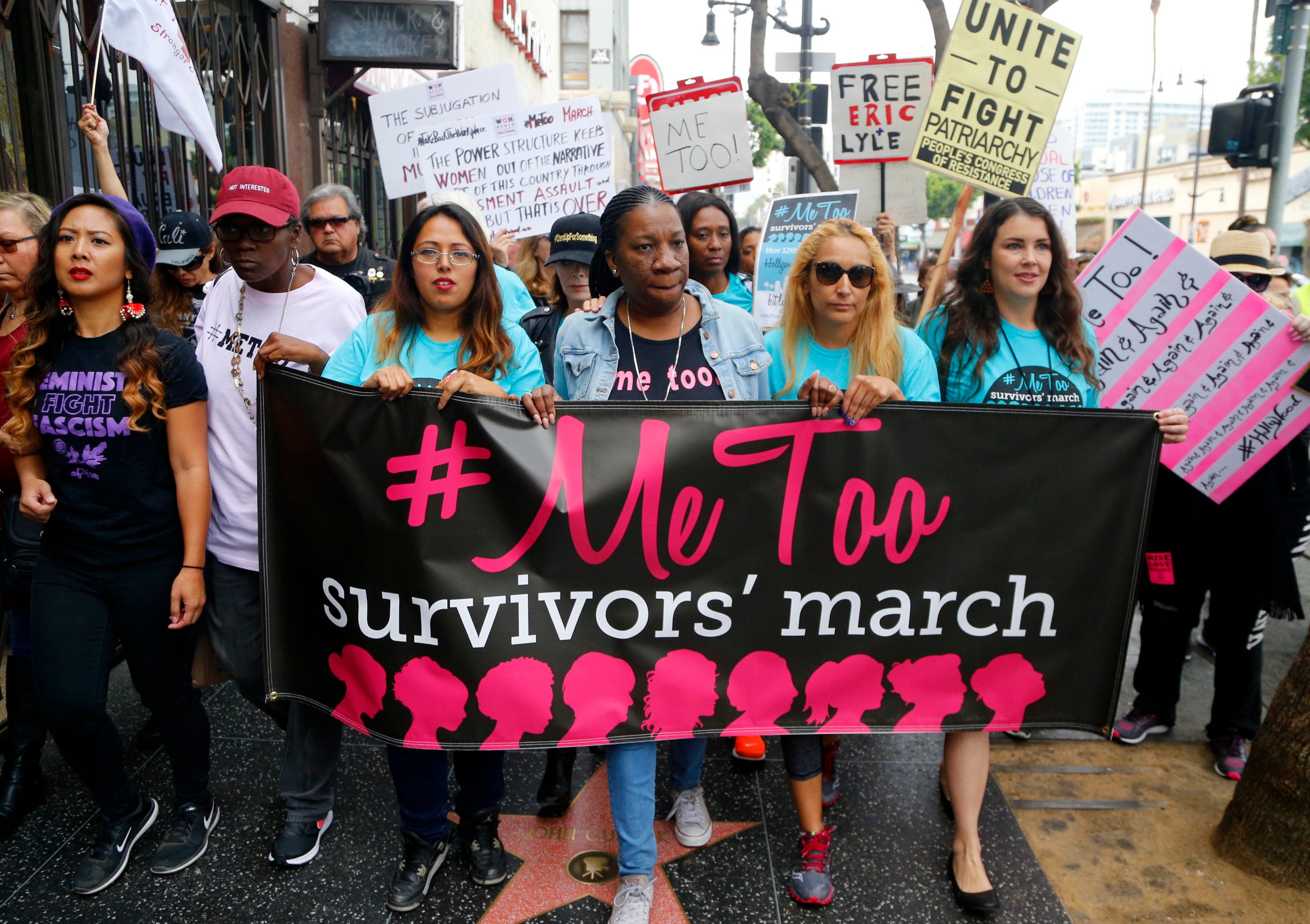
Does “engagement in community organizing” include engaging with Bible-thumping communities? If so, what if that community of textualists believes Leviticus 12:1-14:
“A woman who becomes pregnant and gives birth to a son will be ceremonially unclean for seven days, just as she is unclean during her monthly period.“
Can we really move forward with those fallen trees in the path? Just how far can women and minorities expect to go on a trail carved out for a supernatural white patriarchy?
Alternately, consider the two successful political movements over the past decade for Republicans: Trumpism and QAnon. Unlike their Democratic counterparts, the right-wing ideologies do not clash with any of their top-down hierarchies in a religious worldview. If anything, they enforce them.
And look at the difference in reception. Women and minority rights remain a top priority for Democrats, but the left still struggles with the kindling. Trumpism and QAnon, meanwhile, have sparked like a September pine.
If we are really serious about changing the way we see each other, we have to start with the labels sewn into the cloth of religious identity. The patrons of #MeToo and Black Lives would be well-served asking if they really want the Iron Age goat shepherds who authored the Bible writing their playbook as well.
In honor of National Banana Split Day, our FactSlaps are a celebration of Tarzan’s favorite to-go food: