Rāmanagaram It appeared in my office, just a few inches from my laptop — the very laptop from which I write this column!
A couple days ago, I noticed the monolith appeared to have moved: at least a couple inches to the right, I’d estimate. As if it were moving away from the globe. There was no sign of disturbance on my desk, and J.D. Barkinger is not yet here, so she could not have erected or moved it.
Ok, ok, I admit it. Your questions are just too incisive.
I made it up. I put the monolith closer to my laptop. The subterfuge was even caught on camera, most likely an Instagrammer or FaceBooker. Damn you, social media!
In the upper right corner: Signs of foul play
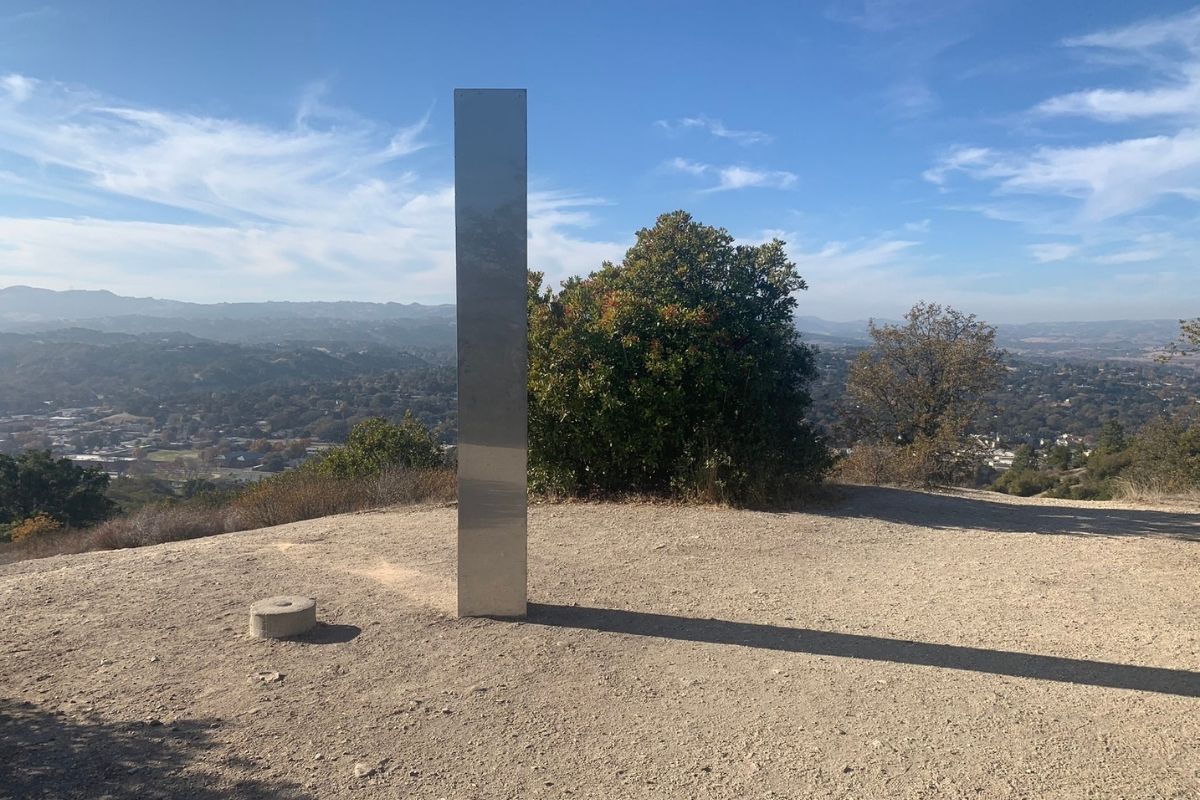
You don’t understand. I just wanted to be like the cool kids in Utah, who found a monolith. Or the ones in Romania, who also found a metal obelisk. A few days after that, a THIRD monolith was discovered in Atascadero, Calif.
The Utah monolith
The Romanian monolith
The California monolith
And I stand by the hoax. Look at the wonderful mystery surrounding the monoliths. Where did they come from? Who built them? Who brought them down? Are aliens trying to tell us to quit touching our faces?
Not only do I stand by the prank, I promise you this: I’m going to pull more of them. After all, what is the harm in this conspiracy theory?
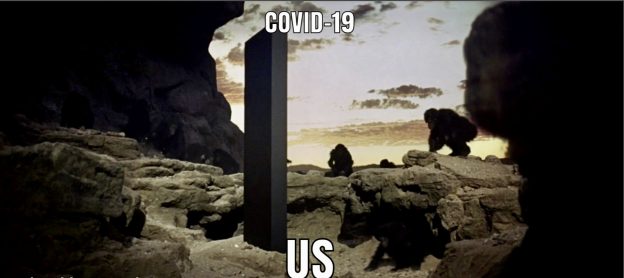
We’ve seen how the belief in other conspiracy theories can corrode. The elections were rigged. COVID is a hoax. The earth is flat. Science is an ideology.
Enough. Time for a conspiracy theory that has us looking at possibilities, not peril.
In fact, start your own monolith conspiracy. Stack a few rocks in front of your mailbox. Stick a branch in the ground and place a penny at its altar. Make a passerby think: What is that? Make a passing dog think: That would look good with urine on it.
Rockhenge, in Lake Balboa, Calif.
And if it is aliens: Hi! We’ll take you to our leader. Just give us a few weeks.
This is a true story. The events depicted occurred in Hollywood in 2020. At the request of Accuracy, the names have not been changed. Out of respect for the Truth, the rest has been told exactly as it occurred. And lots of spoilers.
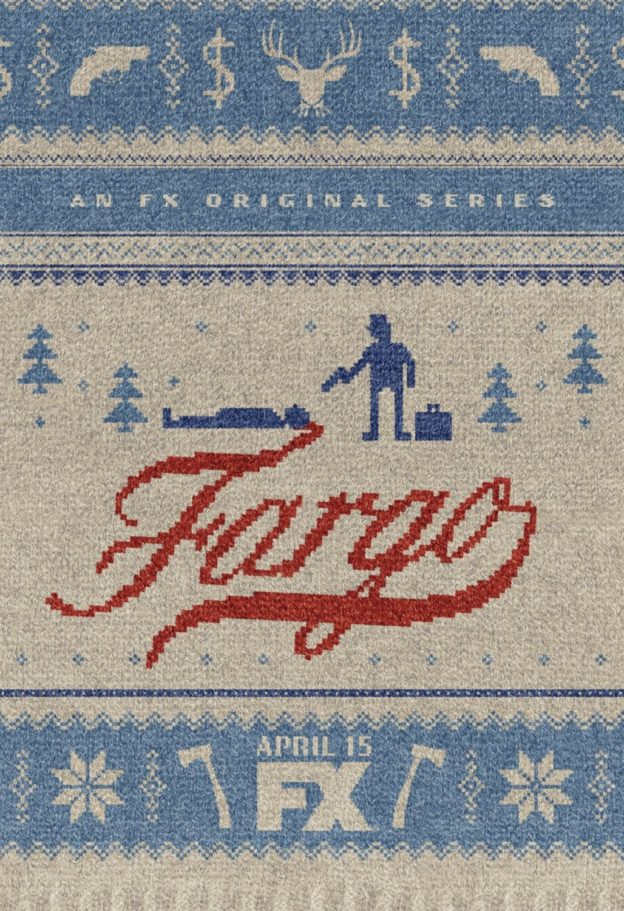
Perhaps the past really is prologue. By almost every metric, Fargo‘s fourth season, which concluded Sunday night, got the show back on track.
After two brilliant seasons and some unattainable expectations, the third installment of the anthology series felt like an inevitable disappointment last year. Critic response was lukewarm, and audience reaction lacked the fanboy frenzy of most Coen Bros. projects.
So the rebound isn’t wholly unexpected, and the fourth series still pales in comparison to its two prodigious predecessors. Still, the latest iteration suggests that Fargo the TV series may be up to something as brilliant as Fargo the taproot film. Namely, that creator Noah Hawley may be slyly piecing together stories of a single book whose chapters have been placed out of order.
That possibility became clearer with a Season 4 finale, Storia Americana, that is actually a prequel hand-off from Season 2, arguably the best season in the series this far.
And the newest season raised the tantalizing possibility that Hawley is making an adaptation of the fictional anthology The History of True Crime in the Mid West, a book that plays a noticeable role this season and in Season 2. Could all four tales be part of a single story?
The fictional book that’s appeared in two seasons.
After all, Hawley employed a similar crossover between Seasons 1 and 3: the deaf hitman Mr. Wrench. Distributing network FX has taken pains to make it clear: Each season is a standalone creature.
But could the next chapter (television gods willing) of Fargo reveal a larger tale? The Coens (who serve as executive producers) are nothing if not fond of layered stories. And Hawley appears untethered by network constraints to tell a quirky tale (this season ran 11 episodes instead of 10, and episodes routinely ran longer than an hour).
Mr. Wrench in a crossover role.
All of which begs the question: Is Hawley creating a larger “true crime” story in an homage to the brothers, gift-wrapped with Coen-like chronology leaps?
Season 4 is set in Kansas City, a key location in Season 2, and serves to document the formative years of rising crime syndicate boss Mike Milligan.
Other season-jumping Easter eggs this year: Joe Bulo, who is Milligan’s boss in Season 2, is a young thug who learns firsthand that the family crime business is dying; Mort Kellerman, the K.C. crime boss killed in Season 2, delivers an assassination of his own this year; and this season’s protagonist, Loy Cannon (Chris Rock), drops a Milligan quote in assessing how locals treat outsiders: “Pretty unfriendly, actually.”
Above: Joe Bulo, left, gets lessons in thuggery. Below, Mort Kellerman, right, delivers on.
It’s those inside jokes that underpin the series, which is, ultimately, a collection of Coen Brother tribute videos. Season 4 had plenty of discography nods, including No Country for Old Men, Raising Arizona and, in particular, Miller’s Crossing.
Gabriel Byrne in Miller’s Crossing, left, Chris Rock in Season 4, right.
The young Milligan is a boy named Satchel Cannon (Rodney L. Jones III). He’s haloed by a clipped-wing nightingale known only as Rabbi Milligan (a terrific Ben Whimshaw). The poetic pairing of outcasts would merit a future name change to whatever you damn well please.
Satchel and Rabbi, left. Mike Milligan, right.
As usual, Hawley peppers each season with film-school level references to the Coen Brothers. He treats the duo with Kubrickian reverence, and the result is near-film-quality adoration. A “bad” Fargo episode is better than most shows’ best day.
And this season had plenty of good days, including the entire Wizard of Oz tribute episode East/West (no. 9) and the recurring ghost of Theodore Roach, the gnarled demon of slave ships past who haunted this season’s darkest scenes.
The show had a few missteps: There were a few too many characters to keep track of this time around, and the story made logic leaps previous seasons wouldn’t have attempted.
But the season finale, which ended on a beautiful surprise post-credit scene, brought the show so far back (or forward?) in its origins story it’s hard to think a larger tale isn’t unfolding.
And considering Hawley and company pulled this season off in the middle of a pandemic — when we most needed thoughtful, scripted television — it really doesn’t matter whether Fargo is a true story or not. As long as it’s a continuing one.