
Joy to the World, the Crop Is Done


buy Lurasidone 40mg I’ve spent too much of my life trying to trespass into minds that were never mine to enter.
Abnūb The older I get, the clearer the truth becomes: I have no claim on what anyone thinks of me. No more than I have a claim on what they think about abortion, gay rights, the World Series, or whether fig vines belong on backyard walls.
Opinions live inside other people the way weather lives inside clouds. I can watch them form, but I don’t get to steer their wind.
For years, I treated that as part of the job. As a reporter, I was paid to decode people. To read not only what they said but what they meant, the pauses between their words, the details they didn’t realize they were offering.
It was useful work, but it trained a bad reflex. I started using those muscles everywhere, long after the notebook closed.
Recently, I realized I needed something stronger than restraint. I needed a practice. A move I could make when my mind drifted into someone else’s living room to rearrange their emotional furniture.
So I started evicting myself.
Self-eviction is the only kind of eviction that feels like mercy. It’s the moment I catch myself mentally attempting a break-in of thoughts, trying to read meaning in words that may hold none. Then I walk out, close the door, and head home.
My home. The only one I actually own.
You own a home, too. How many are you trying to rent?
How often do you try stepping inside other people’s imagined thoughts, deciphering motives, repainting intentions, drafting storylines based on assumption? Do you treat their inner world like a short-term lease, never noticing how exhausting the rent becomes?
The practice of self-eviction means catching yourself in the act. It happens in three moves:
• You notice the trespass. The moment you start drafting someone else’s thoughts, motives, or imagined verdicts, you name it. It often begins with the words “Why don’t” or “You should.”
• You step outside. You stop the storyline mid-sentence, walk out of their imagined space, and close the door behind you. I picture Fred Flintstone locked outside his house.
• You return home. You go back to your own mind, where the ground is solid, the air is yours, and the lights answer only to your switch. There is comfort in sovereign space.
And when you do it, even once, you feel how quickly the spiral dies. Without your attention, the theories lose oxygen. Without your imagination propping them up, the scaffolding collapses.
You realize how much time you’ve spent trying to forecast someone else’s inner weather. You realize how little of it was ever real.
Your mind becomes a place you return to instead of a place you abandon.
Self-eviction is not a ding on your credit. It recognizes that the safest address in the world is the one behind your eyes. A reminder that when you leave someone else’s imagined space, you’re not walking into exile. You’re back to jurisdiction.
And everything sharpens when you do. When you stop interpreting glances or silences, you can actually listen. You can speak without running your thoughts through ten layers of hypothetical reaction. You can inhabit your own life instead of guessing at someone else’s.
That’s the quiet power of it. Every time you return to your own mind, a light comes on.
Every time you walk out of someone else’s, you feel lighter.
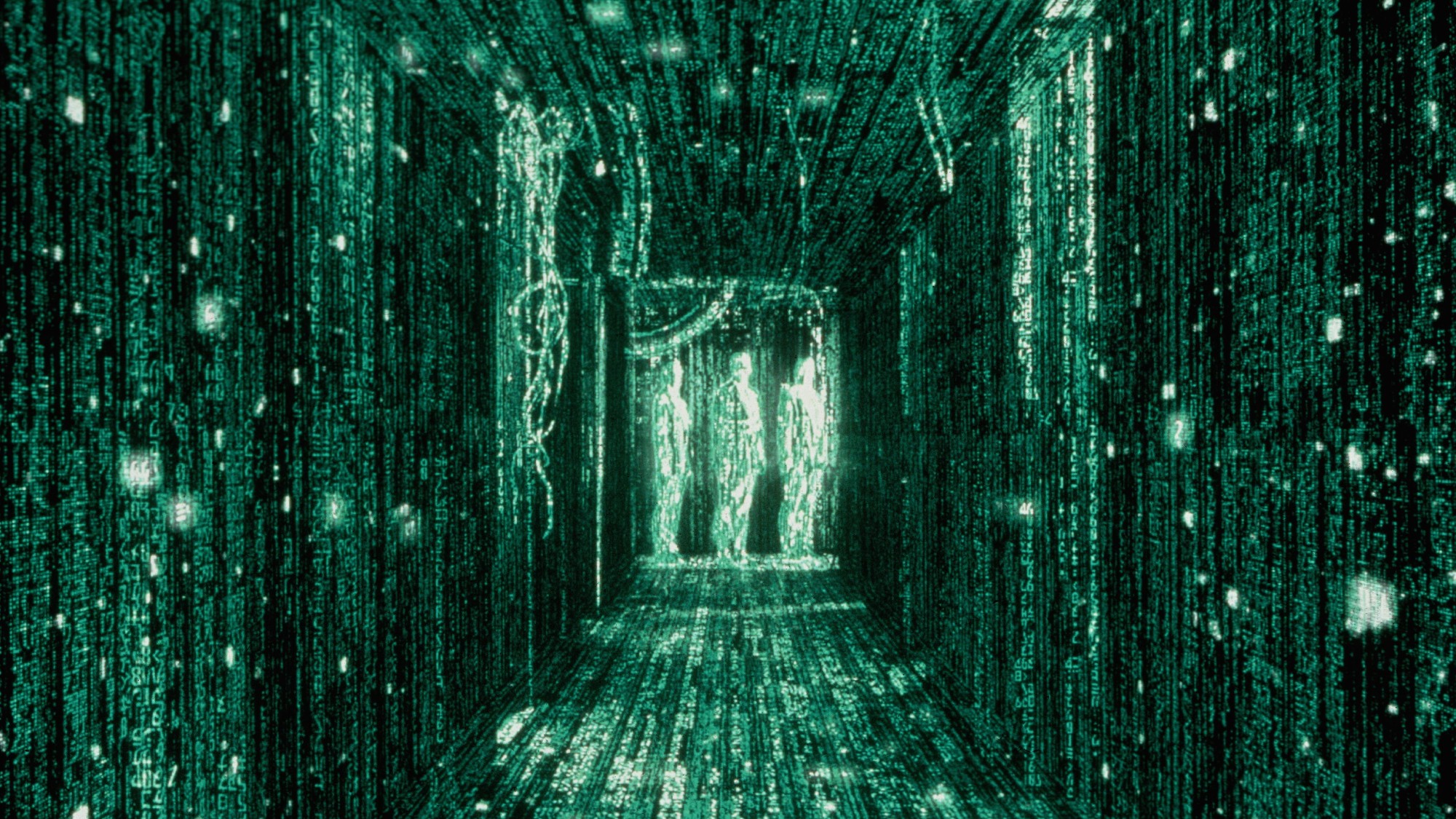
AI slop may be the strongest evidence yet that we are living inside a rigged machine.
The internet floods every hour with synthetic sludge. Half-baked essays. Dead-eyed portraits. Franken-sentences stitched together by models that try to sound human but drift into word salad the moment you look close.
People blame tech bros. They blame lazy users. They blame digital pollution.
But the real story sits deeper. The sheer volume of AI slop feels like the world glitching in plain sight.
Simulation theory argues that advanced civilizations eventually build perfect replicas of reality. If that is true, we are probably inside one. After all, we already build video game worlds where the characters don’t know they’re in one. They just know gold is good.
For years that sounded like a stoner theory with a math footnote. Now you scroll through your feed and see the seams. Fake news written by a blender. Photos where hands melt into each other like wax. Chatbots that cycle into gibberish when pushed.
Three things stand out every day:
• AI produces content faster than humans can react.
• AI repeats patterns until they fray.
• AI reveals structural shortcuts that feel baked into the world.
The shortcuts matter. Slop stacks in predictable ways. Repetitive language. Familiar rhythms. Hollow confidence. These are tells.
AI lookS like what happens when a simulation trims memory and reuses assets the way video games recycle buildings in the distance. The background blurs because the system saves power for whatever stands in the foreground.
People talk about AI ruining creativity. The larger story may be that AI exposes the architecture beneath creativity.
When a model fills a page with generic phrases, it is showing what the machine thinks reality looks like when it stops pretending. Quality content becomes the anomaly. Slop becomes the base layer.
Writers complain about how hard it is to sound original now. They should. It feels harder because we have started bumping into the ceiling.
The simulation runs low-res until someone demands better. Then it snaps into detail. That is why the world feels crisp when you travel somewhere new and hazy when you drive the same route for years. The system renders what you notice. AI just mirrors the trick with fewer guardrails.
The strangest part is how fast slop spreads.
Political strategist Rick Wilson underscored this in a recent YouTube commentary, breaking down how AI-faked political clips and garbage media blast across the public square faster than campaigns can respond.
AI multiplies like mold. It fills the gaps where human attention wears thin. And every time it appears, it reminds us that the machinery exists. Something is building content at scale with no intent or purpose except to fill the frame.
People talk about AI ruining creativity. The larger disaster is that AI is rewriting our sense of what real looks like.
And if you are stuck watching a stream of cheap copies echoing off each other, you see the world as a draft. Or simulation.
The theory used to be speculative, now it feels observational.