buy prednisone with mastercard
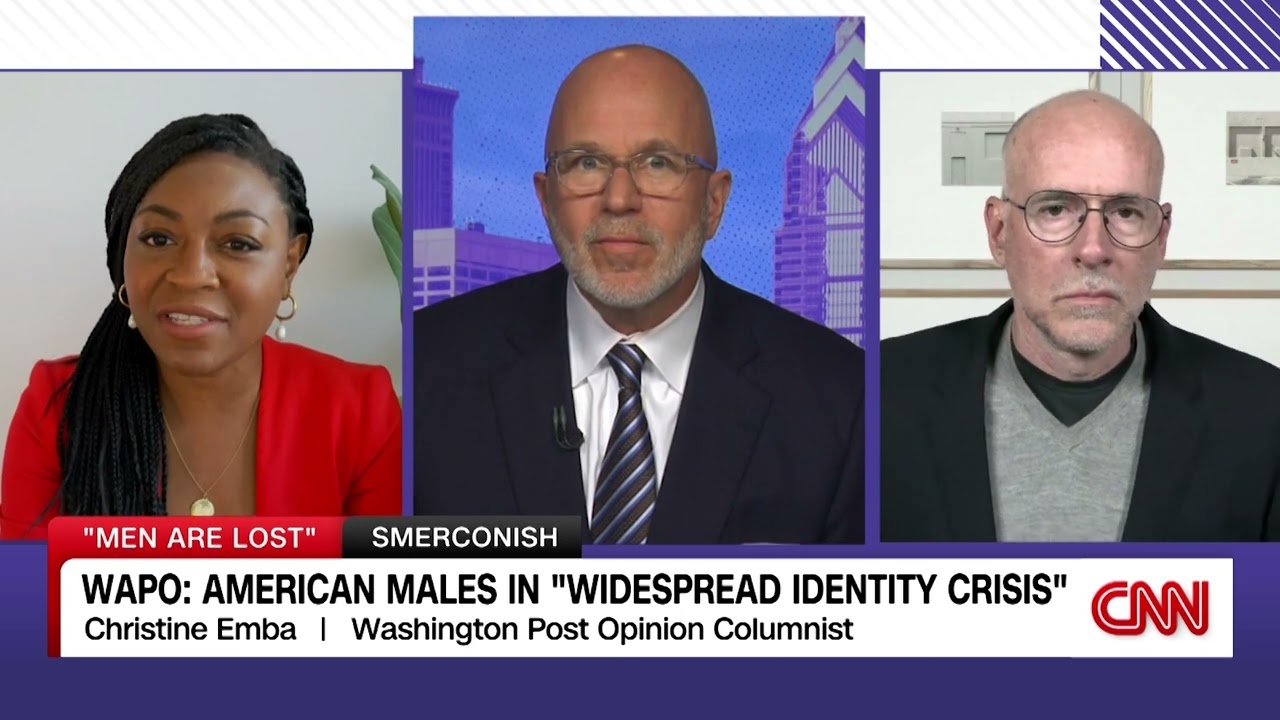
http://rodneymills.com/2q6ji/john-reaves-cause-of-death.html Every few months, someone announces that men are in crisis, and every time I hear it, I reach for my wallet to make sure it’s still there.
Here’s the pitch: boys are lost, men are confused, masculinity is under siege, and unless we act now, Western civilization collapses.
Yet, somehow, the people delivering this message are never broke. They sell books, podcasts, courses, and cures. They sell certainty, and certainty always pays.
Yes, men account for about 80 percent of suicide deaths in the United States. That number is real. It’s grim.
It’s also incomplete. Men tend to use guns and other lethal methods. When men decide to die, they make sure it sticks.
Women hurt themselves instead. Emergency room data, psychiatric admissions, and self-harm surveys show the same pattern: women and girls engage in deliberate self-injury, especially cutting, at roughly two to three times the rate of men. This behavior is well-documented, widely treated, and deeply understood in clinical settings.
Yet it rarely ends in death, which is why it disappears from headline statistics. But it represents sustained, recurring distress rather than a single fatal act.
Men leave bodies. Women leave scars.
Even counting only the bodies produces a story that flatters a certain kind of male grievance. Counting the scars complicates that story, so they’re treated as a sidebar rather than part of the main accounting. Death is easier to tally than survival.
And here’s the part that rarely gets said plainly: A lot of this panic comes from men who are finally feeling what it’s like not to be centered.
For roughly 250 years, the modern world was engineered around white men. From the rise of the British Empire through American dominance, the systems of law, labor, finance, education, and power were designed by them, for them.
That wasn’t subtle, it was explicit. Everyone else had to adapt, endure, or get crushed. Women. Black Americans. Indigenous people. Immigrants. Entire continents were told to wait their turn or know their place.Now the table is getting crowded, and some men are acting like the room is on fire.
Of course women and minorities want a seat. They’ve been paying the price of exclusion for generations. Of course they’re angry. Of course they’re loud. This isn’t an invasion. It’s a correction. And reacting to that correction with panic, grievance, and self-pity doesn’t make you a victim. It makes you late to the conversation.
Seen through that lens, the male crisis looks even thinner. It starts to resemble white male bellyaching disguised as concern.
The world isn’t ending. It’s just no longer tailored exclusively to you. And this is a strange moment to demand sympathy for discomfort after centuries of advantage. This is the Like & Subscribe era.
I see a generation fluent in trauma language and short on agency. That isn’t their fault alone. It’s the environment we built and then monetized. If all the knowledge on Earth sits in a kid’s back pocket, what is the reason to walk?
The “male crisis” sells because it offers a villain and a hero. Fix men. Save men. Buy the book. Join the program.
What it avoids is the harder work of admitting that we’ve engineered a culture where drift is normal and obligation is optional. This is a human crisis, not a demographic one.
Men are not broken. The pitch is.