Author Archives: Scott Bowles

The Thick Blue Line


buy Lyrica online cheap uk Turns out democracy looks a lot like an ID badge.

is it legal to buy clomid online Los Angeles Police Chief Jim McDonnell may have just made the most important move in policing since body cameras: ordering all Immigration and Customs Enforcement agents to show identification to LAPD officers and have it recorded on bodycams whenever they operate in the city.

Last week, McDonnell did something that federal authorities have refused to do for years: he brought sunlight to the dark corners where ICE agents hide. For too long, ICE has operated like a traveling ghost show — masked agents in unmarked vehicles, scooping people off sidewalks with the subtlety of a paramilitary snatch squad.

And in a country that claims to worship freedom and transparency, we have inexplicably tolerated it.

The result? Panic. People calling 911 to report kidnappings. Families torn apart in seconds. Neighborhoods paralyzed by rumors and fear. No knock, no badge, no warning. Just men in tactical gear who might as well be phantoms.

McDonnell’s new policy flips the script. From now on, if you want to play lawman in Los Angeles, you’ll need to prove who you are — on camera. No badge? You don’t get to operate. Try it, and you risk arrest for impersonating an officer. It’s so obvious and yet so revolutionary that it makes you wonder how we ever let it get this far.

The move comes as momentum builds nationally to put a leash on ICE’s Wild West tactics. California lawmakers, led by Rep. Laura Friedman, are pushing the “No Masks for ICE Act,” which would ban agents from covering their faces and require them to visibly display identification. Locally, the L.A. City Council is proposing motions to enforce similar standards and punish impersonators with real teeth.

But while legislators draft bills and give speeches, McDonnell acted. He saw what was happening in his city — the terror, the confusion, the erosion of public trust — and he said enough. In a single stroke, he reaffirmed the basic social contract: if you carry a badge, you answer to the people. You can’t terrify a community and call it public safety. You can’t vanish neighbors into unmarked vans and call it law enforcement.

For ICE, transparency has always been kryptonite. The agency’s entire playbook depends on surprise and secrecy, from predawn raids to workplace stings. Agents justify their masks as necessary for officer safety, but in reality, anonymity shields them from accountability, from lawsuits, from community oversight. It is no coincidence that abuses thrive in the shadows.

By demanding IDs and recording them on body cameras, Los Angeles is forcing ICE into the open. It is demanding that the agency stand by its actions with names and faces, just like any other law enforcement body. And it reminds us that ICE is not some divine, unquestionable authority — it is a government agency, and government agencies serve the public, not the other way around.

Critics will howl about risks to officers, as they always do when accountability is on the table. But the truth is simple: police officers reveal their names and badge numbers every day in far more dangerous situations. Transparency is not an attack; it is the foundation of legitimate power.

McDonnell’s policy won’t fix everything. ICE will still exist. Families will still live in fear of deportation. But this is a concrete, immediate step toward demystifying a federal agency that has thrived on fear and opacity.

Los Angeles has drawn a line: if you want to enforce the law here, you must follow it first. Show us who you are. Prove your authority. Because in a democracy, power without accountability is not law enforcement — it’s tyranny.

In demanding that ICE show its face, Los Angeles finally showed us its spine.

The Grift, Now Official


They didn’t just lose their spine — they sold it for ratings.

There was a time when journalism fancied itself the last line of defense against tyranny. Woodward and Bernstein hunted down a president and helped crack the spine of corruption. Cronkite looked into the camera and told us plainly when a war was lost. Murrow took on McCarthy and won.

But in the Trump era, the fourth estate has all but surrendered, a husk of its former self, afraid to print the truth and terrified to be sued into oblivion.

Meanwhile, Trump’s latest “mega bill” (and I’ll be damned if I’m going to call it beautiful) was heralded by the same media that once declared themselves guardians of democracy. Reporters spoke breathlessly of intra-party disputes, as if Republicans might miraculously grow a conscience and abandon their standard-bearer.

They never do, and they never will. The bill sailed through, and the nation learned nothing except that journalism today is more eager to spin palace intrigue than tell the simple, devastating truth.

What’s perhaps most troubling is that the media insists on pretending there’s still a functioning democracy here. There isn’t. We are living under a single ruling class that performs democracy like dinner theater.

The Republican Party has transformed into a single-minded organism, acting only in service to Trump, while Democrats play a polite parlor game of appeals and procedural scolding. The courts? His. The legislature? His. The streets? Bristling with supporters ready to “defend” him against any consequence.

Trump’s country. Let’s say it clearly: America belongs to him now, seized not only through political maneuvering but through a potent cocktail of white grievance, evangelical fervor, and ceaseless media amplification.

Trump has rebranded victimhood into power and sold a large portion of the nation on the idea that any loss is simply proof of conspiracy. Every time a court rules against him — if it dares to — outlets spin it as a grand blow to authoritarianism.

Meanwhile, they ignore that his Supreme Court majority can undo almost anything, that state legislatures are gerrymandered into submission, and that millions of Americans are pre-programmed to see every indictment as martyrdom.

A rebellious press once believed its job was to comfort the afflicted and afflict the comfortable. Now, it flatters the powerful and confuses access with integrity. Our newspapers read like marketing copy for strongmen; our television networks posture as watchdogs while cashing checks from pharmaceutical giants and defense contractors.

Journalism doesn’t need new guidelines or town hall panels. It needs rebellion. It needs to grow a backbone again, to stop fetishizing both-sides-ism and name the threat directly: America is in thrall to a man who scorns law and reason, and it will take a defiant press to pry the country back.

Until that happens, we remain a nation of cowardly editors and spineless anchors, narrating the slow collapse as if it were just another season finale. And we, the public, are left to sift through the ashes of a profession that once promised to hold the powerful to account — and meant it.

A big, beautiful con.

The Cliche Machine


They ask the impossible, and we pretend there’s an answer.

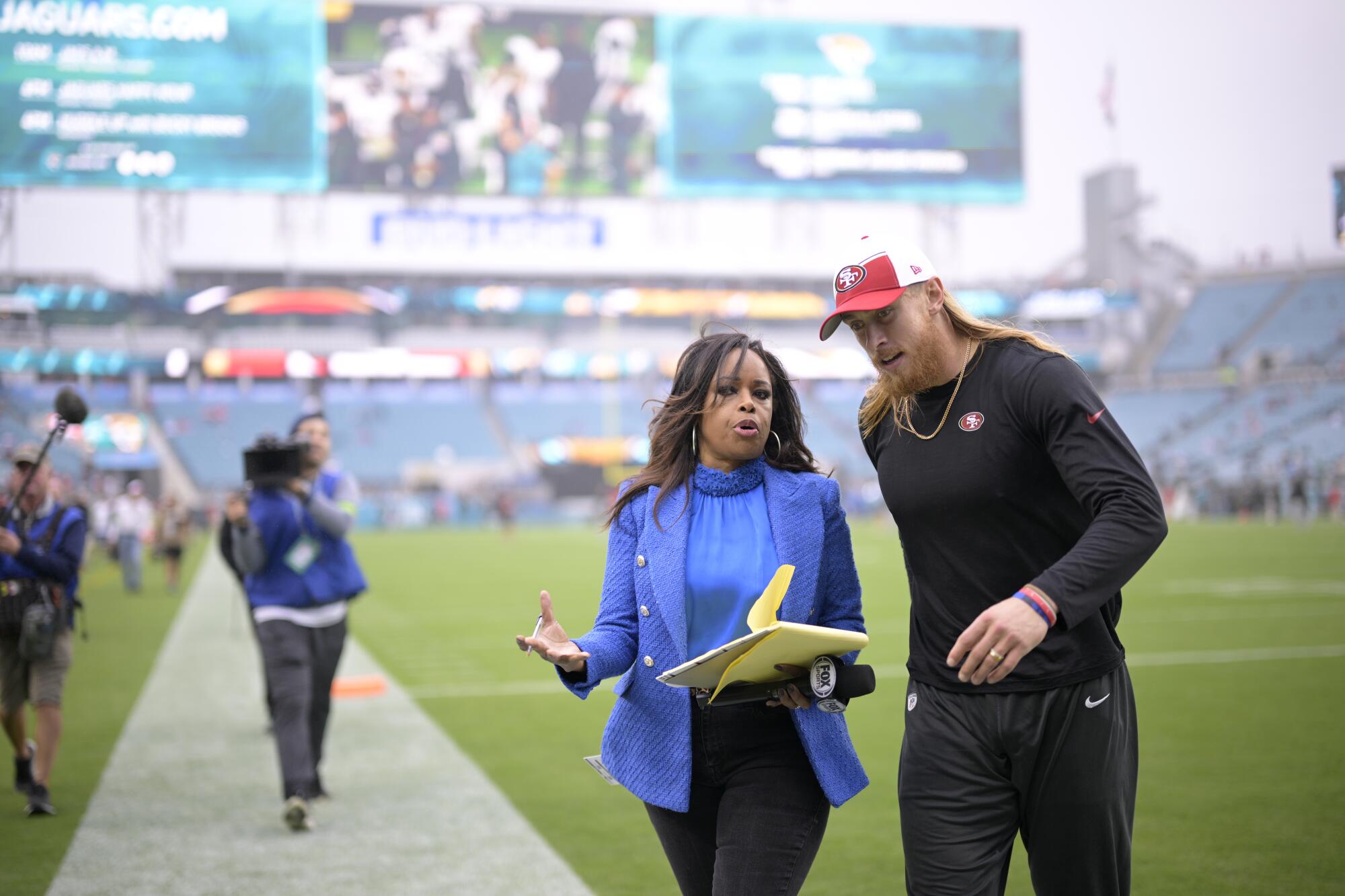
I was watching soccer this week when I came to this epiphany, right in the middle of a dim-witted sideline interview. The player had barely caught his breath before a reporter stepped in, microphone poised to spoil the moment.

“How did you find the confidence to take that last shot?”

“How did you dig deep and find the heart to push through?”

“Where did you find the inner strength to keep going?”

These aren’t real questions. They’re abstract riddles in the costume of journalism, designed more to kill air than to enlighten. We’ve accepted them as part of the postgame ritual, but the moment you really listen, you realize they’re impossible to answer.

An athlete doesn’t pause mid-run to ponder the depths of his confidence or deliver a TED Talk on resilience. He moves because movement is his only language. He runs because stopping isn’t an option.

Yet the microphone always appears, begging for a magic formula: “What was going through your head?” As if the player had time to draft a sonnet while hurdling defenders. The honest answer — nothing — sounds too plain, too true for broadcast TV.

These questions echo across every sport like a chant. You could shuffle them up and fling them at a hockey goalie, a sprinter, or a tennis player, and no one would blink. The rookie on the bench? “What gave you the mental toughness to stay ready?” The pitcher who just threw a shutout? “Where did you find the inner fire tonight?”

We crave the myth of the warrior poet. We want to believe these athletes dwell in a realm of unearthly focus, conjuring ancient spirits of grit. We ask them to explain it so we can taste a piece of that magic.

But sport lives in the present tense. The greats don’t think; they vanish into the act itself. The zone is an empty room, not a confessional booth.

Maybe we ask these questions because we’re afraid of silence. We can’t bear to let a moment breathe. We can’t let the stadium roar or the hush after a missed shot hang in the air. Instead, we force players to stitch together a story on the spot, to speak for a feeling that refuses to be pinned down.

And in doing so, we flatten them into cliché machines. The defender who made a season-saving tackle? Maybe he’s just relieved it’s over and wants to call his mom. The striker who scored in extra time? Maybe he just wants a burrito and a nap.

Imagine simpler, more human questions: “What’s the first thing you want to do now?” Or even better — “How did that happen?” and then shut up. Let them decide if they want to say more.

We keep begging for an explanation of courage when the answer already ran past us in cleats, dripping sweat. They live it. We watch it.

And that should be answer enough.