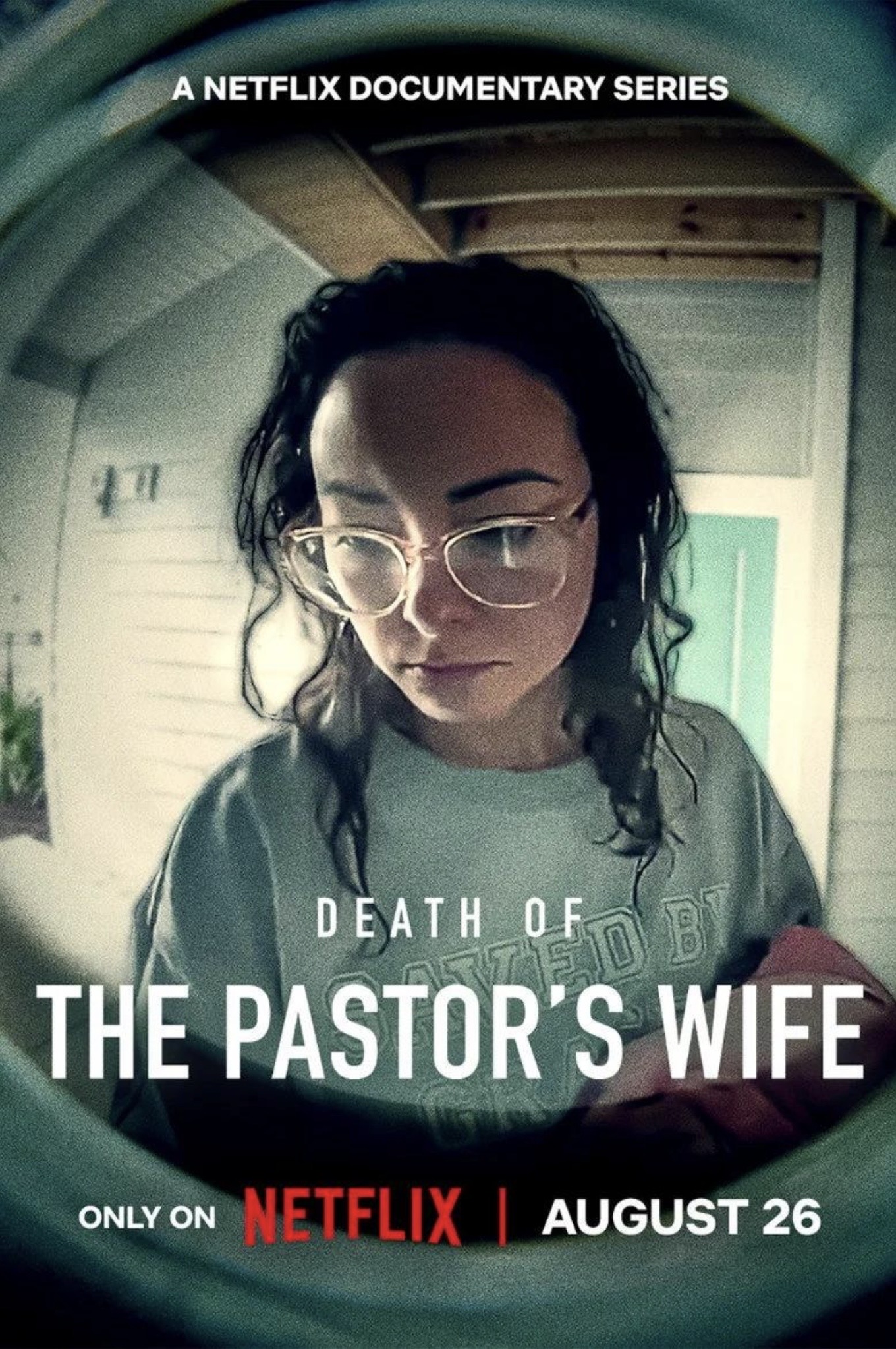
The most frightening thing about Netflix’s terrific Death of the Pastor’s Wife is that it isn’t history yet.
We are accustomed to true-crime documentaries arriving after the blood has dried, the trial has ended and somebody has written a book. There is a comforting distance to them. Even the grisliest become archaeology.
This one is still happening.
Mica Miller died in April 2024, two days after serving divorce papers on her husband, John-Paul “JP” Miller, pastor of Solid Rock Church in Myrtle Beach, South Carolina. Her death was ruled a suicide. Miller has not been charged in connection with her death. He has, however, pleaded not guilty to subsequent federal charges of cyberstalking Mica and making false statements to investigators. His trial is scheduled for October.
Netflix got there first.
Directors Julia Willoughby Nason and Michael Gasparro have made a three-part series so current that some of its participants cannot fully discuss what is happening. The effect is unnerving. We aren’t watching people remember a nightmare.
We are watching them live in one.
And it is difficult to watch Death of the Pastor’s Wife without getting furious.
At men. At white men. At God. At the church.
At a system that seems capable of discovering a reason why somebody else’s hands are tied every time a woman says somebody is tightening his around her life.
Most infuriating is how comfortably Jesus survives all of it.
Mica praises Jesus. The people around her praise Jesus. Her husband preaches Jesus. Religion doesn’t disappear when the behavior becomes ugly. It becomes part of the vocabulary through which the ugliness is explained, defended and sometimes sanctified.
The series gives Christians enough room to say these people perverted Christianity.
It also gives everyone else enough evidence to wonder how often Christianity provides the authority required to do the perverting.
Then something unexpected happens.
The congregation gets bigger.
It becomes the internet.
Mica’s death became a social-media phenomenon, with strangers digging through videos, sermons and records and refusing to stop talking about her. Ordinarily, “internet sleuths” are among the least reassuring words in the English language.
Here, they become something else. Witnesses.
The institutions that were supposed to protect Mica repeatedly proved inadequate to what she said was happening to her. South Carolina law did not adequately recognize the pattern of nonphysical coercive control her family says she endured. Her family now backs legislation known as Mica’s Law, which would criminalize coercive control and broaden the state’s understanding of domestic violence.
State Senator Stephen Goldfinch said in June he intends to reintroduce the bill in January.
After watching this series, the bill deserves the kind of cultural recognition the Amber Alert achieved: a dead person’s name transformed into a warning system for the living.
But Death of the Pastor’s Wife suggests another kind of warning system already exists.
Us.
Social media cannot convict anyone. It shouldn’t. It can be reckless, cruel and spectacularly wrong.
But it can also make forgetting impossible.
That may explain why this series feels different from the endless conveyor belt of Netflix true crime. Nason and Gasparro aren’t excavating some safely concluded scandal. They’re dropping us into one whose legal, political and cultural consequences remain unresolved.
The documentary itself becomes part of the phenomenon it documents.
Mica Miller wanted people to hear her. Now millions can. Maybe that isn’t justice.
But it is one hell of a congregation.