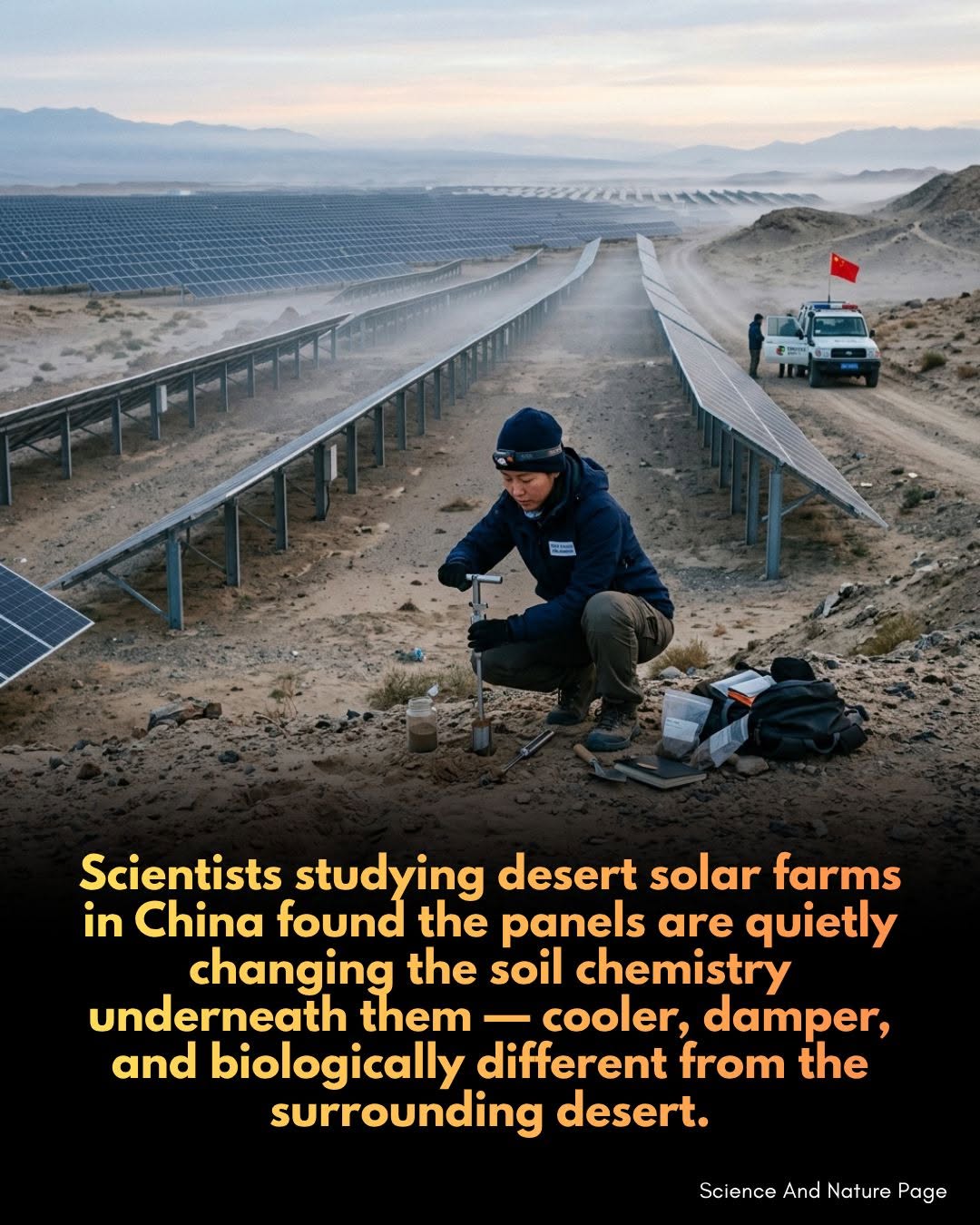
New field research at large-scale desert solar installations in China has found that solar panel arrays are quietly reshaping the microclimate underneath them. Researchers measured cooler surface temperatures, reduced wind speeds, and higher humidity levels beneath the panels compared to surrounding untouched desert land — conditions that are triggering measurable changes in soil moisture, salinity, microbial activity, and nutrient cycling in the ground below.
cheap disulfiram The study concludes that these environmental shifts can permanently alter local soil chemistry over time, effectively creating a distinct microenvironment underneath utility-scale solar farms that doesn’t exist naturally in the surrounding desert. Because solar panels block direct sunlight and reduce evaporation, the soil beneath them tends to retain more moisture, which in turn supports different microbial communities than the harsh, dry conditions typical of open desert terrain.
Scientists are now studying whether these long-term changes could eventually support ecosystem restoration in degraded desert landscapes, or whether they introduce new ecological trade-offs as utility-scale solar continues expanding rapidly across arid regions worldwide. As more countries build solar capacity in desert environments to meet climate targets, understanding these soil-level effects is becoming an increasingly important part of evaluating the technology’s full environmental footprint.
Source: Field research findings, desert solar installations, China, 2026