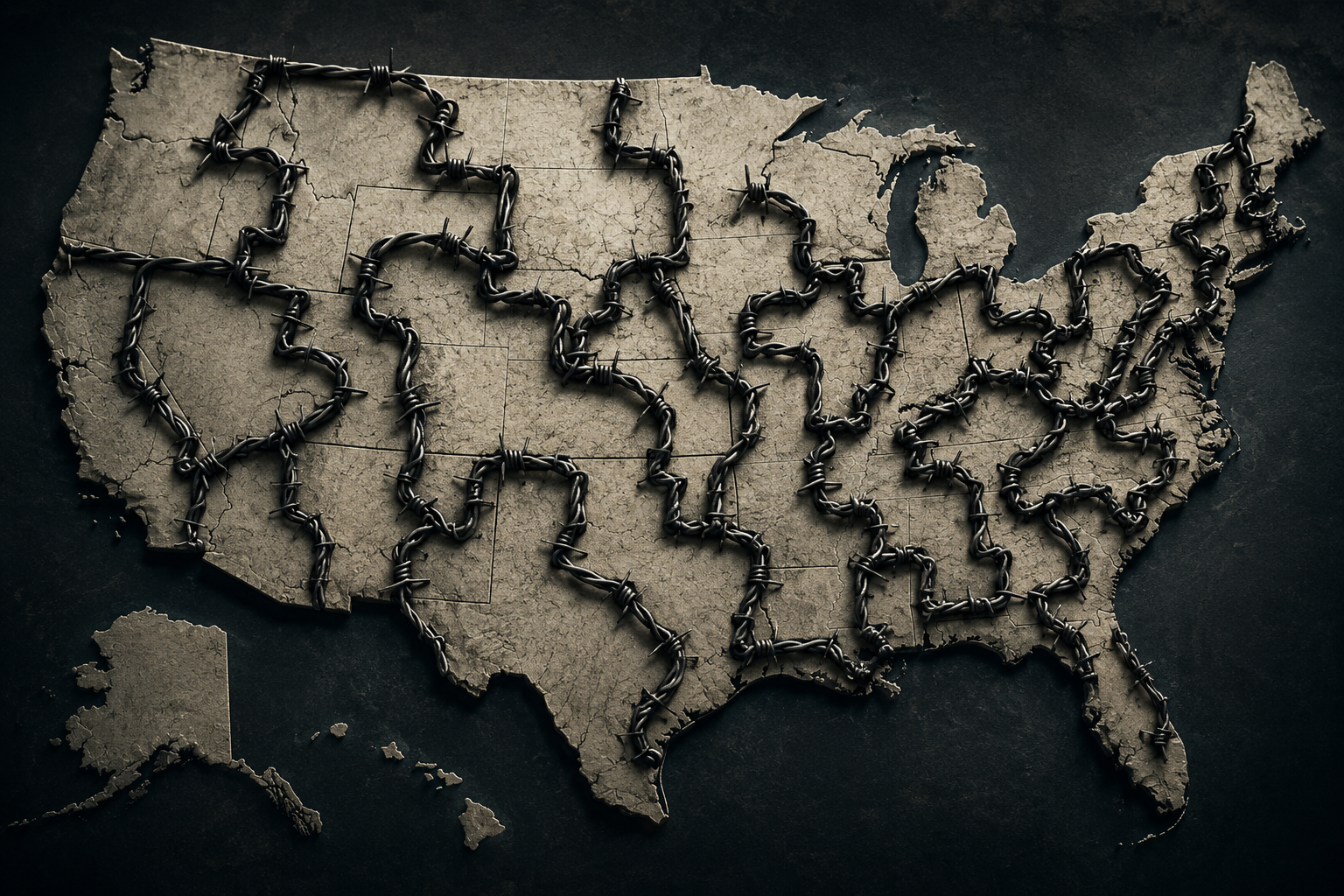
The election is in six months. It is already over.
Not because of polls or approval ratings or the historical tendency of voters to punish the party in power. Because the maps are drawn, the courts have blessed them, and the legal tools to fight back are gone.
What is left is the performance of democracy. The ballots, the booths, the breathless cable coverage. All of it scheduled for November 3, all of it largely beside the point. Assuming, of course, that Trump does not declare a national emergency and cancel the elections before we get there. That remains an open question. The smart money says it isn’t.
This week, Virginia’s Supreme Court killed a voter-approved redistricting plan that Democrats spent $100 million to pass. Voters narrowly approved it April 21. The court voided it today. In a 4-3 ruling, the court found that the legislature violated procedural rules while passing a constitutional amendment on redistricting and placing it on the ballot. The new map would have given Democrats four additional House seats.
The court decided the vote margin played no role. The people had spoken. The court ruled they had spoken incorrectly.
That decision landed the same week the U.S. Supreme Court finished burying the Voting Rights Act. The court’s decision in Callais on April 29 appears to clear the way for Louisiana and other states to engage in the discriminatory practice of vote dilution, delivering a historic blow to one of the most important federal civil rights provisions in the country’s history.
It took 60 years to build that protection. It took one ruling to gut it.
Trump called his shot last summer. He urged Republican-controlled states to redraw districts to help maintain Republican control of the House, kicking off a nationwide redistricting race not seen since the 1960s.
Texas went first, then Missouri, then North Carolina. Republicans could gain as many as 14 seats from redrawn maps across six states, compared to six for Democrats.
Democrats need a net gain of three to flip the House. The math was already tight. The maps sealed it.
Democrats tried to counter. California drew new lines. Virginia held a referendum and won it. The court threw it out anyway.
Justice Samuel Alito ruled it was “indisputable” that Texas’ motivation for redistricting was “pure and simple” partisan advantage, which the court has previously ruled is permissible. Alito found this unremarkable. So did the five justices who agreed with him.
You draw the lines tight enough, you void the votes that cross them, you let the judiciary finish the job. It is slower than a coup. It is tidier. It is entirely legal.
That last part is the point. And it’s already made.