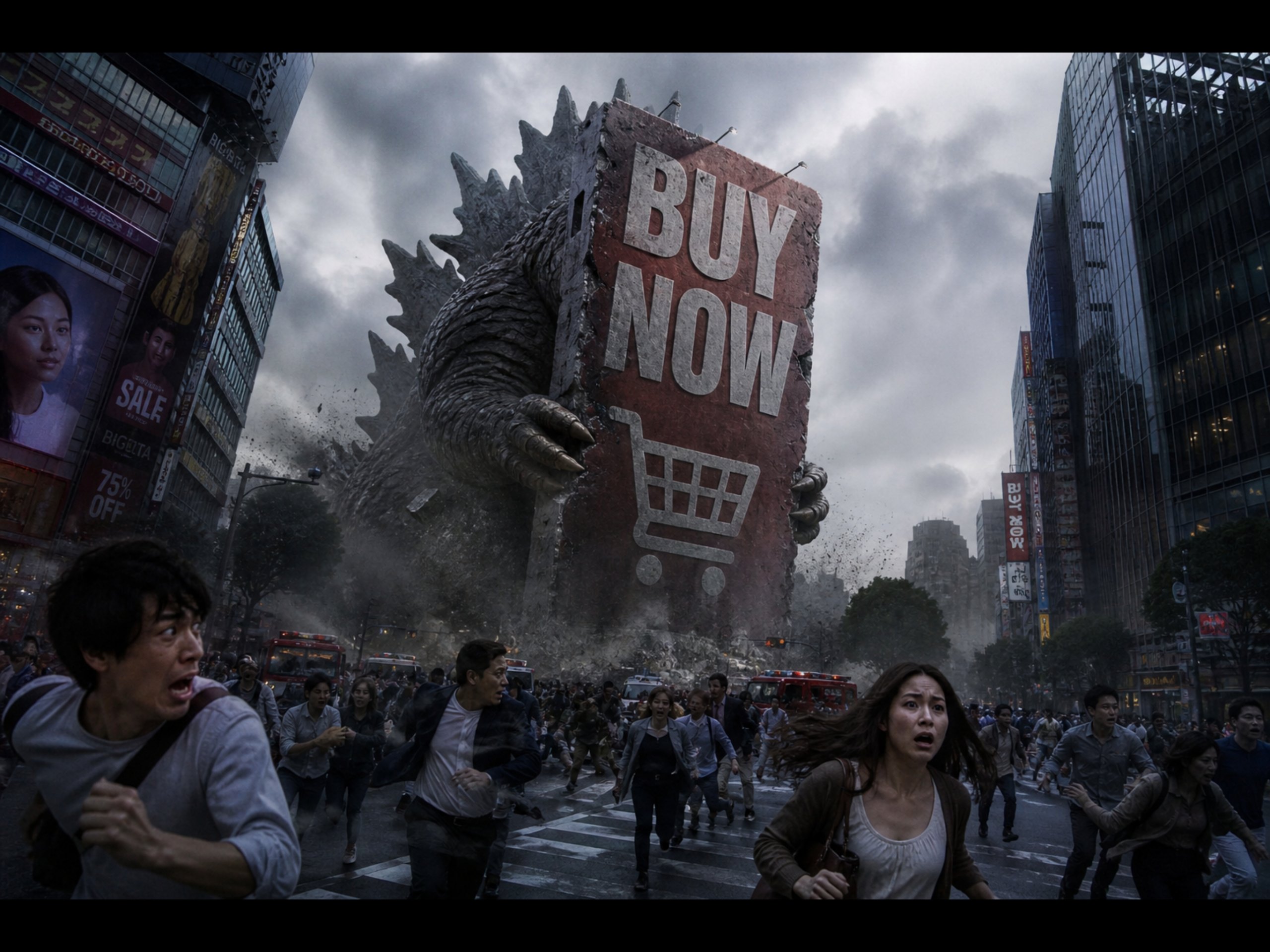
Advertising used to interrupt your content.
A billboard on the highway. A page in the newspaper. A sixty-second spot between your radio station and the next song. You understood the bargain. The interruption paid for the thing you wanted.
Now advertising has become an apex predator.
YouTube Premium arrived in my life because the ad load had grown unbearable. Not just the political spots, though those corrode something in you.
All of it. The endless cascade of products, causes, politicians. Four minutes of advertising for a three-minute clip about dog training. The math broke. The content became the interruption.
This represents a complete reversal of how the system functioned.
Back when advertising lived on billboards and in newspapers, it occupied its own space. You saw the ad. You heard the ad. It had boundaries. Radio commercials played between songs. Television ads ran in blocks.
They were interruptions, yes, but they were finite. You knew when they ended. You knew when your content resumed.
The old model was transparent. Free content. Ads subsidized it. Everyone understood the contract.
Now these streaming platforms have inverted the entire structure. They’ve weaponized the ad load so thoroughly that paying for silence feels like ransom.
Netflix charges you monthly to watch without interruption. Spotify does the same. YouTube Premium, ditto. They’ve created such unbearable friction, such predatory saturation, that the premium tier isn’t a luxury. It’s an escape hatch from the trap they built.
The predation scales differently now. The old media had limits. A newspaper could only print so many ads. A television station had only so much airtime. The friction was built into the physical world.
Digital platforms have no friction. No limits. An algorithm can serve you infinite ads across infinite hours. There’s no scarcity of attention to monetize. Just endless inventory.
What makes this predatory isn’t just the volume. It’s the design. These ads aren’t selling you deodorant anymore. They’re selling outrage. Fear. Division. They’re engineered to provoke response.
The political ads especially. They’re not interruptions. They’re provocations. They make you angry enough that you’ll pay to make them stop.
That’s the inversion. Advertising used to be something you tolerated to get content. Now advertising is the content, and you pay to escape it.
The old system had an honesty to it. You got something free because someone else paid to reach you. Simple transaction.
Now the transaction is upended. You pay to not be reached. You pay for the absence of something rather than the presence of something.
This is what happens when an industry discovers it can manufacture the very problem it then sells you the solution to.